How To Make Emotionally Diverse Gingerbread Men

Feeling the pressure to be happy this Christmas? Yeah, turns out Gingerbread men do too, so as a follow up to my post on Monday (Managing Christmas With Depression), here is a video to teach you how to make emotionally diverse gingerbread men who are allowed to feel however they want this festive season. Remember, it is OK not to be OK at Christmas time!

Take care everyone x

Managing Christmas With Depression

In day to day life, I think there is a certain pressure to be happy.
People are always singing about looking on the “bright side of life”, and whenever it is time to celebrate the anniversary of someone’s birth we tunelessly make our way through the all too familiar song that usually comes prior to the blowing out of some candles on a cake, a song that urges the person to feel joy that they are no longer entrapped by the walls of a womb. Even at Easter or New Year the pressure to have a “Happy” time is plastered into the holiday by cards and pictures willing joy at that time of year (this is why I like Lent. There is no pressure to be happy at Lent. Good for you Lent.)
Obviously, this is all makes a lot of sense as people want other people to be happy during celebratory times or indeed all year round. It would be a pretty miserable world if every birthday we received cards that said things like “I hope you have a horrendous day and that everyone forgets to buy you a cake” or “I hope you spend the day wishing you were back in the womb as I have since the day you were born”, and it certainly would make party hats and balloons look a little out of place.
Nevertheless, of all the times we are told to be happy, there is no holiday with a greater pressure for merriment than the month long December festival of Christmas. If you can be happy then that is great, but when you have depression this pressure for jovial smiles and antler hats can be incredibly difficult and is one of the reasons I think people with mental illnesses often find Christmas to be one of the most difficult times of the year.

Seriously, the pressure is everywhere, both from fellow humans and even foods that pop up in the bakery aisle at the supermarket, grinning at you from their cellophane packets like it is the easiest thing in the world (yes gingerbread men. I am talking about you. Smug bastards…On another note can someone please tell me why gingerbread men have buttons…as far as I can see they are naked little creatures and without clothes I cannot see the necessity for holding those non existent garments together with bright Smartie buttons…are their clothes invisible? In which case why can I see their buttons…or is the gingerbread man actually a biscuit version of a normal man in a gingerbread suit of which the buttons are a part…Oh my goodness I bet that is it…the outside of a gingerbread man is actually a costume to disguise the nature of the fact we are all eating standard biscuit men instead of these fictional gingerbread creatures…we have all been lied to…TRUST NOBODY THIS FESTIVE SEASON).

There is even pressure to laugh at meal times what with the compulsory paper hats and jokes fluttering from the folds of exploding crackers, although I do have to admit, I rather like the prizes you get in crackers. I swear every box contains at least one cracker with a bag of marbles in, which is odd considering nobody plays marbles these days…suffice it to say I have not won a stash myself yet (I do however have a life time supply of tiny playing cards and mini screwdrivers.)
Nevertheless, all this forced joy makes it seem as if people see December as a time we can all put aside our difficulties for the month just so we don’t ruin carol singing around the tree, or setting fire to a Christmas pudding with our miserable faces in the background of every photograph.

Indeed the difficulty of Christmas with mental health problems is evidenced by the fact that suicide rates go up around this time of year. I don’t know why exactly this is, but if I had to hazard a guess I would say that it is this pressure to be happy that is the cause.
Having depression and admitting to having spent three days crying into a pillow is hard all year round, but at least all year round it is more acceptable. At Christmas any sign of negativity is immediately rebuked with the instruction “cheer up! It is Christmas”, as if a bit of tinsel and a few fairy lights should be enough to cure any depression. You can’t even cancel plans at Christmas if you are too unwell or anxious to leave the house, without being charged with the accusation that you are a “party pooper” (when really it is your mental illness that has been doing all the pooping on the party rather than something you have decided to do for laughs).

At Christmas then, the pressure to be happy means that people feel more unable to talk about the negative things going on for fear of bringing everyone down. Every time you are greeted by a family member you haven’t seen in a while for one of the annual gatherings they will ask things like “how have you been?”, a difficult topic to discuss when “Pretty suicidal and this is the first time I have got out of my duvet fort all week” is not deemed an acceptable answer. For this reason, many people feel the need to lie about how they truly feel and have to grit their teeth, lying about how they are “not too bad” whilst simultaneously having to swallow the lonely truth that they wish they could reach out to someone with for comfort rather than suffer in silence, and If there is one thing guaranteed to make a mental health problem worse, it is suffering in silence. Maybe suicide rates go up then not just because of the stress and debt as postulated in the papers, but because this pressure to be happy leaves people more ashamed than usual and unable to ask for help.

Perhaps another reason as to the rise in number of those who feel there is no escape from their pain other than to end their existence, is that everyone else in the world always looks especially happy. Of course there is a good chance that they aren’t happy and we are all hiding the truth behind toothy grins together, but seeing everyone around you feeling something and being caught up in a merriment your brain will not allow, can make you feel just as lonely and isolated as the inability to speak out honestly.

Obviously I am not criticising the general population for being happy at Christmas, nor am I blaming the rise in suicide rates on the smiley faces of ginger spiced baked goods (those would be some pretty powerful biscuits), but I guess I just want people to know that if it were possible for the mentally ill to set aside our aching emptiness of depression for the festive period, every sufferer would do just that. When we are miserable at Christmas it is not because we haven’t got into the Christmas spirit or because we want to ruin cutting the Christmas cake. I personally wish I could buck up and ensure my family have a “happy Christmas” but I can’t, and it is hard to feel guilty about it every year.

Similarly, if you yourself are a sufferer and struggling with the need to be merry and bright this winter, I wanted to write this post to let you know that not being happy and able to throw caution and anxiety into the wind so you can enjoy yourself, doesn’t mean you are a bad person nor does it mean that you are alone. As you sit there grinning at the dinner table holding back tears you know rationally have no right to be there, as lonely as it feels, you are not alone. If you are struggling please do not feel such a pressure to be silent that things end up getting worse. More people need to speak about living with depression as Christmas if the problem is ever going to be solved, so admitting that you need help is not a sign of weakness or shame. Instead it is admitting that things are not as simple as checking the date on the calendar to see how happy you should be for the day, and that depression is not easily solved by a bit of festive ribbon.

If you are reading this with or without mental health problems I of course wish you a fabulous Christmas, but then again do not feel any pressure. Maybe this year is just about having an “alright” Christmas or simply getting through Christmas at all, and it is a bucket full of “have an OK Christmas” wishes that I am sending to you now. However you feel, it is ok, you have every right to feel it, and you are certainly not alone. Take care everyone. x

depressedchristmas

5 Tips For Managing A Job Interview When You Have Mental Health Problems

A couple of weeks ago, I had a job interview. Much like most people before an interview, I was terrified, but not exactly for any of the usual reasons for pre-interview nerves. Of course the normal worries like “Am I going to look like an idiot?” “What if I can’t remember my own name?” “What if I can’t answer any of the questions?” were there, yet the leading racers in the anxiety Olympics were all mental health related. My main concerns were things like “Are they going to want to shake hands?” “What if I have a panic attack?” “What if they offer me a biscuit?” and “Is it socially acceptable to go into this interview with a hot water bottle shoved down my trousers?” (admittedly that last one isn’t exactly mental health related but I think we can all agree it isn’t on the list of the most common interview worries…I was just very cold…still, my mother confiscated the hot water bottle because it would make me “look weird”…yeah…I am sure they saw the icicles forming on my chin as totally normal…I’m not bitter at all…)
Prior to the interview then, I had a lot on my mind, and in turn a lot of preparations to make to ensure that I was going to be able to actually get through the interview. This meant that over the course of the experience I learnt a few things, so I thought I would pass them onto you now in case anyone else out there is struggling with the “please hire me by the way I am insane” issue. I can’t say these tips are going to make your job interview a jolly occasion, but in the end, I got the job which the interview was for, so I guess these tips have their uses…

1. Anticipate parts of the interview that are going to cause particular problems: Prior to an interview, there are several things that everyone will think about in preparation. Maybe they will research the company in which they are seeking employment, think about potential questions, or have a google search of the latest updates in the business world so they are prepared for any topic up for discussion. In the same way then, it is important to think about and prepare for any potential events that could be difficult. For example, I was worried about hand shaking, so in preparation I spent the days before the interview anticipating the touching of palms and speaking to people about it to get through some of the anxiety. In practical terms I also found an anti bacterial foam that supposedly lasts for six hours, so I was sure to pack that in order for me to be able to use it before the interview as a sort of protection glove. I then made sure I knew where the nearest bathrooms were for post interview washing. I even prepared how to turn down a biscuit incase one was offered, so anticipate potential mental health hiccups and solve them before they arise. (Thankfully water was the only refreshment offered so I never had to turn down a biscuit…I accepted the water and really wanted to drink it, yet never got a chance because I was too scared of making a slurpy noise. Had it been a job interview for a position as professional slurper I would have drunk the water as fast as I could and been sure to demonstrate all the slurping noises possible but alas, my interviews was not located in an institution that advocated slurping…or hot water bottles stuffed down one’s trousers apparently…)

2. Be realistic: In job interviews, it is sort of an unwritten rule that you say “yes” to everything and worry about consequences later. Can you speak french? Of course you can! You have a french dictionary at home and 24 hours to learn it…what could go wrong? Can you fly? Of course you can! How hard can it be to sprout wings /morph into a sparrow overnight (from experience I can assure you that is VERY hard indeed). As great as it is to say whatever you can to get the job though, it is important to be realistic and not agree to things that your mental health is going to make impossible and that you are consequently going to go home fretting about. If you have social anxiety and can’t speak publicly to a crowd of thousands, do not agree to do so and then regret it later. If there are things you are not going to be able to do, let the people know right away to avoid getting into a difficult situation further down the line. Yes it will be awkward and maybe you won’t get the job if there is a key part of it that your mental health makes impossible, but then again if that is the case, maybe that job isn’t the one for you. In terms of being realistic about actions you can perform, it is also important to be realistic concerning what you can manage when it comes to hours. Accepting a job 24 hours a day 7 days a week when you know it will overwhelm you, interfere with medical appointments and leave you no time to take care of yourself, is never a good idea. Getting the job is important, but taking care of your needs is vital as without looking after yourself you wont be able to perform at work and getting the job will not be a success you can celebrate for long. I for example know that there are multiple aspects to this job that are going to be extremely challenging and on the surface, if I am honest with myself, the hours are more than I think I can realistically handle. However, I made sure only to apply for a Christmas job for 6 weeks so that if I get overwhelmed/it is detrimental, there is at least an end goal in sight.

3. Get there early: Everyone knows you should get to a job interview early purely because being late is not the best way to promote the “great time keeping skills” you bragged about in your CV. Nevertheless, with mental health problems I would always advise not just getting there early enough to ensure you are on time and make a good impression, but getting there super early to allow for potential disaster/to allow you to remove the hot water bottle shoved down your trousers. Obviously you can’t plan what your brain is going to do in advance and it would be unrealistic to decide that you are going to schedule a panic attack for 11:15 so you have time to calm down in time for the interview, but if there is a risk of that kind of thing happening, get there with the time such an event would take spare. If you often have panic attacks, get to the interview with enough time to have one. Even if you don’t have panic attacks but suffer with anxiety, still get there early just to allow yourself to gather your thoughts and carry out any coping mechanisms like listening to a certain song or practicing mindfulness if needed.

4. Do not take rejection personally: One thing I really struggle with when it comes to job interviews/anything in life, is the fact that I take rejection extremely personally. My main worries about not getting the job weren’t about not getting the job in itself, rather they were worries about the effect it would have on my self esteem. For example I know that getting rejected from roles in school plays/not performing as well as I wanted in a test, has always led to difficulties with self harm, self hatred and general feelings of “everyone hates me and this is a sign that they don’t want me to be alive anymore because I am so terrible”. Before you go for the job interview then, try not to build it up to be this majorly important thing on which your value as a person and entire future happiness depends. Don’t see it as something on which your life rests, as ultimately no job is worth that. Maybe even write out some bullet points in case rejection does come to remind you of the rational facts in the situation. When the rejection comes it is likely your thoughts will spiral into the irrational emotional side of the brain so get your pre-rejection rational thoughts in order first. If you don’t get a job it doesn’t mean you are a terrible person/rubbish at everything/doomed to fail in life. It likely means that there were a hell of a lot of applicants and even if you were more than skilled enough, perhaps you just weren’t right for the role or someone else was better suited. If you are a doughnut maker and don’t get a job as a doughnut advocacy speaker it doesn’t mean you don’t make good doughnuts. It might just mean that you were up against a talking doughnut, and lets be real, who is better to speak for doughnut advocacy than a talking doughnut? Nobody, thats who.

5. Be honest: This is the final tip I have to offer but it is also THE most important. When I used to be preparing for interviews I would debate whether or not to tell the potential employer about my mental health problems/how much to say. I always wanted to hide it incase my mental health would stand in my way, yet ultimately that just meant that by hiding my difficulties I made life more difficult for everyone involved. Eventually the truth would always come out, and it would have been a hell of a lot better simply to be honest in the first place. If your mental health affects your life in terms of abilities or availability, let the employer know. Otherwise you will find yourself lying about reasons you need a day off to go to an appointment and having to invent mythical physical diseases to request time off work when really you are having a mental health crisis. For the past few years I have even put my mental health problems somewhere on my CV or within any applications so that everyone is on the same page before I even get an interview. This then makes it easier to talk about in the interview and by being honest both I and the employer can see if the job will be possible/work out ways to make it possible. When I worked in a coffee shop I was open about my fear of touching the hoover and thus allowed to use it whilst wearing rubber gloves saving me a lot of anxiety and excuses to get out of having to use a hoover. Again, like the tip about being realistic, there is always a chance that being honest will affect your chances of getting the job, but if it affects your life so much that it will inevitably cause problems at work, again, maybe that is a job you shouldn’t be applying for.

So there you have it! My top tips for managing job interviews with mental health problems. Now of course I have the mission of managing the actual job itself… To be honest I haven’t figured out how to manage that bit yet, but I guess that is something I will learn along the way. If my experience over these next few weeks does teach me anything about mental health in the workplace though, I will be sure to pass on any helpful lessons to you later.

Take care everyone and good luck with any potential job opportunities. YOU CAN DO IT!
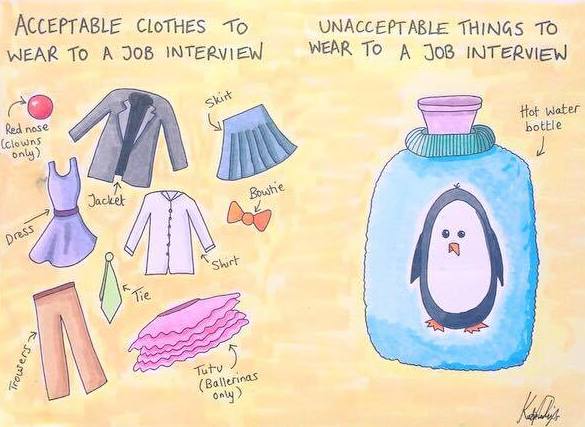
jobinterview


Mind Media Awards 2016

Have you ever wanted to know what it is like to go to the Mind Media Awards? Yes? Well today is your lucky day!…Actually it isn’t…I wanted it to be…and I tried to film my experience there to share with you all…but I didn’t do a very good job…so…this isn’t a great advert is it…damn it just watch the video…

6 Tips For Managing Public Transport When You Have Mental Health Problems

As you read these words I will hopefully be hot footing my way to London. I say hopefully because, as the idea is so terrifying, I cannot be sure I will go through with the journey (I am writing this a week in advance. Call me Mr Organised. Actually don’t, make that Señor Organised…has a bit more of a flourish don’t you think?).
Going to London/leaving the house at all is scary for a multitude of reasons such as managing food, being in unfamiliar environments with uncontrolled levels of bacteria, generally being around people, but one of the top scary things on the list of ultimate London scariness (it is a very long list), is the fact I will have to use public transport, and I am pretty sure that will be on many peoples’ lists of scary things about leaving the house.
Therefore, today I thought I would write this blog post to help anyone out there who is overwhelmed with terror at the mere thought of bumbling along on a bus or trundling track via a train. I can’t say these are the best ways to manage public transport anxiety issues, but they are at least the tips I will be using to get me through…if I manage to leave the house to get to the public transport stage that is…All aboard the mental health travel tip train! Here we go!

1. Make alternative routes: If there is one thing you can rely on when it comes to public transport, it is the fact that it will be unreliable. Buses break down, flights have to stay grounded because it is cloudy and I am yet to have a train journey which hasn’t started with a good half hour wander up and down the platform listening to the woman on the tannoy tell me that my train is delayed in a frustratingly calm voice (she always says she is sorry to announce the delay but if you ask me she doesn’t sound sorry at all. HOW DOES SHE SLEEP AT NIGHT?). I once even had a train cancelled with the explanation that there were “slippery leaves”…That’s right, slippery leaves. Not even going to try and make a sarcastic joke about that. I think the phrase “slippery leaves” makes the point. Anyway, due to multiple reasons much like the aforementioned soggy foliage, it is likely that any route you plan to take will be interrupted. This is enough to make anyone frustrated, but when you are already anxious and stressed it can feel like the end of the world and make you run back to your home wondering why you ever bothered leaving the front door. For this reason it is always vital to have an alternative route to fall back on incase any slippery leaves rear their ugly heads to get in your way.

2. Customise your route: When trying to look up directions, pretty much all of us will turn to the internet (dear young readers, did you know that maps actually used to be things you could find on paper rather than apps on your phone with floating blue dots. They called these maps “The A-Z”. They were marvellous things, I really wish you could have seen them), and when you look up directions on the internet it will often tell you what it thinks is the easiest route. However, this “easiest” route is the route judged as easiest by a computer, it is a purely rational decision and unlikely to fit with what is “easiest” for the irrational fears in your head. Of course we must all push ourselves and challenge our mental illnesses lest they control every aspect of our lives and sometimes there is only one way to get from A to B. Nevertheless if there are options on a journey that may not be the quickest route on paper but that will help you manage anxiety better, go with them. Walking a few streets along may take longer than hopping on the London underground, but if the tube is likely to cause a paralysing panic attack in the end, walking may actually save time and a hell of a lot of stress.

3. Do not rely on the internet: Another thing in life that can be as unreliable as the number 44 bus is internet signal. It is all well and good to entrust your travel plans into the route calculating hands of an online computer but if you find yourself in the middle of nowhere with no internet, Siri is going to be of little use in helping you out of that predicament. Even if you do have signal, phones and other pieces of technology are always at risk of running out of battery (especially if you have spent too much time playing Pokemon go…ahem), so regardless as to whether you found your route online, make sure you take a paper copy. Paper doesn’t require signal and paper does not run out of battery leaving you in an anxious heap. In short paper is awesome, so don’t forget to use it.

4. Listen to audiobooks: When on a train or a bus I often find my anxious thoughts speeding around my mind faster than the mode of transport I am riding, so fast that they are little more than a blur that I cannot decipher. Every bump in the road is a potential earthquake to my terrified brain, every new passenger a potential murderer, and for this reason when anxious on public transport it is vital to have distractions. A lot of people listen to music in order to help soothe them and if you are one of those people then make sure any journey out of the house involves earphones to listen to your favourite tunes. Personally though I struggle with listening to music on public transport, as when you put music on shuffle it can be unhelpfully unpredictable. It is all well and good to be on the bus nodding your head to a relaxing ballad from Adele but seconds later you can find yourself being bashed about the ears with the drums of heavy rock which is not relaxing at all. For this reason then, I often listen to audiobooks which I find are a lot easier to get lost and calmed by, so I thoroughly recommend them as a distraction technique (especially Harry Potter books on trains. That way you get the dulcet tones of Stephen Fry and you can pretend you are on the Hogwarts express as you listen).

5. Buy tickets in advance and get money ready: To buy tickets you need to queue. Queuing is stressful. People with anxiety and mental health problems do not need added stress. The solution? AVOID QUEUING (by booking tickets in advance at quiet “non rush hour” times or online, not by whacking everyone else in the queue out of the way with your hand bag.) Personally when it comes to buying tickets I also find touching money to be a challenge, so if you also struggle with this may I suggest getting your fare ready prior to the moment some ticket officer asks for it so that you do not have to suffer the money touching stress with the “oh my goodness I cannot find the right change why is my purse full of pennies people are staring at me” stress. When I prepare a bus fare in advance I always like to antibacterialise it and then keep it in a separate pocket to lower anxiety further. It isn’t ideal in terms of trying to fight things like OCD, but if needs must, in my eyes it is better to do whatever you need to to get out of the house.

6. Give yourself time and plan every step that is difficult: The final thing that I would say makes travel difficult is the general panic and hysteria I find myself getting into when I am in a rush/under a strict time limit. For this reason to reduce anxiety I always leave a lot longer for my journey than might otherwise be necessary AND I plan in travel breaks whenever I need them. It makes more sense to hop from train to bus to train and on again until you reach your destination, but incase the anxiety gets too much it is important to plan pit stops to release some tension and take a break from all the mania. Personally, with planning breaks I also like to plan toilet breaks because the idea of an unplanned unexpected public toilet experience freaks me out, so if it scares you too, maybe find loos along your journey that would be easiest and fit them round your ticket times.

So there you have it! The six tips that I use to help me get through the fear of public transport and the six tips I will hopefully be carrying out right now on the way to London (like I said it is a week in advance but already I have planned every safe toilet along the journey. PREPARATION IS KEY.).
Of course they won’t take the fear of public transport away, but hopefully they will make it a little easier or at least doable.
I wish you all safety and relaxation during any upcoming travels and promise to keep my fingers crossed that you are never faced with the horror film inspiring added obstacle of “slippery leaves”.

Take care everyone x

transportanxiety

Born Without Marbles Is Now On YouTube!

What is this? A born without marbles post on a Friday? What is going on? I thought they only came on Mondays? Someone contact the BBC and get Fiona Bruce to report this (actually don’t bother. I already contacted them. They weren’t interested). No, this is not actually the usual Monday blog post, it is in fact an announcement to let you all know that Born Without Marbles is now not just on my website…IT IS NOW ON YOUTUBE AS WELL! Are you thrilled? Now you can hear me waffle as well as read about it every Monday! Bless this happy happy day! Anyway, this is just to let everyone know that the channel is there so feel free to take a gander and subscribe if you fancy (and by if you fancy I mean please subscribe even if you don’t fancy. Trust me, All the cool kids are doing it so it must be a good idea). I won’t post on here every time I upload a video (unless that wouldn’t be annoying/you wouldn’t mind), so be sure to check on the Youtubes for my face whenever you can.

Hope you are all having a marvellous day, take care everyone x