The Difficulty Of Dating When You Have A Mental Health Problem

If you have walked into any shops or restaurants in the past few weeks, you may have noticed a lot of brightly coloured hearts in various shades of fuchsia splashed about all over the place. Cards with hearts on, posters with hearts on, even giant teddy bears holding hearts (which is biologically confusing as without the heart how is the bear able to breathe and thus hold the heart at all…unless he is holding someone else’s heart in which case that is pretty damn sinister if you ask me). Funnily enough this is not because February is a month in which humans feel the need to celebrate the life giving aortic pump caged within our ribs (or in the hands of a rather terrifying and possibly murderous teddy bear), all this heart shaped nonsense is because tomorrow is Valentine’s day. Personally I have never understood why you should need a holiday to remind you to let your partner know that you love them, but I suppose it is better to have a day dedicated to love than something horrible like punching puppies in the face. Nevertheless, I still find it quite a difficult holiday as it is one that reminds me all too loudly of the detrimental effect my mental health has on my love life.

To sum up my current “love life” I guess you could simply say that it is non existent and has been this way for several years. During my life, in times in which my mental health has been better, I have somehow managed to have two “proper” relationships thus far, both of which it can be argued ended either because my mental health problems were actively getting worse or because they simply became too overwhelming for my partner (which was totally understandable in both situations.)
I guess in a way it is good that the main reason for both of my relationships collapsing is centred around an illness because at least an illness can be cured and could potentially disappear one day. Had the problem been a weird habit of belting out ABBA’s greatest hits in my sleep, that would perhaps be more frustrating, as to my knowledge there is no cure for that kind of thing. When it comes to OCD, depression and anorexia however, I know there are people who have got better and hopefully one day I will be able to count myself among them.
Truthfully though, I cannot see that happening. I would love it if it did and I will never stop working towards that goal, but realistically the chances are pretty slim, and even professionals have admitted that I am going to struggle with my illnesses for the rest of my life, maybe not to the same extent as I do now, yet chances are they will always be there. Assuming these predictions are right then, any relationship I ever have is going to involve my mental health problems having some kind of an impact, and that is the kind of thing that inspires the classic “I am going to die alone” worry considering my mental health problems have been the destruction of all former attempts at having a partner. I can’t even do what most people who fear this do and resign myself to the identity of being a “crazy cat person” because I don’t think I could handle four little paws spreading potential bacteria around my house let alone a whole litter’s worth… What back up is there to the “crazy cat person” back up plan? The only option is to be simply “the crazy” person…That doesn’t sound fun…

I think relationships are actually one of the biggest struggles faced by people with mental health problems but it is a struggle people rarely talk about because admittedly it feels a little embarrassing. Nevertheless, it is because nobody really talks about it that I think it is so important to talk about it. If I struggle with and worry about this kind of thing whilst feeling totally alone in it, amongst other people my age who are doing things like getting married and giving birth, then there is a high chance that there are other crazy people out there who feel the same and need to know that it isn’t abnormal. Indeed, I think the impact mental health can have on relationships is seriously under reported. The instability of my mood, the inability to touch most things, the compulsion to clean obsessively, body image issues blocking the way to physical intimacy, trust me, the list of obstacles in my way is endless, and those are the problems you face when you have actually managed to get into a relationship in the first place.

Nowadays before you can even get to that stage you have to go through the terrifying minefield that is otherwise known as “dating”. I know that a lot of my friends have been on these “dates”, but mental health wise I cannot get my head around the idea. For one thing, where are they meeting all these people with whom they go on dates?
Usually people come into contact with potential romantic entanglements during social events or hobbies, but because of my mental health I am rarely at social events and my only hobbies are things like repeatedly tapping doorhandles which is a relatively solitary pass time. The only places I tend to go regularly when I leave the house are therapy appointments, so the only people I meet are mental health professionals, and I think it is pretty frowned upon to start dating your psychologist.

Considering we are currently in the age of internet dating you may think that my lack of social skills in real life are no longer an issue as I could easily meet someone on one of these websites like match.com or an app like “Tinder” (WHAT THE HELL IS TINDER. Everyone has it and from what I gather it is just a lot of swiping…what are we swiping…where are things going when we swipe them out of view…should I want to be swiped? WHAT IS GOING ON).
Thing is, though I have never been on any of these websites myself, from what I gather they involve putting pictures of yourself online as well as a brief description of your personality. A brief description of my personality? What the hell can I write there? “Totally bonkers”? Who would look at that and think “well I want to spend the rest of my life with that insane creature”. Of course I could easily lie and write something like “I am a totally sane and calm human who is not crazy at all and likes long walks on the beach” (massive lie. I HATE the beach), but that seems far too much like false advertising. Ok, people false advertise in adverts all the time (like with that mermaid Barbie I wanted when I was 7…she wasn’t a real mermaid! I threw her in the bath and she didn’t even float let alone swim. What kind of mermaid sinks? LIES I SAY), yet despite its acceptability in general life the idea of putting myself online without mentioning my mental health issues isn’t just false advertising, rather it is dishonest. The truth is that at the moment there is no aspect of me that does not involve some kind of mental health complication, and were I to ever get into a relationship again, that would be something that I would have to be open about from the start.

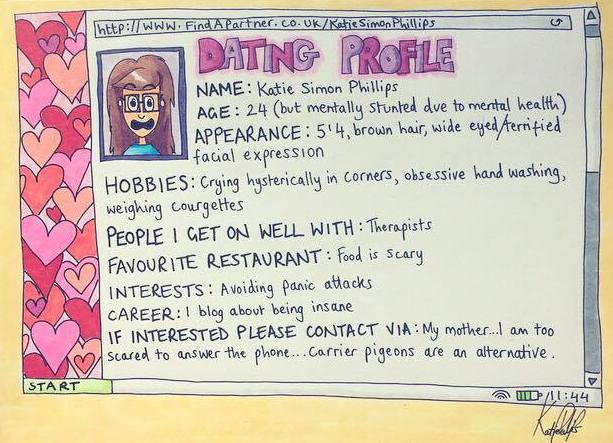
Then even if you have mental health problems and manage to somehow get a date with your restricted daily schedule and unattractively marble free online profile, how the hell do you actually go on the date you somehow acquired? Usually a date will include something like a meal, but with my eating disorder a meal out is basically impossible and in terms of OCD any other activity like bowling is ruled out too. YOU CAN’T BOWL IF YOU ARE UNABLE TO TOUCH THE BALLS. Then there are the obvious issues caused by general anxiety, social anxiety and depression making everything more complicated, as well as OCD worries like the fact I wouldn’t be able to hold open a door for anyone which would look very rude, and that isn’t getting into the inability to hold someone’s hand or touch their skin without panicking. How can you advertise all that on an online dating profile or ask someone on a date in that situation? “Hi, my name is Katie, I would love to go on a date with you…but there can be no food involved or if there is food I will just have to watch you eat…also we can’t do any activity that involves touching objects in public or each other…and I need you to be aware that I might cry at random moments without warning…yeah…thats about it…CALL ME!..but not on my phone…phones are scary…CONTACT MY MOTHER.”

Maybe I am panicking a little too much about all this as I know everyone worries about the whole “dying alone” thing, but I have to say that with mental health problems the whole dating world and romantic stuff does get a lot more complicated. If I put on my optimist’s hat (it is purple with a penguin on), I like to think that in the end I will read this post back one day with my future wife and laugh at what a fuss I made worrying about something that really will be ok in the end.
Reading this back I now realise that I haven’t actually given helpful or constructive advice on how to date or manage a relationship with mental health problems. Instead I have simply splurged my anxieties all over you (apologies for splurging), but I hope that I have started some kind of discussion or raised some awareness as to the impact mental health problems can have on one’s love life. Right now I don’t think I am qualified to give any romance advice anyway, yet if ever I find myself able to manage the dating world rather than panic at the thought, any tips I do learn will be passed on to you. For now at least I have helped my fellow relationship worriers out there know that they are not alone and not a freak for being unable to go on Tinder or go on dates and have fun like everyone else this Valentine’s day.
Even though none of you are my other halves I still send each and every one of you a lot of love this Valentine’s day and every day of the year…You can thank me by getting me a date with Helena Bonham Carter, or at least getting her to call me (and by me, I mean my mother).

Take care everyone x
datingmhproblems

10 Ways To Support Someone With An Eating Disorder

Living with an eating disorder is hell, but I think it is underestimated just how horrendous it can be for the people living with people who have eating disorders. I know many parents, families, partners and friends tend to feel pretty hopeless when watching someone they love slowly drowning, without knowing how to stop it. Almost every day my mum will ask me what she can do to help, like there is some problem solving action she can perform as easily as changing a lightbulb.
I know for a fact that if there were an action she could carry out, my mum would do it in an instant no matter how inconvenient or unpleasant (I think she would even play Pictionary and she HATES Pictionary…weirdo). Unfortunately, eating disorders don’t have quick solutions and no matter how much a loved one wants to help, they cannot fix the problem. They can however support the person, and often these little offerings of support are nowhere near as dramatic as people seem to think. Supporting someone with an eating disorder doesn’t require grand complicated acts of kindness, often you can support someone with little things that don’t take much time or effort at all. So today, I am going to share with you a list of things that I find help me at home aka 10 simple ways you can help someone with an eating disorder.

1. Don’t get angry with the person, get angry with their disorder – When you have an eating disorder in the house/in any relationship, you can guarantee it is going to cause some conflict. I have lost count of the number of arguments I have had with my mum with regard to eating disorder issues like what I am eating for dinner. I honestly don’t think we have ever had an argument about anything that wasn’t mental health related (bar one argument we had in 2002 because she wanted Will Young to win Pop Idol when I was firmly on the side of Gareth Gates. I would like it noted that I can now lift my hands up and admit I was wrong on that one). Just yesterday I am ashamed to say I had an argument with my mother and yelled at her for about half an hour because she tried to help, and unknowingly put my kidney beans in the “wrong pan”.
Afterwards I felt incredibly guilty/like the worst person in the world. This guilt would have eaten me up and is the kind of thing that makes me feel that I don’t deserve food, but after we had all calmed down and I had apologised, what I found helpful is the fact that my mum made it clear that she understood that I hadn’t meant to yell about a bean pan. She knew it had just been the eating disorder taking control, and though I need to work on managing that myself, the acknowledgement that I wasn’t this terrible person who worried more about what pan my beans were in than my mother’s kind attempt at assistance, made me feel more able to continue with the meal.

2. If you are eating with someone with an eating disorder, keep them distracted and don’t make the food the sole focus of the experience – Meal times with someone with an eating disorder are not the most relaxing of situations and can be pretty intense (like one of those awkward dinner parties you see on Come Dine with me only less bitchy and without a voiceover man commenting on every little thing that occurs). For this reason, when I have to eat a meal with someone, I find it really helpful for them to help keep me distracted and not make it all about the food. Silence allows thoughts to creep in at the table, so I would recommend conversation if the person is able or, if they are unable (sometimes I cannot talk very much/think of words because I am so anxious), have the radio on in the background or play a game. Sometimes in hospital we would even do things like crosswords or little quizzes which really helped keep your mind occupied by working on something else (my favourite thing about this was that when there were bank staff they would go through the pile of quiz questions without realising which ones we had already done so we were all able to provide correct answers instantly and looked like geniuses.)

3. Allow them to take baby steps in their recovery rather than expecting miracles overnight – When people are in recovery from any mental health problem, there is often a lot of pressure for progress to be quick so that the problem can be solved and forgotten about as soon as possible. However, recovery is a very slow process and this pressure is often detrimental as it can make a sufferer more anxious and stressed. To help someone who is struggling, allow them to make progress at a steady pace they are comfortable with rather than forcing them to make dramatic changes which ultimately will not be sustainable.

4. Praise them…or don’t praise them at all – I have many friends who appreciate a little “well done” or similar nudge of encouragement after a meal to make them feel supported and like their hard work hasn’t gone unnoticed, so offering those words of praise can be a great way to support a loved one. That said, I know there are others, (me included) who actually find this more unhelpful, as they like to leave the table and forget everything rather than acknowledge the meal that has just been consumed. Denial may not be the best way to deal with mealtimes, but at the moment denial is how I cope, so I am helped by nobody commenting on how fantastic it is that I have cleared my plate. For this one then, maybe ask the person you are supporting to see whether praise would be helpful to them before whipping out the party poppers to celebrate an empty bowl of cereal.

5. Try to be as relaxed as possible at the dinner table – When I sit at the table, I am always anxious, and when I can see that other people are anxious, it makes me more anxious. This then makes them more anxious and before you know we are left with a table of people panicking about a meal that hasn’t even happened yet. For this reason when supporting someone at a meal time, if possible try to be calm and relaxed to show that the situation isn’t anything to be afraid of, rather than freaking  yourself out and condoning the “THE TABLE IS A SCARY PLACE” fear.

6. Seek support for yourself – People with eating disorders need support and so do the people around them. As important as it is for carers to have an outlet somewhere to discuss their concerns and worries though, it is helpful to make that outlet someone other than the person who is struggling. When you feel that you are a terrible person who is ruining everyone’s lives because you cant eat normally, emotional outpourings condoning that are only going to make things worse. Ultimately then for this one, support someone by finding support and seeking help for yourself too.

7. Keep diet talk to a minimum if you are on a diet – Obviously when you have an eating disorder, people being on diets can be rather triggering. That said you cannot dictate that nobody who lives with someone who is struggling is allowed to have any say in what they eat. Naturally we all have needs and some people may be prescribed special diets from a doctor which of course they should follow. If this is the case however, the best way to help the sufferer manage the situation is to not make a song and dance about it (aka no conga lines for the fact you have switched to low fat yoghurt and if possible none of those “I LOST THREE STONE” certificates which diet clubs award people plastered all over the fridge).

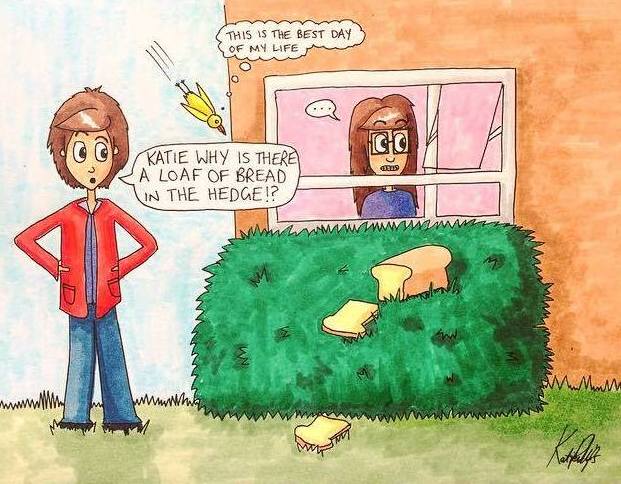
8. Know their meal plan – Again this one depends from sufferer to sufferer but personally I find it helpful when those around me know what is on and what is expected of me in my meal plan as it makes me accountable in some way. Obviously the goal is to get to a point where I don’t need people to know what I should be eating and am able to be responsible myself, but right now my mum having a copy of my meal plan supports me every day. That way, when I am struggling and want to miss things out, I know that it is not a case of “nobody will notice so just throw the bread out of the window” as my mum would immediately wonder where the soft wholemeal has gone (and why there is half a loaf of Hovis stuck in the garden hedge)…

9. Don’t treat them like a disorder – When people see or think of me, I always feel they think of me as “the one with the eating disorder” and that I have no other identifiers to me as a person. It is therefore helpful when living with someone with an ED, to treat them as a normal person with other interests and hobbies so as to remind them that they are more than their disorder and will ultimately still have an identity left, even when the disorder is gone.

10. Do not comment on their meal plan or their body weight – This last one is probably fairly obvious but nevertheless very important so I had to include it. Whatever you do and if you only follow one of these tips as to how to support a loved one, make it this one and for the love of all that is holy NEVER comment on how much weight someone has gained on their recovery meal plan and NEVER comment on how big someone’s meal is. Eating disorder recovery meal plans may look totally normal but there are some that may perhaps be bigger than normal. Whatever the meal plan though, the person will need all the food prescribed to treat their malnourished body and repair all of the damage that has been done internally. If someone is soldiering through their meal plan trying to reassure themselves of this, the last thing they need is a comment like “blimey that is a lot of food, I couldn’t eat that”. Hand on heart a bank HCA in hospital with no experience in eating disorders sat next to me one meal time and after I had finished my main/was picking a spoon up to dive into my rhubarb crumble with custard, they commented “I don’t know how you can eat that. My main course was half the size of yours and I am already too full to eat another bite”…THAT IS NOT HELPFUL INFORMATION.

So there you have it, ten ways in which family/friends can support people with eating disorders (at least in my experience), without actually having to do much at all. Being desperate to help a loved one and wanting to support them doesn’t have to be carried out in dramatic acts like white water rafting or playing Pictionary, Sometimes all you need do to be the most helpful and make the biggest difference, is the little things like asking them for help with a crossword over their cornflakes or giving an encouraging nod at lunchtime.

Take care everyone x

supportsomeonewithed

“But You Don’t Look Depressed”

Have you ever played real life Where’s Wally but instead of a man in a bobble hat and a striped jumper you had to find someone with depression? Hopefully you answered no, (if you answered yes I would advise you to make some changes to games you play for recreational purposes and would suggest Scrabble as an alternative). If you did answer no though, it is a game I do not recommend because playing such a game would be practically impossible (again, maybe try Scrabble).

Despite the fact that we now live in a time where there is a fairly wide understanding that depression is a “mental” illness, I still feel like there is the idea that somehow it is as visible as a broken leg. In fact I have lost count of the number of times someone has discovered I have depression before responding in surprise with that oh so familiar phrase to anyone with depression, “but you don’t look depressed”.
To be fair, no, no I often don’t. Then again Ralph Fiennes didn’t look like Ralph Fiennes when he was playing Lord Voldemort in the Harry Potter films with his nose all squished out of recognition, but underneath all that make up/genuine wizardry, he was still Ralph Fiennes.
Much like Ralph Fiennes, people with mental health problems like depression are often great actors, dare I say even better than the ones you see on TV to be honest, as we don’t even need green screen or CGI fake noses.

Whenever people say that I “don’t look depressed” I almost want to ask what exactly someone who has depression should look like considering I am clearly not living up to their expectations.
I think the traditional depressed person is supposed to look like the pictures you see when you search depression on google images or look at any of the pamphlets they hand out at doctors’ surgeries. In the majority of these images, the people are curled up in a corner somewhere with their heads in their hands, but like the images you see of skeletal anorexics in the media, this is not always the case, and it is dangerous to think so.
Admittedly sometimes in my life living with depression, there is a lot of curling up in a ball for a good cry (often with Celine Dion – “All By Myself” playing in the background), yet that is not my constant state of being and not something I allow many people to see.
Inside I may feel like staying in that soggy ball all the time, but at family occasions or social events for example, I always put on my “sane” face and play the part of “human who has life together” as required by expectations upon me, much like many other people do at work or when they are in front of their children.

Contrary to portrayals in the media, often both I and other sufferers of depression really do just look like “normal people”. However well disguised a depression suffer is though, it doesn’t mean they are any less ill or need be taken any less seriously than those who are visibly struggling. Indeed, what a person looks like on the outside will tell you nothing of the severity of their condition, and you cannot compare sufferers based on the number of tears they have cried in the last fortnight.
Depression may be one illness, yet it expresses itself and feels different to every individual who suffers from it, so how one depressed person behaves could be totally different to someone else who also has the condition.
Even single individuals can present the illness in totally different ways depending on what day you come into contact with them so you can’t even classify people in groups of “loud person with depression” or “quiet person with depression”.
Like I said there are some days where my depression means that I physically cannot talk or get out of bed, and then aside from the days I have to pretend to be a certain way in front of family members, I have days at home in private where I am so depressed that I spontaneously burst out into hysterical laughter despite being alone and “allowed” to show how I really feel without upsetting anyone. It is almost like those situations in which people without depression hear a piece of bad news and instead of reacting with tears as would be appropriate, they just start laughing because their brain physically cannot cope with the shock/that amount of sadness. Truthfully I have had days where I can be so depressed that I spent half an hour hysterically guffawing (I believe the kids today call it “LMAOing”/“Loling”) at a pencil. Yes, you read that right, I laughed for half an hour at a pencil (not even a particularly funny pencil. His jokes were terrible. No idea of timing when it came to landing a punchline).

Much like the problem I discussed in my post about people with eating disorders not always being underweight, this misconception that someone must “look depressed” to be depressed is actually a mistake that puts many people at risk as well as being frustrating.
It is often due to this “depressed people must look depressed” problem that sufferers may feel unable to “come out” and be honest with family members about their issues for fear that they won’t believe them or take them seriously. Admitting to someone that you have depression is hard, often embarrassing and can take a lot of courage as it is, but to do so and then be told that you must be mistaken because “you don’t look depressed” is a sure fire way to make someone feel more devalued, ashamed and deluded than ever.
It is when people feel the need to keep their illnesses quiet and not seek help for fear of this response that they end up feeling more alone than they already did and in some circumstances take their own lives. How many articles about a suicide victim have you read where the family conclude by saying “we knew this would happen. Too much crying/head holding in the corner”? Most likely none, as usually such columns end with the far more unfortunate “we had absolutely no idea”.

When it comes to those with depression, in this post I really want to urge people to see them/us, not as head clutching Celine Dion fans, but instead as ninjas, masters of disguise who can pop up anywhere without people realising (only without the resulting violence that often ensues around ninjas).
That jolly person who served you in the supermarket? They could have had depression. That milkman that never shows any emotion at all? They could have depression. That girl you saw cycle past your house this morning? They could be a penguin in disguise, which isn’t exactly the same as depression but it just goes to show that you cannot make any judgements based on appearance alone.
Literally the only way it would ever be possible to play Where’s Wally where the aim is to spot the person with depression would be to make every sufferer of the aforementioned condition wear a Where’s Wally jumper at all times, and thankfully, that is never going to happen… At least I hope it doesn’t… I really don’t suit horizontal stripes.

Take care everyone x

dontlookdepressed

How To Get Through New Year’s Eve When You Have Mental Health Problems

If you are one of those people who really struggles around Christmas time what with all the anxiety of social interaction, disruptions to routine, pressure to be “merry” and bountiful buffets of sausage rolls and Christmas pudding…THEN CONGRATULATIONS!
If you are reading this that means it is now Boxing Day and the bulk of Christmas is over for another year (except for Boxing Day obviously but if you struggle to manage that then my advice is to hide away from everyone in a box and say that you are celebrating the holiday in the “literal sense”).
So hooray for you mentally ill winter holiday fearing person! You don’t have to go through the celebratory stress anymore! You can pack the tinsel and paper hats away now, sit back and relax into your usual routine and …wait…I have just been told that celebrations are not actually over…apparently we still have New Year’s Eve to get through…the celebration with yet more social interaction, overt displays of happiness, buffets (albeit with slightly stale Christmas pudding by now) and crowds of people disrupting day to day life…ah…well this is awkward..sorry about that…seriously who put these two holidays so close together? This is just too much pressure for the already anxious around the world! Next year I am moving to Beijing to celebrate new year in late January/February with the Chinese…

Now, with New Year, we are all forced once again to face many of the fears we already had to deal with at Christmas (aka the aforementioned necessity to be jolly and crowds of strangers/family members). However there is also an added extra stress with New Years, that being the obsessive need to reflect upon the past twelve months whether we like it or not.
For some people, with or without mental health problems, this can be a pleasant experience and the stroll down memory lane can be a nostalgic jaunt lit by sunlight and rainbows. If that is the case then that is fantastic and jolly good on you if you are finding yourself in that situation. All too often though, memory lane can be a dirty back alley scattered with garbage bags of bad days and regret that you really wish the bin men would hurry up and remove. Everyone has bad days (even Mr Happy from the Mr Men books…they just didn’t publish that story), but at New Year for some reason we don’t just look back at those bad days feeling pleased that they are over, rather we look back feeling guilty and ashamed that they happened at all and all the things that we were unable to achieve because of them.

If you have a Facebook or Instagram account it is likely that the next week or so will see an onslaught of collages uploaded displaying all the happy times people want to remember of 2016 and that is great. I love seeing all the happiness the year has brought to my friends and all of the things they have achieved. Lord knows I would be unhappy were they to have had terrible years, yet the issue with these collages is the compulsion we feel to compare our lives to them and the collages in our heads.
Many of these collages for example will involve things like images of new high end jobs, new houses, weddings and holidays abroad. I think this is hard for anyone (I know a lot of “sane” people who find New Year difficult for this reason too), but the difficult thing when you are struggling with a mental health problem is that you are more likely not to have done these things not because you didn’t have the opportunities, but because your mental health physically prevented you from reaching them. I know being mentally ill is called having a “mental disability” when I have to fill out forms or applications, yet still I think it is easy to forget just how disabling these mental health problems can be, how dramatic the impact they have on lifestyle.

My mental health is so unpredictable and takes up so much of my time that I am unable to hold down a regular “serious” job. For this reason I do not have an income or any money to rent a room in someone’s shed let alone buy a house, and unfortunately in my life mental health problems have been the ruin of all previous romantic relationships (either that or my funny looking face of course) let alone marriages/weddings. In terms of the rigid nature of my OCD rituals, fear of contamination and my anorexia driven inability to eat outside of my house, I also cannot travel on holidays in my own country never mind abroad. There is probably a very lyrical way to express how this feels, but in summary, it sucks.
This year two of my best friends went to Greece and I would have loved to have gone with them, but it was simply out of the question if thinking realistically. Seeing photos of people on holiday or abroad building orphanages in faraway lands, happily married or running their own company then can make you feel inferior, a feeling that is often exacerbated by the common question of “how was your year?”

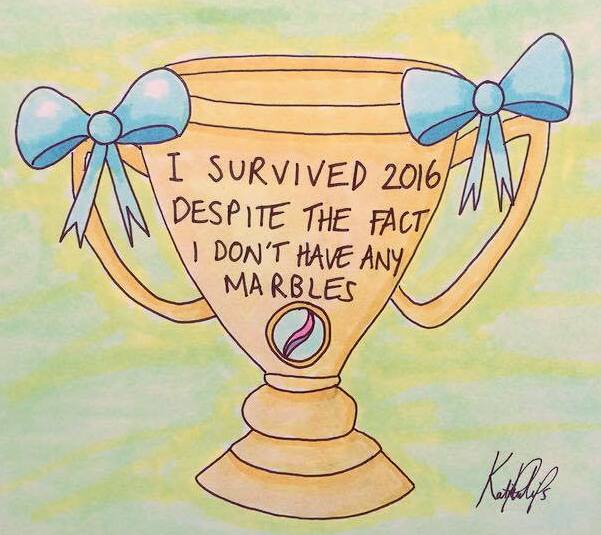
In comparison to many people, looking back at my year you could say that I have achieved nothing. I haven’t moved up the career ladder or taken a step onto the property ladder (the pressure to climb ladders these days is OVERWHELMING), and I haven’t found the love of my life or helped build a medical centre in Africa which will help save the lives of orphans in need of urgent treatment. If I look at it bleakly, I have simply carried out another 365 days of rituals that achieve nothing outside of the confines of my head, been hospitalised against my will again and basically carried out the same year in year out routine that I have rehearsed every year for the past decade. So what was the point? What did I achieve? Well, this is where I think all us marbleless folk need to give ourselves a bit of a break and not think about the things we didn’t do, but realise the value in all the little things we did do. If you are looking back at 2016 and are feeling that you have made no progress or step advancing you on your journey through life, I can guarantee you are wrong.
The word achievement is not limited to describing extravagant weddings, a three piece suite in your new lounge or a bungee jump across a beautiful landscape in New Zealand. An achievement can be anything.
Ask yourself, this year did you ever get out of bed even on a day you really didn’t feel able to face the world? WELL DONE YOU. Did you speak to a fellow human being even though your stomach was a mass of churning social anxiety? FANTASTIC. Did you put on clothes? Eat Breakfast? Open a door or do any little thing, despite fear in your heart and a head screaming all it could to prevent you from doing so. WHAT A CHAMPION YOU ARE. What a mental illness fighting warrior of epic proportions. What an achievement.

If you have simply managed to keep yourself alive, survive and make it through another 365 days with a disability then THAT is something worth celebrating and something for which you should be incredibly proud, even if you can’t exactly take a photo of that achievement to whack up on Facebook.
If you are reading this it is literally impossible for you to claim that you have had another year wasted or another year of not doing anything. Even if you come back at me with “I haven’t kept myself alive, I am in hospital/being held against my will with staff who are doing that for me”, I can come back at you and say without any doubt that you have achieved something because you are reading these words. Somehow you have found the strength to go onto the internet, click a link and made the decision to read it, and in my eyes, that is pretty damn fantastic. Also, if you are reading this, you have achieved the task of making me smile by listening to my nonsense and make me feel less alone, so that is two brilliant things right there in the past five minutes.

New Year’s Eve is of course still going to be difficult and no matter what I say, the parties, the crowds and the reflection of the past 12 months is going to be a challenge. Nevertheless, if all you have done is wake up today, I would say you have at least one good thing to reflect on rather than feel ashamed or guilty. When those collages pop up on social media, remember that you have every right to be very proud of yourselves, as I know I certainly am. Take care fellow warriors, I will speak to you in 2017 and again we will get through that year together. Stay safe and take care,

All my love, best wishes, hugs and Happy New Year vibes

Katie – Born Without Marbles xxx

newyeartrophy

Managing Christmas With Depression

In day to day life, I think there is a certain pressure to be happy.
People are always singing about looking on the “bright side of life”, and whenever it is time to celebrate the anniversary of someone’s birth we tunelessly make our way through the all too familiar song that usually comes prior to the blowing out of some candles on a cake, a song that urges the person to feel joy that they are no longer entrapped by the walls of a womb. Even at Easter or New Year the pressure to have a “Happy” time is plastered into the holiday by cards and pictures willing joy at that time of year (this is why I like Lent. There is no pressure to be happy at Lent. Good for you Lent.)
Obviously, this is all makes a lot of sense as people want other people to be happy during celebratory times or indeed all year round. It would be a pretty miserable world if every birthday we received cards that said things like “I hope you have a horrendous day and that everyone forgets to buy you a cake” or “I hope you spend the day wishing you were back in the womb as I have since the day you were born”, and it certainly would make party hats and balloons look a little out of place.
Nevertheless, of all the times we are told to be happy, there is no holiday with a greater pressure for merriment than the month long December festival of Christmas. If you can be happy then that is great, but when you have depression this pressure for jovial smiles and antler hats can be incredibly difficult and is one of the reasons I think people with mental illnesses often find Christmas to be one of the most difficult times of the year.

Seriously, the pressure is everywhere, both from fellow humans and even foods that pop up in the bakery aisle at the supermarket, grinning at you from their cellophane packets like it is the easiest thing in the world (yes gingerbread men. I am talking about you. Smug bastards…On another note can someone please tell me why gingerbread men have buttons…as far as I can see they are naked little creatures and without clothes I cannot see the necessity for holding those non existent garments together with bright Smartie buttons…are their clothes invisible? In which case why can I see their buttons…or is the gingerbread man actually a biscuit version of a normal man in a gingerbread suit of which the buttons are a part…Oh my goodness I bet that is it…the outside of a gingerbread man is actually a costume to disguise the nature of the fact we are all eating standard biscuit men instead of these fictional gingerbread creatures…we have all been lied to…TRUST NOBODY THIS FESTIVE SEASON).

There is even pressure to laugh at meal times what with the compulsory paper hats and jokes fluttering from the folds of exploding crackers, although I do have to admit, I rather like the prizes you get in crackers. I swear every box contains at least one cracker with a bag of marbles in, which is odd considering nobody plays marbles these days…suffice it to say I have not won a stash myself yet (I do however have a life time supply of tiny playing cards and mini screwdrivers.)
Nevertheless, all this forced joy makes it seem as if people see December as a time we can all put aside our difficulties for the month just so we don’t ruin carol singing around the tree, or setting fire to a Christmas pudding with our miserable faces in the background of every photograph.

Indeed the difficulty of Christmas with mental health problems is evidenced by the fact that suicide rates go up around this time of year. I don’t know why exactly this is, but if I had to hazard a guess I would say that it is this pressure to be happy that is the cause.
Having depression and admitting to having spent three days crying into a pillow is hard all year round, but at least all year round it is more acceptable. At Christmas any sign of negativity is immediately rebuked with the instruction “cheer up! It is Christmas”, as if a bit of tinsel and a few fairy lights should be enough to cure any depression. You can’t even cancel plans at Christmas if you are too unwell or anxious to leave the house, without being charged with the accusation that you are a “party pooper” (when really it is your mental illness that has been doing all the pooping on the party rather than something you have decided to do for laughs).

At Christmas then, the pressure to be happy means that people feel more unable to talk about the negative things going on for fear of bringing everyone down. Every time you are greeted by a family member you haven’t seen in a while for one of the annual gatherings they will ask things like “how have you been?”, a difficult topic to discuss when “Pretty suicidal and this is the first time I have got out of my duvet fort all week” is not deemed an acceptable answer. For this reason, many people feel the need to lie about how they truly feel and have to grit their teeth, lying about how they are “not too bad” whilst simultaneously having to swallow the lonely truth that they wish they could reach out to someone with for comfort rather than suffer in silence, and If there is one thing guaranteed to make a mental health problem worse, it is suffering in silence. Maybe suicide rates go up then not just because of the stress and debt as postulated in the papers, but because this pressure to be happy leaves people more ashamed than usual and unable to ask for help.

Perhaps another reason as to the rise in number of those who feel there is no escape from their pain other than to end their existence, is that everyone else in the world always looks especially happy. Of course there is a good chance that they aren’t happy and we are all hiding the truth behind toothy grins together, but seeing everyone around you feeling something and being caught up in a merriment your brain will not allow, can make you feel just as lonely and isolated as the inability to speak out honestly.

Obviously I am not criticising the general population for being happy at Christmas, nor am I blaming the rise in suicide rates on the smiley faces of ginger spiced baked goods (those would be some pretty powerful biscuits), but I guess I just want people to know that if it were possible for the mentally ill to set aside our aching emptiness of depression for the festive period, every sufferer would do just that. When we are miserable at Christmas it is not because we haven’t got into the Christmas spirit or because we want to ruin cutting the Christmas cake. I personally wish I could buck up and ensure my family have a “happy Christmas” but I can’t, and it is hard to feel guilty about it every year.

Similarly, if you yourself are a sufferer and struggling with the need to be merry and bright this winter, I wanted to write this post to let you know that not being happy and able to throw caution and anxiety into the wind so you can enjoy yourself, doesn’t mean you are a bad person nor does it mean that you are alone. As you sit there grinning at the dinner table holding back tears you know rationally have no right to be there, as lonely as it feels, you are not alone. If you are struggling please do not feel such a pressure to be silent that things end up getting worse. More people need to speak about living with depression as Christmas if the problem is ever going to be solved, so admitting that you need help is not a sign of weakness or shame. Instead it is admitting that things are not as simple as checking the date on the calendar to see how happy you should be for the day, and that depression is not easily solved by a bit of festive ribbon.

If you are reading this with or without mental health problems I of course wish you a fabulous Christmas, but then again do not feel any pressure. Maybe this year is just about having an “alright” Christmas or simply getting through Christmas at all, and it is a bucket full of “have an OK Christmas” wishes that I am sending to you now. However you feel, it is ok, you have every right to feel it, and you are certainly not alone. Take care everyone. x

depressedchristmas

52 Non-Food Related Ways To Celebrate Christmas When You Struggle With An Eating Disorder

If there is one group of creatures on earth who find Christmas dinner more stressful than all the turkeys out there do, it is people with eating disorders. Actually scrap that, when it comes to having an eating disorder it isn’t simply Christmas dinner that is stressful, it is the entire build up over the festive season when suddenly it feels as if EVERYTHING is about food.
There are Christmas meals out with friends to attend, boxes of chocolates being thrust under your nose at every turn, Christmas puddings, mince pies, Christmas cake, chocolate log and mile upon mile of buffet tables. You can’t even look at a calendar to see what the date is in December without it trying to throw a chocolate at you!
Don’t get me wrong, I love all of the Christmas food traditions we celebrate with in order to make the season extra special and I do not want the food aspect of Christmas to be banished forever. Indeed I love the idea of building gingerbread houses, opening the door on your advent calendar to see what shape chocolate you will find that day and the tradition of turning all the lights off, setting fire to the Christmas pudding and sitting for several moments “oohing” and “ahhing” at the blue flames waltzing across their dried fruit dome of a dance floor. Nevertheless, as fun as all the food aspects of Christmas can be, with an eating disorder they can be incredibly stressful and thus make December a particularly difficult time of year, especially if you find yourself unable to join in with the traditions your loved ones are carrying out and thus feeling more isolated than usual.

For this reason then, I thought I would use today’s blog post to offer a list of suggestions of ways to celebrate Christmas that aren’t food related. Obviously if you find you are able to join in with the usual food activities then by gum join in and have a jolly old time (does anyone say “by gum” anymore…I quite like it…screw it I am bringing it back), but if you can’t, allow me to offer up some new potential traditions that will hopefully get you into the festive spirit without all the festive anxiety…

The Official Born Without Marbles List Of Alternative Non-Food Related Ways To Celebrate Christmas

  1. Buy a live Christmas turkey and take care of it
  2. Go carol singing (if you sing like I do your neighbours may not be thrilled about you knocking on the door whilst belting out “Good King Wenceslas” but if you do it with enough enthusiasm I am sure they will enjoy it in the end. Maybe include hand gestures to go along with the lyrics or a intricately choreographed dance routine.)
  3. Make Christmas wreaths
  4. Buy an entire supermarket’s supply of crackers and have an evening of cracker pulling madness
  5. Perform a fashion show wearing all the paper hats you earned in your cracker pulling evening
  6. Perform a stand up routine of all the jokes you earned in your cracker pulling evening
  7. Stop performing and take a break by watching a Christmas film (I am a sucker for “Love Actually”…until the part where Emma Thompson cries to Joanie Mitchell because Snape bought a necklace for a home wrecker…OH GOD HERE COME THE TEARS)
  8. Dry the tears you have cried watching Love Actually and read a Christmas book instead (my personal favourite is the classic Christmas Carol by Charles Dickens.)
  9. Dress up as an elf and dance around the streets
  10. Play Monopoly and get into an argument with a family member about who gets to be the silver dog (nothing says Christmas like a board game argument involving statements like “No, I am the dog. You can be the iron!’)
  11. Plant a Christmas tree
  12. Decorate a Christmas tree (hint, it is has been scientifically proven that the beauty of a Christmas tree increases dramatically when decorations are penguin themed)..
  13. Find the machine they used in the film “Honey I shrunk the kids”, miniaturise yourself, whack on some wings and a wand and then sit on the top of your Christmas tree to be the family fairy on top (maybe take a cushion to avoid spikes. Fir trees can be prickly)
  14. Make a Christmas present filled shoe box and donate it to a charity who send out gifts to those who need a present
  15. Grow a beard
  16. Dye beard white
  17. Stroke beard and shout “Ho Ho Ho” at passers by
  18. Hang out with a reindeer
  19. Put fairy lights all over the front of your house and enjoy the groups of strangers that gather at your doorstep to appreciate your display
  20. Volunteer with a charity to help take care of those who are alone at Christmas
  21. If you are a Christian/fancy something a bit traditional, go to church
  22. Invite burglars into your household and then take them down with paint cans and tarantulas in a re-enactment of the classic Christmas film Home Alone with Macaulay Culkin
  23. Come up with a good explanation as to why the house is a state and why there are two unconscious burglars in the basement for when your parents/house mates return home
  24. Find snow
  25. Go sledding
  26. Go skiing
  27. Build a snowman
  28. Direct your own one man nativity play (I will leave it up to you to decide how to simultaneously play a sheep, the Virgin Mary, Joseph and the baby Jesus…you are the director after all)
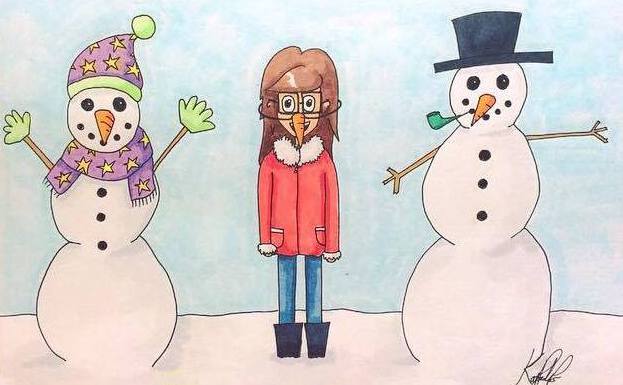
  29. Tie a carrot to your nose and stand in people’s gardens pretending to be a snow man
  30. Make Christmas cards
  31. Knit your own Christmas stocking
  32. Find Santa’s workshop and offer to help making all the presents this year
  33. Make your own advent calendar and hide treats that are not food related behind all the doors
  34. Go and watch a pantomime (if you find it hard to find the theatre on the night of the performance just turn around. Chances are it’s behind you)
  35. Stand under the mistletoe and wait…
  36. Keep waiting…
  37. Keep waiting…
  38. Just a little longer…
  39. Give up standing under the mistletoe and run to a mirror. Stare at your reflection and then compliment yourself out loud with the utmost sincerity because you are beautiful and if people don’t kiss you under the mistletoe then it is their loss/a sign of their bad taste/not a reflection on your personal levels of fabulousness.
  40. Tinsel. I am not sure what exactly you can do with tinsel but it is christmassy and not food related so do something with it.
  41. Find a pregnant lady called Mary and ask if she would mind coming with you to give birth in a barn where the cattle are lowing
  42. Lie any babies born in a manger
  43. Offer the baby Frankincense
  44. When the baby turns its nose up at frankincense (literally…that stuff STINKS), offer it a rattle instead
  45. Play pin the tail on the reindeer (WITH A PAPER REINDEER PLEASE)
  46. Go ice skating
  47. Sit under a fir tree with a bow on your head and pretend to be a present
  48. Laugh at all the fools who actually mistake you for a present
  49. Jingle some bells (jingle them ALL the way)
  50. Find loved ones
  51. Hug loved ones
  52. Scout the supermarkets from the 22nd of December onwards to see which one starts selling easter eggs first. The first place winner gets nothing at all as a reward and should be ashamed of themselves for perpetuating consumerism/the capitalist agenda.

So there you have it! A list of fifty-two alternative ways to celebrate Christmas when you have an eating disorder. Of course part of me hates writing this post and in an ideal world I would simply tell you all to just join in with everyone else and the “normal” food related activities rather than having to follow any of my suggestions (fabulous though they may be).
As any sufferers out there will know, eating disorders are soul destroying, potentially fatal illnesses that should not be allowed to dictate and ruin your Christmas. They shouldn’t dictate your behaviours, interfere with your ability to be “Merry and bright” and make social interactions around a crowded dinner table utterly terrifying, but unfortunately, a lot of the time, no matter how hard you try, eating disorders do all of those things without caring as to whether they should or shouldn’t.

That is why I have made this list. It is not because I agree with any of your eating disorders telling you that you can’t join in or that there is anything wrong with the food celebrations at Christmas time, but because this is not an ideal world (remember, this was the year Mary Berry left The Great British Bake off), and as much as I wish I could wave a magic wand and banish your eating disorders to enable you to have the ED free christmases you deserve, I know that such a dream is vastly overestimating my abilities as a magician.
Hopefully one day there wont be any eating disorders so this post and these alternative Christmas celebration activities won’t be necessary anymore, but until then I just want to try and help you come up with ways that you CAN join in at Christmas regardless of your eating disorders so that you don’t have to hide all December and become lonelier than the last toffee penny in a tin of quality street.
I have every faith that we will all eventually get to the day where the highlight of Christmas is a roast dinner and flaming pudding with all the family. Until then though, let’s just find fun where we can, knit our stockings and look forward to a time when all of this mental pain is a thing of the past.

Take care everyone x

snowmaned

Why Living With A Mental Illness Is Like Having A Full Time Job

When I told my mum and my various therapists that I had got a job for Christmas, the general reaction was “Why on earth have you gone and done that”, and admittedly, upon accepting the job, I felt very much the same. Realistically, I knew that my mental illnesses are currently putting too much of a strain on me to manage a job on top of them, but nevertheless I felt I had to get a job and that there was no choice in the matter. Why? Because of a question I always get asked by people in day to day life: “What do you do?”.

Whenever you meet someone new or see a family member that you haven’t seen for a few years, people tend to ask questions along those lines to find out what you are doing with your life, this often meaning in terms of job or career. It is this question and the moment in which it is asked that I always dread.
You see, pretty much all of my friends have proper jobs and it is generally accepted in society that everyone has a job to show that they are a valuable member of the population, contributing to society and earning money to put into a bank account somewhere to save for a mortgage on a house (what the hell is a mortgage!? How do you make a bank account?! Where do banks keep all the money? Who is in charge of all of this? When did they teach this in school? Why are piggy banks no longer acceptable as a money holding receptacle? Have I been mis-sold PPI?!).

Unlike most of my friends and indeed most people my age however, I do not have a proper job nor have I taken my first step onto the career ladder (I haven’t even found the damn ladder).
The reason for this is because my mental health currently dictates my day to day life and arguably makes a regular job impossible (hence why I have not applied for a regular job in years). This means that every time someone asks me what I am doing with my life I feel incredibly embarrassed and inferior having to say that I am “just trying to work on my mental health”. In essence this is ridiculous as I am well aware that there is no shame in not having a job because you are too unwell and I would never judge anyone else for being in a similar situation. Being ill myself, I know how drastically it can impact one’s routine, but as much as I know that I worry that people who haven’t experienced such things will think I am someone who is lazy or sponging off their parents, someone who should be written about or filmed for a Channel 4 documentary so that the general public can watch and rave on twitter about what a terrible person I am. Luckily I have never had any bad comments myself, but I know for a fact that when people ask my mother what I do and she responds with “Katie can’t work because of mental illness right now”, she has received comments akin to “so what on earth does she DO all day?.
It is as if they think I just tick the box for having a mental disability on all the forms I get for the sake of not having to hold down a job and then lie at home complaining about how bored I am. This could not be further from the truth. I tick that I have a mental disability on all of these forms and then when I go home I am not being bored, I am wrestling with a mass of nastiness in my brain that is trying to kill me, and that in itself is pretty hard work. I always felt like it was equivalent to a job myself, but lately the number of “what do you do” questions has been putting such a pressure on me that I started to wonder whether or not I really was making excuses and was as lazy as I assume everyone thinks I am.

After a week of work though, I have fully learnt the lesson that I feel more people need to learn in society, that being mentally ill is very much like a full time job all in itself (a really rubbish job with no time for a tea break, no pay and no Christmas party. Yeah. You heard me. NO CHRISTMAS PARTY.)
Things that should take minutes just take hours when it comes to me and the time simply goes by without me realising it. Showering can take forever and meal times are at least three hours so some days I may only be able to say “I have eaten three meals and had a shower” in response to “what have you done today?”, which doesn’t sound like much.
In the mind of a sane person that probably conjures up an image of two hours activity at the most with time in between to spare, without realising that really to achieve that is over ten hours work a day, and that doesn’t even include other things I may have to do like go to an appointment, go to the loo or get dressed (all of which are more things that go on for longer in duration than the film Gone with the Wind. God have you seen that movie? IT GOES ON FOR HOURS. I swear it never ends. It has been running in my living room since January 1989 and they are still waffling on. Also for a film with the word “wind” in the title I would like to complain that it is simply not blustery enough. I don’t even think we have had a light breeze yet let alone the gale force tornadoes I was expecting. FALSE ADVERTISING. MOVIE PEOPLE ARE EVIL.)
When viewed like this then, it is easy to see how mental illnesses demolish the time and effort people would usually put into a job, and it is the reason that I am struggling so much with my career as a Christmas temp for six weeks.

I only do five hour shifts five days a week which may not be as much as other people, but in carrying out that job the issue is that I haven’t simply been able to resign from my mental illness one to accept it. Having a real paid job doesn’t mean that I can just stop showering or eating for hours on end, so essentially I am now working two jobs. Considering I never really get free time you may be wondering how on earth I am able to do these two jobs as where can i fit these extra five hours in? As an answer to that I will simply say that rather than resigning from my mental illness job, I have had to resign from the position of “person who sleeps” instead.
Nowadays I work for five hours, then come home and work my usual eating and sleeping routine (I can’t bring myself to eat breakfast before work so I literally am having a working day then coming home and starting with the routine from the beginning with meals like breakfast as if I have just woken up).
If I am lucky and my “day” of trying to eat/stop washing/stop obsessively repeating things like brushing my hair finishes, it is then that I will go to bed. However, by this point it is practically time to start the next day in terms of official work, so after two to three hours I am up and have to get started all over again. I have also had to cancel every therapy appointment I had this week and I really am so exhausted that I have no idea what is going on. I am sort of in that drunken state that you find yourself in when you haven’t had enough sleep and end up staggering about, bumping into things and laughing at the pavement which in your deluded state suddenly seems to be a hilarious invention worthy of much mirth and merriment. It has got to the point where yesterday I genuinely felt a small hole when washing my stomach in the shower and panicked because I thought I had been mortally wounded somehow/was about to see my liver fly/spill onto the floor, before I realised that that “hole” is the belly button that has been chilling in the same place upon my abdomen for the past 24 years. As signs that you are pushing yourself too hard, I think “being scared of your own belly button” is a fairly big one.

I know that in writing this I am going to get comments telling me to quit this job before it gets too out of hand, and to be honest if it was anyone else in this situation I would be saying exactly the same thing. Carrying on with this job until the end of December goes directly against all the advice that I gave in my “tips for managing a job interview blog” (e.g. the whole “don’t push yourself past what is possible and take care of yourself first” idea), yet I am frustratingly one of those silly people who can give very good advice but very seldom follow it. That said, I still stand by all of that advice and can reassure you that there is no way I would be carrying on with this if it were a permanent position. I am not stupid, I KNOW that I could not keep up this level of hectic-ness forever. The way I am managing is by thinking I just have to keep my head down, get on with things for another 6 weeks or so and then I can get back to working only my mental health job. After that I think I will accept that I have thoroughly learnt my lesson and there is no way I will be applying for any more jobs until I am a lot less bonkers.

Nevertheless, as difficult as it is, I still really wanted to write this post as this experience is something that I am learning from, and hopefully they are lessons that, in writing them here will help us all out in the long run. If you can’t work because of your mental illness it doesn’t make you lazy, as you technically have a job getting through every day, it just isn’t one you handed in a CV for yet this doesn’t mean it is any less real. Also I really hope that this helps spread the message to people without experience of mental health problems as to what it means when someone is out of work because they are mentally unwell. It isn’t about laziness, it is simply about having the internal job of fighting your demons that nobody else can see, and if more people realise that then maybe the pressure to perform when you are not up to it will one day subside so other people don’t find themselves in my current pickle.

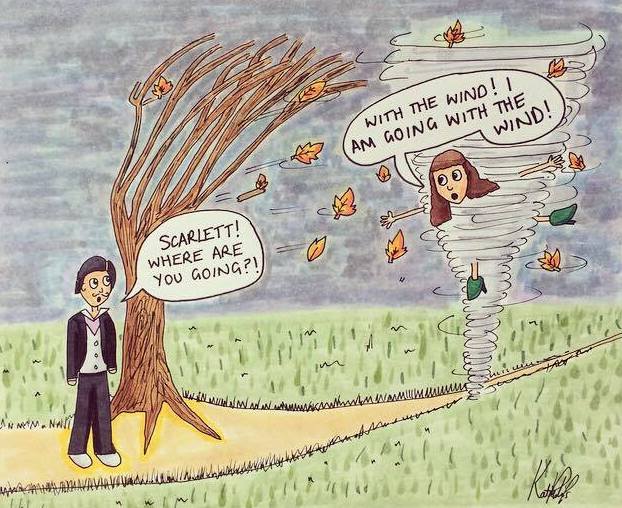
Now if you don’t mind, I will love you and leave you all with the illustration below, an image that depicts what the movie Gone With The Wind would have looked like had I been the writer/director.  As for me I think it is time to go to sleep. My next shift at work starts in a few hours. Oh good lord…

gonewiththewind