Why We Need To Keep Talking About Mental Health

Tomorrow is a very special day for this blog that you are oh so kindly reading in this moment (cheers for that), for tomorrow will mark the one year anniversary of Born Without Marbles being “a thing” on the internet as opposed to an idea in my head that I was too scared to carry out.
That means that I have been harping on about mental health, whether you have liked it or not, for an entire year, and I wouldn’t be surprised if there were people out there wondering why on earth I am still waffling on about illnesses that the majority of the population are well aware of by now.
Ok the general public may have misconceived ideas and perceptions as to what an illness may really be like, but everyone has a rough idea these days as to what things like OCD and Anorexia actually are, so why am I still talking about these things and why do I plan on continuing to talk about these things for the foreseeable future? Newton isn’t still harping on about the time that apple fell on his head (partly because Gravity is old news that doesn’t own the headlines these days and partly because he died in 1726 which somewhat limits his abilities to “harp on”), so why do I keep talking about what it is like to be mentally ill when the existence of mental illnesses is no longer breaking news. Well friends, whether you have been here from the beginning or whether this is your first experience of Born Without Marbles (Welcome. Please excuse the penguins I have left lying around in each post. They are kind of important), today I am going to answer that question and tell you why, even after a year of weekly waffling, I still feel that we all need to keep talking about mental health.

Of course there are all the obvious things like the fact that the more we talk about mental illness, the more research there will be and in turn the more likely we are to find a cure. To explain why I personally have such a passion for the subject however, I need to take you back to 2003, and, more specifically, eleven year old Katie (to set the scene I looked exactly the same as I do now only shorter).
As the name of this blog suggests, I can see that I have shown signs of mental illness from the moment I was born, but it was in 2003 that things really began to become a problem, that I became afraid and ashamed for the first time of the thoughts going on in my head. It was the first time that I didn’t feel normal, and feared that I was different from everyone else.

Every day at school I would watch other pupils in awe. I would see them eating school dinners, opening doors and shaking hands with each other as if it was the easiest thing in the world, and I would wonder how on earth they did it all. For some reason when I tried to open a door, I would find myself frozen in fear, unable to touch the handle as if someone was holding my arms behind my back. When I was in the queue for school dinners, my head was screaming at me to run away because I wasn’t allowed to eat, and no matter how hard I tried to concentrate in lessons about ox bow lakes, all I could see in my mind were images of terrible things happening to all the people I loved, and hear threats that the only way to stop those things happening was to repeat some kind of ritual. This would have been rubbish enough, but the worst bit was that I had no idea what this meant or why this was happening. I thought long and hard, trying to come up with an explanation but the whole thing made very little sense to me. What was so scary about the germs on a door handle when I had evidence all around me showing that nothing bad was happening to people “contaminated” with them? Why couldn’t I go to lunch, even on pasta days? Logically I knew that I loved pasta (pasta is flipping awesome), so why did the idea of eating a steaming bowlful topped with as much cheese as I could get away with before a disapproving dinner lady grasped my cheddar filled palm, scare me so much?
These things went on for months, and I said nothing to anyone because I was too afraid. Maybe mental health wasn’t as widely discussed in 2003 or maybe I was just unaware of what mental illnesses were, but I had never heard of anyone experiencing these things so I kept silent and hoped they would go away. Spoiler alert: they didn’t. Of all the awkward situations I found myself in however, there is one in particular that sticks in my mind and one that continues to motivate me and my dedication to this blog today.

“It” happened at the end of a music lesson. Now, in my school, music was taught in a separate building to all others, ditto art, drama, and DT who all had their own individual buildings (something tells me the staff members of the more creative subjects did not get on well…this explanation of the separate buildings certainly correlates with the time I saw the head of drama pelting the art teacher’s studio with water balloons anyway…)

On the day in which our story occurred, our class had been taken to a room on the top floor of the music building where there were a lot of computers and keyboards set up for us to spend a few hours learning how to play the theme tune from Titanic (a vital part to any eleven year old’s education). Then, the lesson ended and we were dismissed, a fact that meant we were going to have to leave the room and therefore, someone was going to have to open the door. Usually I was very good at avoiding such a responsibility, and at the end of every lesson I would fumble around with my bag until someone else had done the job so that I could scoot on after them without touching anything. This technique worked perfectly for every lesson, but today, for some reason, the teacher wanted us to lead out in single file from the nearest computer to the door. I think maybe someone had been messing about with a keyboard, playing Celine Dion’s soundtrack with a little too much gusto, so in the exit of the classroom, the teacher wanted to establish some serious authority. I felt sick. I was at the computer nearest the door. I was to be the first to leave, I was to lead my fellow students to freedom. I was to open the door. When I saw that it was a push door then, I was thrilled. Happily I nudged the door with my foot and led my classmates out, but the relief was short lived as I realised we were headed for another door, a pull one with a handle…AND AN EXIT CODE KEYPAD.
I thought about pausing in the corridor to let someone overtake but the corridor was too narrow, it was single file, there was no escape, and as I walked down the stair case to the door I genuinely felt like I was walking to the gallows. This was it. I was going to have to touch a door handle, and it was going to be the end of the world. When I reached the door I stopped. The time had come to raise my hand, but I couldn’t move. Instead, I just found myself stuck, panic building as the queue of students eager to go home started forming behind me. Luckily everyone was talking about the day too much to notice my embarrassing situation at first, but after a few minutes of standing in a line waiting, understandably, people started wondering what the hell was going on, and from the back of the line I heard a voice ask perfectly reasonably “is there something wrong with the door?” From then it went silent and all I could hear was the response in my head of “no actually, there is nothing wrong with the door, there is something wrong with me and I have no idea what it is”.

Eventually, after what felt like 34 years, the person behind me became impatient, reached around and opened the door, and from there I ran sobbing to the medical centre with shame, fear and embarrassment. I didn’t want to see anyone ever again, I had to hide, so I decided to take refuge in the sanitarium. When the nurse asked me what was wrong, I lied and told her that I had a tummy ache. I spent the rest of the day curled up on the sofa with a hot wheat bag watching episodes of the Simpsons, feeling more alone than I knew it was possible to feel. There were hundreds of other pupils in the school, but for some reason I was different, I couldn’t open doors or eat meals like they appeared to, and there was nobody, least of all me, who understood why.

It is for that Katie sitting on that sofa with that smelly hot wheat bag that I started this blog, and it is for all the smelly hot wheat bag holding people out there pretending to be fine, pretending to have tummy aches to cover up the fact they are terrified of their own minds and too scared to speak out for fear that other people won’t believe them, that I write this blog. Had I heard about mental health problems sooner, maybe I would have asked for support sooner, but what I would have found more helpful than any of the symptoms listed in the millions of health care packs, would have been the knowledge that there was at least someone out there who struggled with the same things, who let me know I wasn’t crazy, that I wasn’t alone. It is for that reason that, no matter how much awareness there is about the existence of mental illnesses, I will keep talking about my experiences with mental health problems in public spaces. This isn’t a blog to just give information, in my eyes, this blog is a friend, both to me, to the readers and to anyone out there who comments to say that they can relate to my problems and thus remind me once again that none of us are alone.

So happy birthday Born Without Marbles, and thank you from the bottom of my heart for all the support anyone reading this has ever provided. Here’s to another year, another 52 weeks of my ramblings, another 365 days of friendship.

Take care everyone x

MarblesBirthday

My New Diagnosis

For well over a decade, and since my very first therapy session many moons ago, (aka JUST after the dinosaurs died out and at the time when there were Tyrannosaurus Rex bones still lying about EVERYWHERE after that rather inconvenient meteor), therapists and psychologists across the country have always said that there is “something” wrong with me. Obviously they have always known about my OCD, Eating Disorder and Depression, yet still many have insisted that there is “something else” lurking within me and playing general havoc with my brain.

I have always found this “something wrong” that nobody can put their finger on, (or any body part for that matter), to be rather confusing.
When I was 15 the it was banded about that this “thing” might be bipolar disorder, but after trial and error with a few medications, that suggestion was tidied away as well as all the others and I have tried my best to forget about it. I was doing pretty well with this forgetting thing in my opinion (I had placed the “there is something wrong with you that we do not understand” memory alongside Pythagorus’ theorem in the box of “things I no longer need to know after the age of 16”), but then my forgetting box was rudely ripped open again very recently.
If you have been following this blog for a while you may remember that I had an assessment with a new OCD service in October of last year, a three hour interrogation examining all of my mental health problems and experiences of the world throughout my life. I mentioned nothing of any extra “bonus” diagnosis that nobody was sure of, so for this reason I was surprised when the psychologist I was speaking to randomly asked if I had any other diagnoses, as yet again I was showing signs of this “something else”, that something possibly being a “personality disorder”. I didn’t mention this when I had the assessment all those months ago because I imagined it would go away like all those other conversations of mysterious mental health problems in the past.
When I was told that the OCD service may not be able to facilitate my care if I had a personality disorder and I may need to see another service first however, I was unable to forget it again and became increasingly frustrated. Here I was potentially having issues with receiving treatment because of a mysterious something that I wasn’t even diagnosed with, and it was at that point that I knew I needed answers.

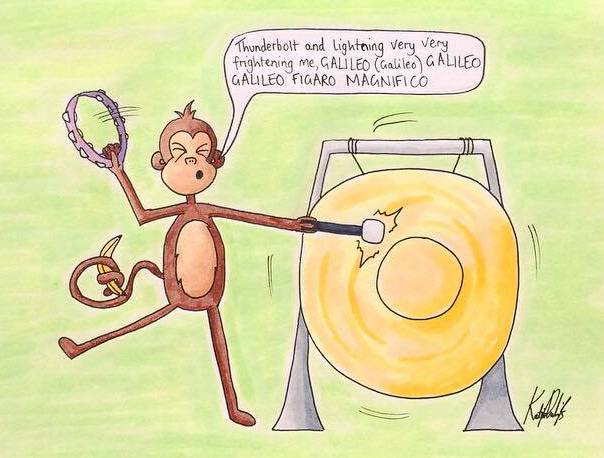
Like I said in my “why I like being diagnosed with mental health problems” blog post a few weeks ago, I like having the labels and diagnoses of my conditions in black and white because it helps me to deal with them and means I know what enemy I should be fighting. If you want a full understanding of why I like being diagnosed with (NOT HAVING) mental health problems, then I fully recommend checking that post out before this one (Why I Like Being Diagnosed With Mental Health Problems – it really is a great read. Trust me it involves a picture of a monkey banging a gong and singing Bohemian Rhapsody), but as a brief summary for all those with an aversion to classic song performing primates, my argument was that I like being diagnosed with mental health problems because it is only when you name a problem and pin it down that you can figure out how to overcome it. It is useless for a person working in a garage to simply say “there is something wrong with your car” because then they can’t fix it. They need to specifically identify the issue that there is a gaping hole in the front tyre, as only when they know that, do they know where they start tinkering and what equipment they will need.

Consequently, after my OCD assessment, I went to each of the three therapists I see in turn and asked them to tell me if there was something wrong and if so, what the hell it was. I can’t remember who first brought it up, but rather quickly a condition (we will call it Penguin condition for the time being), was suggested as the answer to all the questions I have had over the years. From that suggestion I had many appointments discussing the condition and as instructed, I researched it, learnt about it, and I watched a DVD given to me by a therapist, of various people being interviewed about their experience of Penguin condition.

Of course I didn’t relate to every single person on the DVD nor did I agree with some of the explanations of Penguin condition online, but on the whole, when learning about it, something clicked. As I heard people talking about what it was like I was astonished to hear them basically describing things I do/have experienced in life, and although scared and not eager to add a new diagnosis to my list, I was at least a little relieved. Finally I wasn’t just “weird”, I had Penguin condition and maybe if I started dealing with it, things would improve across the board. Perhaps the underlying issue of Penguin condition was the reason for the OCD and eating disorder, perhaps none of the treatment has cured me yet because we were actually treating the wrong parts first, like trying to eat the chunks of brownie at the bottom of a sundae glass before you have tackled the ice cream piled on top of it (ALWAYS SAVE THE BROWNIE BITS FOR LAST. ALWAYS. THAT IS THE RULE. ICE CREAM FIRST, BROWNIES LATER).

For this reason I became eager for the diagnosis to be put in place so that I could finally know where I stood. As well as answering my need for answers I also wanted it made official so that future therapists or medical professionals would know the full story if ever reading my notes, without me having to always add into new introductions the explanatory “I know you have read my notes but just so you know Penguin disorder is also on there but it is not written down”. I wanted it in black and white to be neat, to be clear, and partly because when things are in black and white, they look a little more like a penguin without the beak.

Then, a few weeks ago, I had a session with my psychiatrist and it was decided that we would make it official and the diagnosis would go on my records. At first I was relieved, but then he started to warn me about the consequences of it being made official. Suddenly I wanted to forget all about it and fall back into blissful ignorance again.
Apparently this condition is one with a lot of stigma to it, stigma that can lead to some therapists refusing to see you if you have the diagnosis. This wasn’t really a problem for me. If a therapist isn’t going to see me because I have a certain mental health problem then clearly they aren’t a good therapist or a person that I want to associate with anyway, but the constant reinforcement of judgement that could potentially befall me freaked me out a bit. I am not ashamed of having mental health problems, I talk about them openly on the internet for this reason and to hopefully help others be less ashamed about their disorders, yet with Penguin condition I really was rather scared and embarressed. My psychiatrist said he could treat me for the condition and just not put it on my notes if I would prefer, yet as easy as that would be, I still felt uncomfortable. Yes I wouldn’t have the “shame” of being diagnosed with a condition that faces a lot of stigma, but on some level I would also be admitting that there was shame in the condition and that I should keep it on the down low which is not how I feel about any other mental health problem I have. I am a firm believer that if you have a problem, keeping it on the down low is only going to make it worse and will not raise any of the positive awareness that could potentially be spread with honesty. Nevertheless I am a little afraid, and so for now it is on my notes as “under revision” incase I change my mind by the next appointment and want it removed (apparently without the under revision bit this is something that once on your records, will not come off no matter how much scrubbing or Cilit Bang you apply. Bang and the dirt is gone? Yeah, but the disorder will still be there!).

I have a few days until my next appointment now, and by that next session I have to decide whether or not I want to specify that mysterious something wrong or just sweep it under the carpet again. As well as debating whether to let it on my medical notes I have been debating whether or not to bring it up or “come out” with it in my blog. Again, my initial reaction was no. Even my mum agreed that it might not be the best idea. If you google the condition or do any surface level research on it, people with this disorder are painted as crazed monsters who are unbearable to be around. Reading the articles even I admit that I started to think that I would never want anything to do with someone suffering from the condition, and that was when I made my decision to get over my fear, come clean and talk about it on my blog like I talk about everything else, regardless of whether anyone else is interested. If everyone thinks people with Penguin condition are dangerously insane, then I want to talk about it and I want to raise awareness of the fact that that is not the case and what the people with it are really like. As you can see I am still scared of saying it on here (hence the code name Penguin condition), as I do fear the judgement, but they say feel the fear and do it anyway, so here it goes.

My most recent mental heath update then? After all that waffle what has happened? Well dear friend, I have been diagnosed with Borderline Personality disorder. I am still exactly the same blogger you have been following for however long you have been, with exactly the same issues. It’s just that one of the hidden ones now has a name (sort of like when some women on TV seem to name one of their boobs…it is something that has always been there only now it can be addressed formally in a letter or serious conversation). As you can see this post is long enough as it is so I won’t go into what that means and what myths need debunking here, but for now I feel like telling you is a big enough step. (That said I know many people do not know what this disorder is or have many misconceptions so, before I can provide an explanation of my personal experience I have linked a PDF below from the charity “Mind” which I feel is the best and least stigmatised description around, so if you want to learn more, dear god please go there rather than to a general google search).
Maybe I will delete this post before I upload it but I hope I don’t, and if you are reading it then I guess I have been brave. Nobody should be ashamed of their mental health problems, and I for one am going to live by that, even if doing so is something that scares me right now.

Take care everyone x

diagnosispicture


http://www.mind.org.uk/information-support/types-of-mental-health-problems/borderline-personality-disorder-bpd/#.WLRDi7GcbVo

The Difficulty Of Losing A Therapist

Over the past few weeks, I feel that I have been going through what is commonly referred to as “a break up”, one of those horrible experiences that, in popular culture, is often portrayed as a situation that can only be remedied by much crying into tissues and several tubs of ice cream. Now I know what you are thinking, “but Katie, how can you be going through a break up when you yourself admitted the day before Valentine’s Day that you haven’t been in any kind of romantic relationship for over two years” (alright don’t rub it in guys…Jeez).
Well if you thought that, you would be right, no, I haven’t been in a romantic relationship for a very long time (aside from the one I am in wth Helena Bonham Carter that she isn’t aware of…yet), but in the world of mental health there is a common experience that is very like a break up, that being the loss of a therapist.

Now, before I go on I would like to preface this by saying that I do not mean for this to imply that I am caught up in any romantic entanglements with the therapist I am referring to and who is currently in the process of “leaving me” for a new job.
Indeed our relationship is very much the standard “patient/psychologist” affair (perhaps affair wasn’t the best choice of word there…). However, what I don’t think a lot of people understand is just how attached one can get to a person who only hangs out with you every week because they are paid to do so.
It a very odd situation, and whenever a therapist leaves I feel I should deal with it easily, without being particularly bothered. This is after all not a new experience for me, as I have literally lost count of the number of therapists that have left me over the years, (seriously if you rounded them all up you would have more than enough of a cast to put on a performance of Les Miserables and trust me, from someone with a theatre background, you need a lot of people to perform that show). That said I know a lot of people find this a very difficult thing to go through, and rather than it mean we are clingy or weird, I think it makes a lot of sense.

Yes, a relationship with a therapist is strictly professional and should, on paper, be the equivalent relationship to someone you have hired to be your private chef (who is paid for by the NHS because you are mentally unable to sustain yourself alone….I need to work on my analogies…)
The chef turns up at your house because it is their job just like my therapist turns up for our appointments, but when you are talking about your deepest darkest secrets and fears rather than how you like your eggs cooked, it can’t help but become more personal whether you intend it to or not.
In every other professional relationship you have with someone who is being paid to spend time with you, like a chef or a plasterer in your house, the reason for their being there is in reference to something separate, aka food or dodgy walls. With a therapist though, unsurprisingly, a lot of it is about talking about your life. How can that not be personal?
Ok other professional relationships have personal aspects to them as well, a private chef for example may eventually grow to know how much milk you like in your cup of tea without asking every time, yet with a therapist there grows a level of intuition that is less about knowing how you like your tea and more about being able to simply look at your face and know automatically that it is time to put the kettle on (although I would like to clarify that my therapist has never actually made me a cup of tea at all…if you are reading this dear therapist, maybe work on that in your new job). It is that deep connection of being understood as a person, and for that reason of course it can be like a relationship break up when a therapist retires or leaves to get a new job.

Again, of course I am not saying that it is in any way romantic and unlike romantic relationship endings we are not going to be left wondering who gets custody of the kids (we already decided in our first session that I get them Monday to Friday and then she has them over the weekend). Nevertheless I am left wondering what I will do without this person who is currently a big part of my life.
When you see a therapist for a long period of time, discussing your mental health problems/building a therapeutic relationship is sort of like building a house. In the beginning you have an empty plot of land and the patient has a hell of a lot of bricks (bricks that in terms of this analogy represent secrets/thoughts/things that make you as a person). The patient is standing in the middle of this messy pile of bricks without any idea of how to deal with it, so the therapist is there as a sort of builder/tidier to help sort it all out. Every week you both turn up at this plot of land and gradually, the patient hands the bricks individually to the builder. Together you try to construct something that is a little less of a mess, and a little more something you can work in. The more you talk, the more bricks that come out, and eventually the house is finished at which point you can go inside and start trying to make the place liveable. You try things out, experiment with fuchsia walls, checkered wall paper or new therapies and you see what works for you.
Then finally you get to the point where you can both walk into the house (aka brain), and know the insides and outs of it so well that one of you can reference something within the house and the other will know exactly what they are talking about. Refer to the “plant thing in the bathroom” and they know what that plant thing is as well as when in your life you bought it and why it is in the house, just as a therapist will eventually grow to know all about the way your mind works as well as any life events you simply reference to as “that time with the giant squid”. If anyone else comes in the house and you reference the plant thing, they don’t understand exactly what you are talking about. Even if you take them to the room to point it out they cannot have the same level of understanding as the person who helped you build the bathroom in that particular way and find that particular plant at the gardening centre. You can tell a new therapist about what happened during “that time with the giant squid”, but to them it will just be a story rather than an experience you have lived through together.
Getting a new therapist then is not as simple as the professional transition involved when you get a new plasterer for example (I have just realised there are a hell of a lot of interior design analogies in here which I think is in reference to my love of 90’s TV show Changing Rooms. I miss Carol Smiley. Where did she go. She was so Smiley). No, instead of a new therapist coming in to help you in the house you had made earlier, it is like having to smash all of that “brain internal understanding relationship” stuff to the ground and having to start again. Once again you need to start passing them all the individual bricks they have never seen before, so you actually have a long time of simply building up enough of a rapport/understanding before you can get on with any of the serious stuff.

Like the end of any romantic relationship you find yourself wondering if you will ever find someone you will get on as well with or who will understand the way you work in the same way, and the first sessions with a new therapist are very much like all the first dates you have to go on to try and find a new partner. Conversations go from deep personal investigations into the meaning of life to the cookie cutter “so what is your job”, “where do you live” standard statements that you have to go through before you can get to anything of real interest or value.
Unlike a first date of course, a new therapist will probably have all of your notes from the previous one and thus a rough knowledge of your history, but nevertheless, with or without these notes they will always say that they want to hear about your history “from you”. Admittedly this is a good idea. Obviously I can explain something that happened to me when I was eleven better than a therapist was able to jot down in a word document, but having to go through all that stuff is exhausting. Maybe if you don’t have a huge mental health history this “tell me about you” question can be answered relatively quickly, yet for me it is a question that is incredibly daunting. Tell me about your experiences with mental health services?! How can I do that? We have nearly 14 years of appointments to catch up on! I can’t get through all that in one hour!? DO YOU HAVE ANY IDEA HOW EXPENSIVE HOSPITAL PARKING IS?

This entire blog is probably just one long incoherent ramble so half of you reading will be probably wondering what the hell I am talking about and who the hell Carol Smiley is. I guess I just wanted to raise some awareness of how difficult it is when a member of your therapy team has to change and why it feels so much more impactful than a change in any other strictly professional relationship. If I was ruler of the world I think I would probably make it law that therapists are unable to ever get new jobs, retire, change jobs or go on maternity leave (sounds ridiculous I know but in terms of fair/rational leadership I would still be doing a better job than Donald Trump.)
Luckily as you will know if you have been around my blog for a while, I do have a whole team of therapists so it isn’t a total break down of my psychological support and only one person is changing. I also know and like the replacement very much so it is as “good” and manageable a “break up” as it can be. Nevertheless I can’t help but feel as though in a few weeks when it is time for our last session (on the 21st of March, put that in your diary folks), I will be losing someone very important, someone who I can trust and rely on, so naturally, this isn’t going to be easy.

Take care everyone x

therapistchange

10 Ways To Support Someone With An Eating Disorder

Living with an eating disorder is hell, but I think it is underestimated just how horrendous it can be for the people living with people who have eating disorders. I know many parents, families, partners and friends tend to feel pretty hopeless when watching someone they love slowly drowning, without knowing how to stop it. Almost every day my mum will ask me what she can do to help, like there is some problem solving action she can perform as easily as changing a lightbulb.
I know for a fact that if there were an action she could carry out, my mum would do it in an instant no matter how inconvenient or unpleasant (I think she would even play Pictionary and she HATES Pictionary…weirdo). Unfortunately, eating disorders don’t have quick solutions and no matter how much a loved one wants to help, they cannot fix the problem. They can however support the person, and often these little offerings of support are nowhere near as dramatic as people seem to think. Supporting someone with an eating disorder doesn’t require grand complicated acts of kindness, often you can support someone with little things that don’t take much time or effort at all. So today, I am going to share with you a list of things that I find help me at home aka 10 simple ways you can help someone with an eating disorder.

1. Don’t get angry with the person, get angry with their disorder – When you have an eating disorder in the house/in any relationship, you can guarantee it is going to cause some conflict. I have lost count of the number of arguments I have had with my mum with regard to eating disorder issues like what I am eating for dinner. I honestly don’t think we have ever had an argument about anything that wasn’t mental health related (bar one argument we had in 2002 because she wanted Will Young to win Pop Idol when I was firmly on the side of Gareth Gates. I would like it noted that I can now lift my hands up and admit I was wrong on that one). Just yesterday I am ashamed to say I had an argument with my mother and yelled at her for about half an hour because she tried to help, and unknowingly put my kidney beans in the “wrong pan”.
Afterwards I felt incredibly guilty/like the worst person in the world. This guilt would have eaten me up and is the kind of thing that makes me feel that I don’t deserve food, but after we had all calmed down and I had apologised, what I found helpful is the fact that my mum made it clear that she understood that I hadn’t meant to yell about a bean pan. She knew it had just been the eating disorder taking control, and though I need to work on managing that myself, the acknowledgement that I wasn’t this terrible person who worried more about what pan my beans were in than my mother’s kind attempt at assistance, made me feel more able to continue with the meal.

2. If you are eating with someone with an eating disorder, keep them distracted and don’t make the food the sole focus of the experience – Meal times with someone with an eating disorder are not the most relaxing of situations and can be pretty intense (like one of those awkward dinner parties you see on Come Dine with me only less bitchy and without a voiceover man commenting on every little thing that occurs). For this reason, when I have to eat a meal with someone, I find it really helpful for them to help keep me distracted and not make it all about the food. Silence allows thoughts to creep in at the table, so I would recommend conversation if the person is able or, if they are unable (sometimes I cannot talk very much/think of words because I am so anxious), have the radio on in the background or play a game. Sometimes in hospital we would even do things like crosswords or little quizzes which really helped keep your mind occupied by working on something else (my favourite thing about this was that when there were bank staff they would go through the pile of quiz questions without realising which ones we had already done so we were all able to provide correct answers instantly and looked like geniuses.)

3. Allow them to take baby steps in their recovery rather than expecting miracles overnight – When people are in recovery from any mental health problem, there is often a lot of pressure for progress to be quick so that the problem can be solved and forgotten about as soon as possible. However, recovery is a very slow process and this pressure is often detrimental as it can make a sufferer more anxious and stressed. To help someone who is struggling, allow them to make progress at a steady pace they are comfortable with rather than forcing them to make dramatic changes which ultimately will not be sustainable.

4. Praise them…or don’t praise them at all – I have many friends who appreciate a little “well done” or similar nudge of encouragement after a meal to make them feel supported and like their hard work hasn’t gone unnoticed, so offering those words of praise can be a great way to support a loved one. That said, I know there are others, (me included) who actually find this more unhelpful, as they like to leave the table and forget everything rather than acknowledge the meal that has just been consumed. Denial may not be the best way to deal with mealtimes, but at the moment denial is how I cope, so I am helped by nobody commenting on how fantastic it is that I have cleared my plate. For this one then, maybe ask the person you are supporting to see whether praise would be helpful to them before whipping out the party poppers to celebrate an empty bowl of cereal.

5. Try to be as relaxed as possible at the dinner table – When I sit at the table, I am always anxious, and when I can see that other people are anxious, it makes me more anxious. This then makes them more anxious and before you know we are left with a table of people panicking about a meal that hasn’t even happened yet. For this reason when supporting someone at a meal time, if possible try to be calm and relaxed to show that the situation isn’t anything to be afraid of, rather than freaking  yourself out and condoning the “THE TABLE IS A SCARY PLACE” fear.

6. Seek support for yourself – People with eating disorders need support and so do the people around them. As important as it is for carers to have an outlet somewhere to discuss their concerns and worries though, it is helpful to make that outlet someone other than the person who is struggling. When you feel that you are a terrible person who is ruining everyone’s lives because you cant eat normally, emotional outpourings condoning that are only going to make things worse. Ultimately then for this one, support someone by finding support and seeking help for yourself too.

7. Keep diet talk to a minimum if you are on a diet – Obviously when you have an eating disorder, people being on diets can be rather triggering. That said you cannot dictate that nobody who lives with someone who is struggling is allowed to have any say in what they eat. Naturally we all have needs and some people may be prescribed special diets from a doctor which of course they should follow. If this is the case however, the best way to help the sufferer manage the situation is to not make a song and dance about it (aka no conga lines for the fact you have switched to low fat yoghurt and if possible none of those “I LOST THREE STONE” certificates which diet clubs award people plastered all over the fridge).

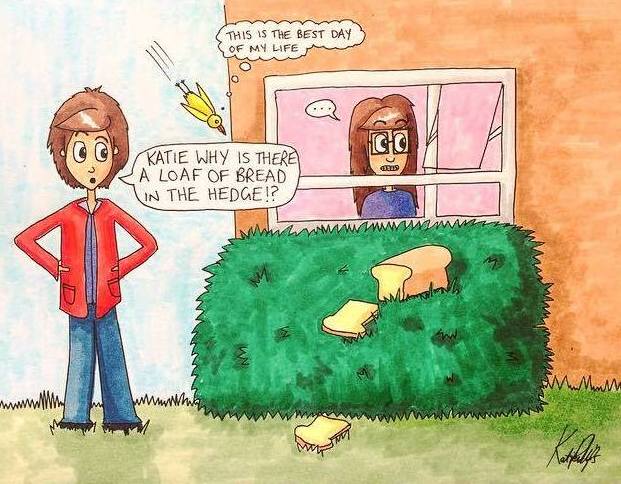
8. Know their meal plan – Again this one depends from sufferer to sufferer but personally I find it helpful when those around me know what is on and what is expected of me in my meal plan as it makes me accountable in some way. Obviously the goal is to get to a point where I don’t need people to know what I should be eating and am able to be responsible myself, but right now my mum having a copy of my meal plan supports me every day. That way, when I am struggling and want to miss things out, I know that it is not a case of “nobody will notice so just throw the bread out of the window” as my mum would immediately wonder where the soft wholemeal has gone (and why there is half a loaf of Hovis stuck in the garden hedge)…

9. Don’t treat them like a disorder – When people see or think of me, I always feel they think of me as “the one with the eating disorder” and that I have no other identifiers to me as a person. It is therefore helpful when living with someone with an ED, to treat them as a normal person with other interests and hobbies so as to remind them that they are more than their disorder and will ultimately still have an identity left, even when the disorder is gone.

10. Do not comment on their meal plan or their body weight – This last one is probably fairly obvious but nevertheless very important so I had to include it. Whatever you do and if you only follow one of these tips as to how to support a loved one, make it this one and for the love of all that is holy NEVER comment on how much weight someone has gained on their recovery meal plan and NEVER comment on how big someone’s meal is. Eating disorder recovery meal plans may look totally normal but there are some that may perhaps be bigger than normal. Whatever the meal plan though, the person will need all the food prescribed to treat their malnourished body and repair all of the damage that has been done internally. If someone is soldiering through their meal plan trying to reassure themselves of this, the last thing they need is a comment like “blimey that is a lot of food, I couldn’t eat that”. Hand on heart a bank HCA in hospital with no experience in eating disorders sat next to me one meal time and after I had finished my main/was picking a spoon up to dive into my rhubarb crumble with custard, they commented “I don’t know how you can eat that. My main course was half the size of yours and I am already too full to eat another bite”…THAT IS NOT HELPFUL INFORMATION.

So there you have it, ten ways in which family/friends can support people with eating disorders (at least in my experience), without actually having to do much at all. Being desperate to help a loved one and wanting to support them doesn’t have to be carried out in dramatic acts like white water rafting or playing Pictionary, Sometimes all you need do to be the most helpful and make the biggest difference, is the little things like asking them for help with a crossword over their cornflakes or giving an encouraging nod at lunchtime.

Take care everyone x

supportsomeonewithed

“But You Don’t Look Depressed”

Have you ever played real life Where’s Wally but instead of a man in a bobble hat and a striped jumper you had to find someone with depression? Hopefully you answered no, (if you answered yes I would advise you to make some changes to games you play for recreational purposes and would suggest Scrabble as an alternative). If you did answer no though, it is a game I do not recommend because playing such a game would be practically impossible (again, maybe try Scrabble).

Despite the fact that we now live in a time where there is a fairly wide understanding that depression is a “mental” illness, I still feel like there is the idea that somehow it is as visible as a broken leg. In fact I have lost count of the number of times someone has discovered I have depression before responding in surprise with that oh so familiar phrase to anyone with depression, “but you don’t look depressed”.
To be fair, no, no I often don’t. Then again Ralph Fiennes didn’t look like Ralph Fiennes when he was playing Lord Voldemort in the Harry Potter films with his nose all squished out of recognition, but underneath all that make up/genuine wizardry, he was still Ralph Fiennes.
Much like Ralph Fiennes, people with mental health problems like depression are often great actors, dare I say even better than the ones you see on TV to be honest, as we don’t even need green screen or CGI fake noses.

Whenever people say that I “don’t look depressed” I almost want to ask what exactly someone who has depression should look like considering I am clearly not living up to their expectations.
I think the traditional depressed person is supposed to look like the pictures you see when you search depression on google images or look at any of the pamphlets they hand out at doctors’ surgeries. In the majority of these images, the people are curled up in a corner somewhere with their heads in their hands, but like the images you see of skeletal anorexics in the media, this is not always the case, and it is dangerous to think so.
Admittedly sometimes in my life living with depression, there is a lot of curling up in a ball for a good cry (often with Celine Dion – “All By Myself” playing in the background), yet that is not my constant state of being and not something I allow many people to see.
Inside I may feel like staying in that soggy ball all the time, but at family occasions or social events for example, I always put on my “sane” face and play the part of “human who has life together” as required by expectations upon me, much like many other people do at work or when they are in front of their children.

Contrary to portrayals in the media, often both I and other sufferers of depression really do just look like “normal people”. However well disguised a depression suffer is though, it doesn’t mean they are any less ill or need be taken any less seriously than those who are visibly struggling. Indeed, what a person looks like on the outside will tell you nothing of the severity of their condition, and you cannot compare sufferers based on the number of tears they have cried in the last fortnight.
Depression may be one illness, yet it expresses itself and feels different to every individual who suffers from it, so how one depressed person behaves could be totally different to someone else who also has the condition.
Even single individuals can present the illness in totally different ways depending on what day you come into contact with them so you can’t even classify people in groups of “loud person with depression” or “quiet person with depression”.
Like I said there are some days where my depression means that I physically cannot talk or get out of bed, and then aside from the days I have to pretend to be a certain way in front of family members, I have days at home in private where I am so depressed that I spontaneously burst out into hysterical laughter despite being alone and “allowed” to show how I really feel without upsetting anyone. It is almost like those situations in which people without depression hear a piece of bad news and instead of reacting with tears as would be appropriate, they just start laughing because their brain physically cannot cope with the shock/that amount of sadness. Truthfully I have had days where I can be so depressed that I spent half an hour hysterically guffawing (I believe the kids today call it “LMAOing”/“Loling”) at a pencil. Yes, you read that right, I laughed for half an hour at a pencil (not even a particularly funny pencil. His jokes were terrible. No idea of timing when it came to landing a punchline).

Much like the problem I discussed in my post about people with eating disorders not always being underweight, this misconception that someone must “look depressed” to be depressed is actually a mistake that puts many people at risk as well as being frustrating.
It is often due to this “depressed people must look depressed” problem that sufferers may feel unable to “come out” and be honest with family members about their issues for fear that they won’t believe them or take them seriously. Admitting to someone that you have depression is hard, often embarrassing and can take a lot of courage as it is, but to do so and then be told that you must be mistaken because “you don’t look depressed” is a sure fire way to make someone feel more devalued, ashamed and deluded than ever.
It is when people feel the need to keep their illnesses quiet and not seek help for fear of this response that they end up feeling more alone than they already did and in some circumstances take their own lives. How many articles about a suicide victim have you read where the family conclude by saying “we knew this would happen. Too much crying/head holding in the corner”? Most likely none, as usually such columns end with the far more unfortunate “we had absolutely no idea”.

When it comes to those with depression, in this post I really want to urge people to see them/us, not as head clutching Celine Dion fans, but instead as ninjas, masters of disguise who can pop up anywhere without people realising (only without the resulting violence that often ensues around ninjas).
That jolly person who served you in the supermarket? They could have had depression. That milkman that never shows any emotion at all? They could have depression. That girl you saw cycle past your house this morning? They could be a penguin in disguise, which isn’t exactly the same as depression but it just goes to show that you cannot make any judgements based on appearance alone.
Literally the only way it would ever be possible to play Where’s Wally where the aim is to spot the person with depression would be to make every sufferer of the aforementioned condition wear a Where’s Wally jumper at all times, and thankfully, that is never going to happen… At least I hope it doesn’t… I really don’t suit horizontal stripes.

Take care everyone x

dontlookdepressed

Why I Like Being Diagnosed With Mental Health Problems

Before I get into this post, due to the potentially controversial/misleading title if people simply read that and not the rest of the blog, I really want to emphasise the fact that I am not saying in any way that I like having mental illnesses. As you all know, I hate having mental illnesses, and if I could find a magic wand to make them all go away for everyone on the planet then I would do so faster than the flap of a hummingbird’s wing (they do 50 flaps a second just incase you were wondering). That said, I have to admit that recently, at a time in which I am struggling a lot with my various disorders, the fact that I am diagnosed with such disorders, is the one positive thing I am holding onto. Confused? Allow me to explain…

Every morning I wake up exhausted from the previous day yet knowing that I have to basically relive that 24 hours again and fight the same daily incessant battles once more. Everything I do, from showering, making a cup of tea and putting on my slippers to eating a bowl of tomato soup (if Covent Garden are reading this then please be aware that I eat your fresh plum tomato soup everyday and am practically keeping you in business so please send me all the free soup available), is a challenge.
Now if I was to be told that the way I live my life is normal, then to be honest I wouldn’t want to take part in it anymore. If life is about constant fear, dread, terror and anxiety, and if it is normal to worry that your mum will die because you touched a towel wrongly, then quite frankly I would give up right now. I don’t enjoy my life as it is at the moment, I simply endure it, and the one thing that gets me through is knowing that none of what I do is normal and that none of this is how life has to be.

Of course I understand that everyone in life has a hard time. Just because you don’t have mental health problems doesn’t mean everything is sunshine and rainbows, so I am well aware that if I ever get better from any of this, life is not going to be easy or enjoyable all of the time. I do however like to think that general day to day life would be a bit less of a struggle.
It comforts me to see other people out there living their lives differently to how I do, touching doorhandles and eating food without crying, because it shows me a world that one day I might be able to be a part of. It gives me hope and something to aim for.
I like that my being told that the reason I struggle to eat is because I have an illness called anorexia, that the reason I cannot enjoy anything is because I have an illness called depression and that the reason I am compelled to perform futile routines for hours on end is because I have an illness called OCD. By identifying and diagnosing these things as illnesses, it suggests that they are things that one can get better from, just like with any purely physical illness.

Imagine you have the flu. You cannot sit up because your whole body aches in places you never knew existed, you have a headache that feels like there is a monkey in your brain banging a giant gong and waving a tambourine (to be more specific he is trying to play Bohemian Rhapsody but it isn’t going at all well). You go from hot to cold so quickly that half the time you aren’t sure whether you want to be wrapped in a blanket or to sit in the freezer, and your nose and throat are so clogged with flu rubbish (medical term), that it is physically hard to breathe.
Imagine lying there groaning about how horrendous you are feeling, and then someone comes into the room telling you to keep it down because there is nothing wrong with you, that this is what life is like, that this is how you will spend your entire human existence, that the pain you are feeling is “normal”.
I don’t know about you, but whenever I have the flu or any other unpleasant physical illness, the comforting thing is the thought that it will go away, there is some evil germ doing something horrible in my body but one day it will be gone. It may be frustrating that I can’t get out of bed and have to cancel plans to meet a friend, but in a week or so I will feel more up to it and we can rearrange. Yes, it sucks that I cannot breathe through my nose and that I am drowning in tissues soaked in my own mucus (no need to thank me for that glorious image), but soon all the mucus will be gone and air will start flying up and down my nostrils with refreshing ease again.
When something is diagnosed as an illness, you can look it up, find cures, relate to symptoms that you thought only you felt and find inspiration and hope in people who have recovered from the troubles you are facing. Have a headache that feels like there is a monkey in your head banging a gong and waving a tambourine? Does it kind of sound like he is trying to play Bohemian Rhapsody but is failing miserably and should probably try learning to play the piano instead? Awesome, that is a symptom of an illness you have and should clear up in a few days. You don’t like having the flu, but you like knowing that there is a name for what you are experiencing and you like being able to learn that it will not last forever. It would be a hell of a lot harder for Harry Potter to destroy Voldemort had he not known who or what was the villain he was fighting, but in identifying him, he knew who the enemy was and therefore knew his target/who he should be attacking. By being diagnosed with mental health problems and by giving them names, I can therefore learn about them and work on a strategy to defeat the evil little bastards.

So as I said in the beginning, do I like having mental health problems? No,I hate their existence and whatever devilish lair they sprang from, but I still love, and it is of great comfort to me, that I am diagnosed with them. I know that at the moment I am not “normal”, that I am unwell, so like the person with the flu, I am getting through each hour by hoping that one day when I wake up, I will finally be able to breathe again.

Take care everyone x

monkeygong