Can a fruit smoothie with an abundance of healthy vitamins and minerals cure you of anxiety? Let’s find out…
Marbles
Why I Like Being Diagnosed With Mental Health Problems
Before I get into this post, due to the potentially controversial/misleading title if people simply read that and not the rest of the blog, I really want to emphasise the fact that I am not saying in any way that I like having mental illnesses. As you all know, I hate having mental illnesses, and if I could find a magic wand to make them all go away for everyone on the planet then I would do so faster than the flap of a hummingbird’s wing (they do 50 flaps a second just incase you were wondering). That said, I have to admit that recently, at a time in which I am struggling a lot with my various disorders, the fact that I am diagnosed with such disorders, is the one positive thing I am holding onto. Confused? Allow me to explain…
Every morning I wake up exhausted from the previous day yet knowing that I have to basically relive that 24 hours again and fight the same daily incessant battles once more. Everything I do, from showering, making a cup of tea and putting on my slippers to eating a bowl of tomato soup (if Covent Garden are reading this then please be aware that I eat your fresh plum tomato soup everyday and am practically keeping you in business so please send me all the free soup available), is a challenge.
Now if I was to be told that the way I live my life is normal, then to be honest I wouldn’t want to take part in it anymore. If life is about constant fear, dread, terror and anxiety, and if it is normal to worry that your mum will die because you touched a towel wrongly, then quite frankly I would give up right now. I don’t enjoy my life as it is at the moment, I simply endure it, and the one thing that gets me through is knowing that none of what I do is normal and that none of this is how life has to be.
Of course I understand that everyone in life has a hard time. Just because you don’t have mental health problems doesn’t mean everything is sunshine and rainbows, so I am well aware that if I ever get better from any of this, life is not going to be easy or enjoyable all of the time. I do however like to think that general day to day life would be a bit less of a struggle.
It comforts me to see other people out there living their lives differently to how I do, touching doorhandles and eating food without crying, because it shows me a world that one day I might be able to be a part of. It gives me hope and something to aim for.
I like that my being told that the reason I struggle to eat is because I have an illness called anorexia, that the reason I cannot enjoy anything is because I have an illness called depression and that the reason I am compelled to perform futile routines for hours on end is because I have an illness called OCD. By identifying and diagnosing these things as illnesses, it suggests that they are things that one can get better from, just like with any purely physical illness.
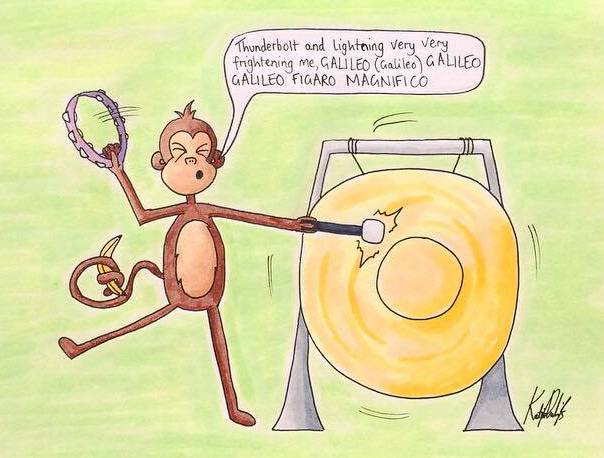
Imagine you have the flu. You cannot sit up because your whole body aches in places you never knew existed, you have a headache that feels like there is a monkey in your brain banging a giant gong and waving a tambourine (to be more specific he is trying to play Bohemian Rhapsody but it isn’t going at all well). You go from hot to cold so quickly that half the time you aren’t sure whether you want to be wrapped in a blanket or to sit in the freezer, and your nose and throat are so clogged with flu rubbish (medical term), that it is physically hard to breathe.
Imagine lying there groaning about how horrendous you are feeling, and then someone comes into the room telling you to keep it down because there is nothing wrong with you, that this is what life is like, that this is how you will spend your entire human existence, that the pain you are feeling is “normal”.
I don’t know about you, but whenever I have the flu or any other unpleasant physical illness, the comforting thing is the thought that it will go away, there is some evil germ doing something horrible in my body but one day it will be gone. It may be frustrating that I can’t get out of bed and have to cancel plans to meet a friend, but in a week or so I will feel more up to it and we can rearrange. Yes, it sucks that I cannot breathe through my nose and that I am drowning in tissues soaked in my own mucus (no need to thank me for that glorious image), but soon all the mucus will be gone and air will start flying up and down my nostrils with refreshing ease again.
When something is diagnosed as an illness, you can look it up, find cures, relate to symptoms that you thought only you felt and find inspiration and hope in people who have recovered from the troubles you are facing. Have a headache that feels like there is a monkey in your head banging a gong and waving a tambourine? Does it kind of sound like he is trying to play Bohemian Rhapsody but is failing miserably and should probably try learning to play the piano instead? Awesome, that is a symptom of an illness you have and should clear up in a few days. You don’t like having the flu, but you like knowing that there is a name for what you are experiencing and you like being able to learn that it will not last forever. It would be a hell of a lot harder for Harry Potter to destroy Voldemort had he not known who or what was the villain he was fighting, but in identifying him, he knew who the enemy was and therefore knew his target/who he should be attacking. By being diagnosed with mental health problems and by giving them names, I can therefore learn about them and work on a strategy to defeat the evil little bastards.
So as I said in the beginning, do I like having mental health problems? No,I hate their existence and whatever devilish lair they sprang from, but I still love, and it is of great comfort to me, that I am diagnosed with them. I know that at the moment I am not “normal”, that I am unwell, so like the person with the flu, I am getting through each hour by hoping that one day when I wake up, I will finally be able to breathe again.
Take care everyone x
Why It Is OK To Give Up On Things That Are Damaging Your Mental Health
As many of you may already know, I am an avid reader. I actually think the distraction and escapism I find in books is my key coping mechanism in living with mental health problems. It is for this “books help me feel better” reason, that a few days ago, I started reading the next novel on my shelf.
I know you shouldn’t make snap judgements with books or anything in life, but ten pages in I was well aware that this book was unlikely to be a new favourite (or to put it bluntly, I absolutely despised this book with every fibre of my being and wept for the poor tree who had sacrificed its life to become paper that was then decimated by the words comprising this hideous monstrosity). I won’t say the title of this work of fiction here because I don’t want to put anyone off reading a book that may be just what they are looking for, so for the purpose of this post let’s just pretend the book was called “The Orange Segment” (the reason being that, as people who have been reading my blog for a while will know, I HATE oranges with a passion similar to my hatred of this particular work of fiction).
Now, this was a book I was reading by choice/“for pleasure”, to relax and to try to escape a little from the confines of my head. It was not a book that I was being told I had to read for any educational purposes, and I was not being held up at orange point (very much like gun point but instead of shooting bullets at you the bad guy throws tiny clementines at your head), with the threat of being pelted with vile citrus fruits were I not to finish.
Therefore I was well within my rights to put the book down, pick an alternative, and try again. But I couldn’t.
You see when it comes to books/anything in life, I am adamant that whatever challenges face me, I will not give up. I am the kind of person who will run for a train that has already left just to stop my head beating me up that I am a failure who “didn’t even try to stop the train with their bare hands”, and this determination has served me well in some circumstances. People are always saying that once I set my mind to a task I will jolly well do it, and I have always thought this to be a positive thing. That was until I read The Orange Segment and found myself unable to put down it down, instead being forced to sit staring at an intimidating 500 pages of hell before me. In all honesty the mere thought of reading another word made me burst into uncontrollable sobs, I dreaded the next few weeks of using the tiny bits of free time I have between mental health appointments and rituals to spend time reading something that was making me feel miserable, and it was then that I realised that this internal voice of pressure in my brain yelling at me was utterly ridiculous.
Lately in life, I have noticed that society seems to have some kind of obsession with persevering. WITH EVERYTHING.
They say that if you live in England you are never more than 20 feet away from a rat, but to be honest I feel it is more a fact of you are never more than 20 feet away from some poster telling you something “encouraging” like “Quitters never win”, “Keep calm and carry on”, “Just do it” or the ever popular “Never Give Up”.
To an extent I agree with this “just keep going through the hard stuff” attitude. Without perseverance we would probably all still merely be a sperm cell snuggled up under a blanket somewhere watching repeats of Friends on a very tiny television with no interest in swimming in search of some much discussed “egg”. However, lately I think this obsession with perseverance has become a little overwhelming and the pressure people seem to feel to succeed and not “be a failure” is not helping anyone, especially when you have mental health problems making you miserable and leaving you feeling like a waste of space who can’t achieve anything anyway.
Indeed, mental health issues or not, I think this craze of never quitting anything and quitting being seen as “weak” or “easy” is a lot of pressure for anyone, with nobody offering the possibility that sometimes noticing that something isn’t working and changing your course of action is actually a very strong and difficult thing to do.
Why should people always have to run themselves into the ground in every task they try to accomplish no matter what the consequences? What the hell is wrong with giving up on something, quitting an activity once in a while if it is not helping your emotional wellbeing or making problems you already have worse? Cheryl Tweedy/Cole/Fernandez Versini/Whatever her name is has always told us that in relationships we feel are breaking down we must “fight fight fight fight fight for this love” but does that mean there is no excuse for giving up on something that no longer makes you happy? Do two people have to stay in a relationship that is making them both miserable because to give up is weak? ANSWER ME THAT CHERYL. ANSWER ME THAT.
What about hobbies? What if you decided to run a marathon and then six months into training realised that you had a deep hatred of long distance running (I don’t know why it would take you six months to learn something I grasped in five minutes of cross country at school but I suppose we all learn at different speeds). Should you keep running regardless because in life you should “never give up?”. I am all for perseverance and determination but if something is making you miserable why the hell is it so frowned upon to walk away (at a glacial pace as we have already discovered that we do not enjoy running).
Had I listened to that pressure to not give up, I would have forced myself to read The Orange Segment for no reason other than to shut up this horrible voice in my head telling me to keep going, but after my realisation, I actually challenged myself to put down the book and never to pick it up again. Immediately I was overwhelmed with guilt. I felt I had to pick the book up and finish no matter what, or else I would be some weak and terrible person. It was then that I decided that I needed to write this post for people who struggle with a similar “YOU CANNOT GIVE UP” dictator who is damaging their mental health.
To all of those people, I simply want to let you know that as great as persevering is, sometimes quitting is pretty ok too, and if you need to quit something, be that a job or a damaging relationship that is having negative effects on your mental health, that is ok and does not make you weak.
Now, I do not want this post to be interpreted as a call for everyone to stop doing every activity in life that doesn’t bring them joy and benefit their mental health. If we never did things we didn’t want to do, none of us would go to the dentist, have jobs or meet the in-laws for Sunday lunch (I don’t have in-laws personally but I hear that this kind of thing is something few people look forward to). No, I am not telling you to give up everything that makes you miserable, I am saying give up all the unnecessary baggage and things you put yourself through like bad books or horrendous jobs that are doing nothing for your mental health other than make it worse. If you are similar to me in that you have internalised this pressure to “never give up” to the extreme, when you find yourself doing something you hate, to see whether or not it is a good idea to quit, I would say you should ask yourself one thing, that being:
“Is this going to benefit me in the long term”
This way I think it helps avoid what some people could assume to be a blog post about never doing anything. Indeed, this whole “it is ok to quit” attitude could be used by people to justify giving up on mental health recovery for example. As we all know, recovery is not all jolly fun and challenging yourself to face your greatest fears is not something that makes anyone happy or feels any benefit to mental health…in the short term.
In the long term however, as painful as it is in the moment, challenges in recovery like eating a scary plate of food or touching a door handle are beneficial to your future mental health and are overall good things to persevere through for the pay off, just as revision for exams is worth it when you get the results you achieved by working so hard. Asking this question also avoids “well I hate my job so I am leaving today” issues but it also allows for that too. If you are stuck in a job you hate and have no legal obligation/monetary need to continue, why do it? Just so you can not be seen as not quitting what most people would see as a wise career choice? If you have a job you hate and there is an end goal in sight or a long term benefit of “if I just get through this placement I can advance to a level I actually want to be in”, “I will just keep going until I get another job” or “if I just stick out another year I will have the money to take that course I want to attend” then by all means, keep going.
However, if it is a job you hate, that will only get you a career that will be damaging to your mental health without looking for an alternative, all because of this mental pressure yelling either “it is a good career most people want so you must want it too” or “giving up on my job because of depression means you are weak and a quitter” then dear Lord my friend quit right now. Much like I shouldn’t feel shame for not reading that godforsaken book, nobody should be ashamed for giving up on something if it is bad for them just because the act of “giving up” is bad in itself. If you need to quit your job or quit a hobby that you cannot manage anymore, do it, and don’t ever feel weak or ashamed for taking control and doing what is best for your mental health and wellbeing.
Overall then, if you are reading this and don’t hate anything in your life, then I guess you don’t have to do anything with this post (though thank you very much for reading anyway and feel free to share this with all your friends and family incase they are struggling with mental pressure not to quit too). If you are reading this however, and you can think of something you are doing, whether that be continuing a damaging relationship, something big like a career that is damaging your mental wellbeing, or something small like reading a book you hate, then I would like to challenge you right now/give you permission to quit that detrimental thing and move on to something else that is more worth your time. Not giving up on things at the first sign of trouble is a valuable quality to have, but it is also important to acknowledge that in life, when it comes to finding happiness, sometimes quitting a trip in the wrong direction is the only way to discover the path that is going in the right one.

Why Baby Steps Are More Important Than New Year’s Resolutions In Mental Health Recovery
There are two kinds of people in this world, those who like and make New Year’s resolutions, and those who think that New Year’s resolutions are pointless and should actually be renamed as “things you try to do all year but give up on by February”. I myself however, am somewhat in the middle of these two kinds of people (much like I am on the whole Marmite debate. I don’t love it, nor do I hate it. I am truly indifferent…WHAT DOES THIS MEAN).
I actually like the idea behind New Year’s resolutions. I think it is good to see the new year as a chance to improve on whatever happened in the previous one, see it as a fresh start and a clean slate without all the baggage you have dragged around for the past twelve months. That said, I have not made a New Year’s resolution myself since 2010, and that is because I feel that when people make these promises to change, they are far too ambitious and unattainable. They set themselves tasks like “fly to the moon” or “play tennis at Wimbledon” when they haven’t yet thought to apply to astronaut school or pick up a racket. Back in 2010 I made three new years resolutions, those being:
- Be happy all the time
- No anorexia
- No OCD
As midnight approached I felt a surge of excitement. The moment that clock chimed (lets pretend we still live in a time where it is common to have a grandfather clock that chimes..it is a nicer image than me staring at the digital numbers on my phone waiting for 23:59 to become 00:00), my life was going to change, I was determined, and I had made a promise to myself that 2011 was going to be better. Then it happened. The clock struck midnight, and suddenly my carriage that had brought me to the party turned into a pumpkin and I lost a glass slipper!…Wait..no sorry…got mixed up in the life of someone else a little…no, what actually happened was the clock struck midnight and I felt a weight fall from my shoulders (much like a glass slipper was slipping from the sole of a future princess…)
Finally 2011 was here and I was recovered, I never had to do an OCD ritual again, I could eat and I would be smiling for the rest of my life. Looking back I can’t believe I was so deluded, but the first thing I did in 2011 was to run to the bathroom to wash my hands once, just to prove that I was in control again and could stop easily after one squirt of soap. But I didn’t stop. After the squirt had been collected in to my hands my thoughts immediately burst in and I found myself rubbing my hands together vigorously with the same urgency as I had done in 2010. I became incredibly stuck, thoughts flying so rapidly that before I knew it a significant amount of time had passed, over 100 squirts of soap had been used and the only thing I could see through the tears of despair and frustration was a basin full of bubbles. As I went back downstairs to join the others still milling around drinking champagne and watching the odd late firework banging about in the distance, I felt totally defeated. I had failed. I hadn’t even kept my resolution for 24 hours before engaging in the behaviours I told myself I was finished with, and my hopes for change fizzled out like an old sparkler. Granted I was being a bit dramatic by seeing the whole year as ruined and giving up because of one ritual, but logically because of the strict boundaries of “No” OCD, I had in essence failed, so what was the point carrying on? Clearly recovery was impossible.
It is only now looking back that I realise that the problem with my resolution and the reason I had “failed” was entirely the wording and dramatic nature of the resolution I had made. I didn’t set myself a manageable goal of trying to reduce the amount of time in the shower over the course of the year or anything reasonable, a goal that would focus on steady progress with potential slip ups yet still a continuous effort to push forward. Instead I had set myself the impossible task of transforming from a person who had been dominated by mental health problems for the last 7 years to a “normal person” in less than 7 seconds, which is pretty much like someone setting the goal of “flying to the moon” without realising all the steps it takes to get to that point.
Admittedly, I have always struggled with people telling me to “take things steady” and “take baby steps” when it comes to recovery. I am a very black and white person, either I am better or I am not, “baby steps” and little goals like “exercise for five minutes less per day” do not help me. I want total freedom from this mental health cage, not just the same cage with an ocean view.
However, my attitude to all this recently underwent a bit of refurbishment when I was glancing through pictures on Facebook and stumbled across a photograph that I posted online in 2014 to commemorate the fact that I had graduated from university, and for the first time, as I looked at the picture, taking “baby steps” made some sense.

As you can see this picture is a comparison shot between little 4 year old me on my first day of school, and 22 year old me graduating from university after a rocky 18 years bumbling through the education system (I look pretty happy in that picture but that was because my mum took it before I found out I wasn’t allowed to keep the funny hat and gown. That was a major disappointment. The only thing I got out of that day was a piece of paper saying I had a theology degree. Who the hell wants that? I didn’t go to university to be educated, I went for the damn hat!)
Looking at these pictures it is very black and white. In one I have a degree (and a marvellous hat), and in the other, I have no degree (and no hat. 4 year old Katie had a hard life). That said, though there is a stark difference in achievement between those two pictures, it isn’t because I made a grand resolution at the age of 4 that changed my life in a second. When I was 4, the thought of getting a degree one day had not entered my mind.
Imagine if someone went back in time now, found little 4 year old me and said “go and get a degree in theology this year”. I would probably have cried (and asked what the hell theology was). When I was 4 there was no way I could just go off and get a degree. I had birthday parties to plan for my teddy bears, letters to write to Santa and hopscotch competitions to attend! I couldn’t tie my shoes yet let alone write essays on Saint Thomas Aquinas or Augustine of Hippo (genuine name…Hippo…it has been years but I am still amused), so setting that goal for me at age four would have been overly ambitious and basically would have set me up to fail.
Had this time travelling person told me to go to school that day however instead of getting a degree right then and there, I would have probably looked at them, nodded and then got on with it. When doing so I wouldn’t have realised that me turning up for a morning of finger painting was actually the first part of my journey to that oh so lovely yet tragically temporary hat (and a degree I am now stuck with forever), but it was. Without achieving all those little steps in-between, the sports days, the story books and the words of wisdom over the years, I would never have got that degree (actually maybe cancel the sports day bit..I don’t think they were particularly important…).
My 2010 new years resolutions to totally recover in the blink of an eye then, were basically the equivalent of me telling 4 year old Katie to go and get a degree before the little tike had learned to read, and it is in realising this that I can see the value in making new years resolutions, as long as they are the baby steps to get you to your goal rather than a leap to success that no Olympic long jumper could make even with a springboard.
If you want to set yourself a resolution for 2017, make a resolution that you can do over time, that allows for mistakes and gradual progress rather than instantaneous results. If you want to recover completely from OCD, make your goal to try and reduced the number of times you get caught in rituals over the course of the year. If you want to recover from depression don’t set the goal of being happy all the time, simply think about the things that could one day make you happy and go out trying to achieve them, even if that goal is just phoning up to enquire about a course. It is the same with progress in eating disorder behaviours as well as any other mental health condition, and though admittedly it takes a lot longer than the midnight miracle method I wished for in 2010, I think it is the only way to make it through this journey.
My hope in life is that one day I will be able to take a picture as someone who is no longer struggling with mental illness and to see it alongside that 4 year old me as a sign of how far I have come in ways other than education, and working towards that is my goal for the next twelve months. 2017 is not going to be “my year”, the year I change, recover totally and get a brand new life, but it is another year in which I will continue my 2016 resolution of doing all I can, listening to professionals, talking and attending all appointments, to one day make that massive goal of recovery. Taking my medication this morning has not made me better, but hopefully it is a baby step along the way.
Happy New Year everyone x

The Loneliness Tea Party Christmas Edition
Remember last month when I asked you all to join me for a cup of tea every few weeks in the interests of battling loneliness with mental health problems? Well get your hot beverage because the Christmas party is about to start and you are all invited! YAY FOR NOT BEING ALONE!
Take care everyone x
5 Tips For Managing A Job Interview When You Have Mental Health Problems
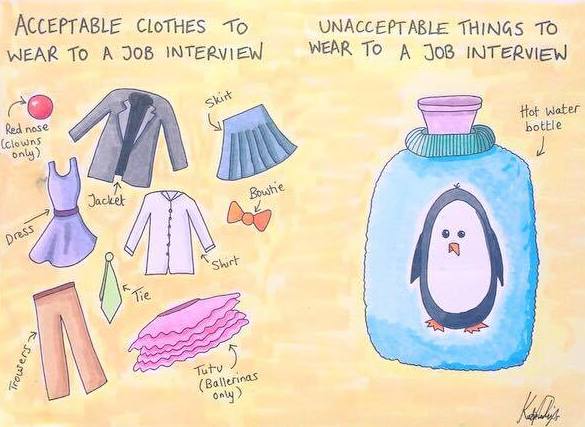
A couple of weeks ago, I had a job interview. Much like most people before an interview, I was terrified, but not exactly for any of the usual reasons for pre-interview nerves. Of course the normal worries like “Am I going to look like an idiot?” “What if I can’t remember my own name?” “What if I can’t answer any of the questions?” were there, yet the leading racers in the anxiety Olympics were all mental health related. My main concerns were things like “Are they going to want to shake hands?” “What if I have a panic attack?” “What if they offer me a biscuit?” and “Is it socially acceptable to go into this interview with a hot water bottle shoved down my trousers?” (admittedly that last one isn’t exactly mental health related but I think we can all agree it isn’t on the list of the most common interview worries…I was just very cold…still, my mother confiscated the hot water bottle because it would make me “look weird”…yeah…I am sure they saw the icicles forming on my chin as totally normal…I’m not bitter at all…)
Prior to the interview then, I had a lot on my mind, and in turn a lot of preparations to make to ensure that I was going to be able to actually get through the interview. This meant that over the course of the experience I learnt a few things, so I thought I would pass them onto you now in case anyone else out there is struggling with the “please hire me by the way I am insane” issue. I can’t say these tips are going to make your job interview a jolly occasion, but in the end, I got the job which the interview was for, so I guess these tips have their uses…
1. Anticipate parts of the interview that are going to cause particular problems: Prior to an interview, there are several things that everyone will think about in preparation. Maybe they will research the company in which they are seeking employment, think about potential questions, or have a google search of the latest updates in the business world so they are prepared for any topic up for discussion. In the same way then, it is important to think about and prepare for any potential events that could be difficult. For example, I was worried about hand shaking, so in preparation I spent the days before the interview anticipating the touching of palms and speaking to people about it to get through some of the anxiety. In practical terms I also found an anti bacterial foam that supposedly lasts for six hours, so I was sure to pack that in order for me to be able to use it before the interview as a sort of protection glove. I then made sure I knew where the nearest bathrooms were for post interview washing. I even prepared how to turn down a biscuit incase one was offered, so anticipate potential mental health hiccups and solve them before they arise. (Thankfully water was the only refreshment offered so I never had to turn down a biscuit…I accepted the water and really wanted to drink it, yet never got a chance because I was too scared of making a slurpy noise. Had it been a job interview for a position as professional slurper I would have drunk the water as fast as I could and been sure to demonstrate all the slurping noises possible but alas, my interviews was not located in an institution that advocated slurping…or hot water bottles stuffed down one’s trousers apparently…)
2. Be realistic: In job interviews, it is sort of an unwritten rule that you say “yes” to everything and worry about consequences later. Can you speak french? Of course you can! You have a french dictionary at home and 24 hours to learn it…what could go wrong? Can you fly? Of course you can! How hard can it be to sprout wings /morph into a sparrow overnight (from experience I can assure you that is VERY hard indeed). As great as it is to say whatever you can to get the job though, it is important to be realistic and not agree to things that your mental health is going to make impossible and that you are consequently going to go home fretting about. If you have social anxiety and can’t speak publicly to a crowd of thousands, do not agree to do so and then regret it later. If there are things you are not going to be able to do, let the people know right away to avoid getting into a difficult situation further down the line. Yes it will be awkward and maybe you won’t get the job if there is a key part of it that your mental health makes impossible, but then again if that is the case, maybe that job isn’t the one for you. In terms of being realistic about actions you can perform, it is also important to be realistic concerning what you can manage when it comes to hours. Accepting a job 24 hours a day 7 days a week when you know it will overwhelm you, interfere with medical appointments and leave you no time to take care of yourself, is never a good idea. Getting the job is important, but taking care of your needs is vital as without looking after yourself you wont be able to perform at work and getting the job will not be a success you can celebrate for long. I for example know that there are multiple aspects to this job that are going to be extremely challenging and on the surface, if I am honest with myself, the hours are more than I think I can realistically handle. However, I made sure only to apply for a Christmas job for 6 weeks so that if I get overwhelmed/it is detrimental, there is at least an end goal in sight.
3. Get there early: Everyone knows you should get to a job interview early purely because being late is not the best way to promote the “great time keeping skills” you bragged about in your CV. Nevertheless, with mental health problems I would always advise not just getting there early enough to ensure you are on time and make a good impression, but getting there super early to allow for potential disaster/to allow you to remove the hot water bottle shoved down your trousers. Obviously you can’t plan what your brain is going to do in advance and it would be unrealistic to decide that you are going to schedule a panic attack for 11:15 so you have time to calm down in time for the interview, but if there is a risk of that kind of thing happening, get there with the time such an event would take spare. If you often have panic attacks, get to the interview with enough time to have one. Even if you don’t have panic attacks but suffer with anxiety, still get there early just to allow yourself to gather your thoughts and carry out any coping mechanisms like listening to a certain song or practicing mindfulness if needed.
4. Do not take rejection personally: One thing I really struggle with when it comes to job interviews/anything in life, is the fact that I take rejection extremely personally. My main worries about not getting the job weren’t about not getting the job in itself, rather they were worries about the effect it would have on my self esteem. For example I know that getting rejected from roles in school plays/not performing as well as I wanted in a test, has always led to difficulties with self harm, self hatred and general feelings of “everyone hates me and this is a sign that they don’t want me to be alive anymore because I am so terrible”. Before you go for the job interview then, try not to build it up to be this majorly important thing on which your value as a person and entire future happiness depends. Don’t see it as something on which your life rests, as ultimately no job is worth that. Maybe even write out some bullet points in case rejection does come to remind you of the rational facts in the situation. When the rejection comes it is likely your thoughts will spiral into the irrational emotional side of the brain so get your pre-rejection rational thoughts in order first. If you don’t get a job it doesn’t mean you are a terrible person/rubbish at everything/doomed to fail in life. It likely means that there were a hell of a lot of applicants and even if you were more than skilled enough, perhaps you just weren’t right for the role or someone else was better suited. If you are a doughnut maker and don’t get a job as a doughnut advocacy speaker it doesn’t mean you don’t make good doughnuts. It might just mean that you were up against a talking doughnut, and lets be real, who is better to speak for doughnut advocacy than a talking doughnut? Nobody, thats who.
5. Be honest: This is the final tip I have to offer but it is also THE most important. When I used to be preparing for interviews I would debate whether or not to tell the potential employer about my mental health problems/how much to say. I always wanted to hide it incase my mental health would stand in my way, yet ultimately that just meant that by hiding my difficulties I made life more difficult for everyone involved. Eventually the truth would always come out, and it would have been a hell of a lot better simply to be honest in the first place. If your mental health affects your life in terms of abilities or availability, let the employer know. Otherwise you will find yourself lying about reasons you need a day off to go to an appointment and having to invent mythical physical diseases to request time off work when really you are having a mental health crisis. For the past few years I have even put my mental health problems somewhere on my CV or within any applications so that everyone is on the same page before I even get an interview. This then makes it easier to talk about in the interview and by being honest both I and the employer can see if the job will be possible/work out ways to make it possible. When I worked in a coffee shop I was open about my fear of touching the hoover and thus allowed to use it whilst wearing rubber gloves saving me a lot of anxiety and excuses to get out of having to use a hoover. Again, like the tip about being realistic, there is always a chance that being honest will affect your chances of getting the job, but if it affects your life so much that it will inevitably cause problems at work, again, maybe that is a job you shouldn’t be applying for.
So there you have it! My top tips for managing job interviews with mental health problems. Now of course I have the mission of managing the actual job itself… To be honest I haven’t figured out how to manage that bit yet, but I guess that is something I will learn along the way. If my experience over these next few weeks does teach me anything about mental health in the workplace though, I will be sure to pass on any helpful lessons to you later.
Take care everyone and good luck with any potential job opportunities. YOU CAN DO IT!
 Born without marbles