The Difficulty Of Dating When You Have A Mental Health Problem

If you have walked into any shops or restaurants in the past few weeks, you may have noticed a lot of brightly coloured hearts in various shades of fuchsia splashed about all over the place. Cards with hearts on, posters with hearts on, even giant teddy bears holding hearts (which is biologically confusing as without the heart how is the bear able to breathe and thus hold the heart at all…unless he is holding someone else’s heart in which case that is pretty damn sinister if you ask me). Funnily enough this is not because February is a month in which humans feel the need to celebrate the life giving aortic pump caged within our ribs (or in the hands of a rather terrifying and possibly murderous teddy bear), all this heart shaped nonsense is because tomorrow is Valentine’s day. Personally I have never understood why you should need a holiday to remind you to let your partner know that you love them, but I suppose it is better to have a day dedicated to love than something horrible like punching puppies in the face. Nevertheless, I still find it quite a difficult holiday as it is one that reminds me all too loudly of the detrimental effect my mental health has on my love life.

To sum up my current “love life” I guess you could simply say that it is non existent and has been this way for several years. During my life, in times in which my mental health has been better, I have somehow managed to have two “proper” relationships thus far, both of which it can be argued ended either because my mental health problems were actively getting worse or because they simply became too overwhelming for my partner (which was totally understandable in both situations.)
I guess in a way it is good that the main reason for both of my relationships collapsing is centred around an illness because at least an illness can be cured and could potentially disappear one day. Had the problem been a weird habit of belting out ABBA’s greatest hits in my sleep, that would perhaps be more frustrating, as to my knowledge there is no cure for that kind of thing. When it comes to OCD, depression and anorexia however, I know there are people who have got better and hopefully one day I will be able to count myself among them.
Truthfully though, I cannot see that happening. I would love it if it did and I will never stop working towards that goal, but realistically the chances are pretty slim, and even professionals have admitted that I am going to struggle with my illnesses for the rest of my life, maybe not to the same extent as I do now, yet chances are they will always be there. Assuming these predictions are right then, any relationship I ever have is going to involve my mental health problems having some kind of an impact, and that is the kind of thing that inspires the classic “I am going to die alone” worry considering my mental health problems have been the destruction of all former attempts at having a partner. I can’t even do what most people who fear this do and resign myself to the identity of being a “crazy cat person” because I don’t think I could handle four little paws spreading potential bacteria around my house let alone a whole litter’s worth… What back up is there to the “crazy cat person” back up plan? The only option is to be simply “the crazy” person…That doesn’t sound fun…

I think relationships are actually one of the biggest struggles faced by people with mental health problems but it is a struggle people rarely talk about because admittedly it feels a little embarrassing. Nevertheless, it is because nobody really talks about it that I think it is so important to talk about it. If I struggle with and worry about this kind of thing whilst feeling totally alone in it, amongst other people my age who are doing things like getting married and giving birth, then there is a high chance that there are other crazy people out there who feel the same and need to know that it isn’t abnormal. Indeed, I think the impact mental health can have on relationships is seriously under reported. The instability of my mood, the inability to touch most things, the compulsion to clean obsessively, body image issues blocking the way to physical intimacy, trust me, the list of obstacles in my way is endless, and those are the problems you face when you have actually managed to get into a relationship in the first place.

Nowadays before you can even get to that stage you have to go through the terrifying minefield that is otherwise known as “dating”. I know that a lot of my friends have been on these “dates”, but mental health wise I cannot get my head around the idea. For one thing, where are they meeting all these people with whom they go on dates?
Usually people come into contact with potential romantic entanglements during social events or hobbies, but because of my mental health I am rarely at social events and my only hobbies are things like repeatedly tapping doorhandles which is a relatively solitary pass time. The only places I tend to go regularly when I leave the house are therapy appointments, so the only people I meet are mental health professionals, and I think it is pretty frowned upon to start dating your psychologist.

Considering we are currently in the age of internet dating you may think that my lack of social skills in real life are no longer an issue as I could easily meet someone on one of these websites like match.com or an app like “Tinder” (WHAT THE HELL IS TINDER. Everyone has it and from what I gather it is just a lot of swiping…what are we swiping…where are things going when we swipe them out of view…should I want to be swiped? WHAT IS GOING ON).
Thing is, though I have never been on any of these websites myself, from what I gather they involve putting pictures of yourself online as well as a brief description of your personality. A brief description of my personality? What the hell can I write there? “Totally bonkers”? Who would look at that and think “well I want to spend the rest of my life with that insane creature”. Of course I could easily lie and write something like “I am a totally sane and calm human who is not crazy at all and likes long walks on the beach” (massive lie. I HATE the beach), but that seems far too much like false advertising. Ok, people false advertise in adverts all the time (like with that mermaid Barbie I wanted when I was 7…she wasn’t a real mermaid! I threw her in the bath and she didn’t even float let alone swim. What kind of mermaid sinks? LIES I SAY), yet despite its acceptability in general life the idea of putting myself online without mentioning my mental health issues isn’t just false advertising, rather it is dishonest. The truth is that at the moment there is no aspect of me that does not involve some kind of mental health complication, and were I to ever get into a relationship again, that would be something that I would have to be open about from the start.

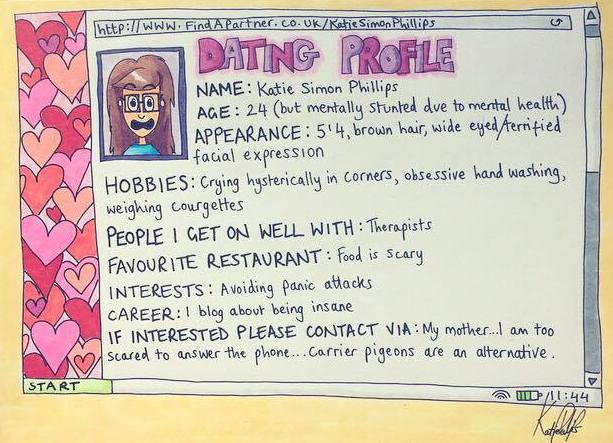
Then even if you have mental health problems and manage to somehow get a date with your restricted daily schedule and unattractively marble free online profile, how the hell do you actually go on the date you somehow acquired? Usually a date will include something like a meal, but with my eating disorder a meal out is basically impossible and in terms of OCD any other activity like bowling is ruled out too. YOU CAN’T BOWL IF YOU ARE UNABLE TO TOUCH THE BALLS. Then there are the obvious issues caused by general anxiety, social anxiety and depression making everything more complicated, as well as OCD worries like the fact I wouldn’t be able to hold open a door for anyone which would look very rude, and that isn’t getting into the inability to hold someone’s hand or touch their skin without panicking. How can you advertise all that on an online dating profile or ask someone on a date in that situation? “Hi, my name is Katie, I would love to go on a date with you…but there can be no food involved or if there is food I will just have to watch you eat…also we can’t do any activity that involves touching objects in public or each other…and I need you to be aware that I might cry at random moments without warning…yeah…thats about it…CALL ME!..but not on my phone…phones are scary…CONTACT MY MOTHER.”

Maybe I am panicking a little too much about all this as I know everyone worries about the whole “dying alone” thing, but I have to say that with mental health problems the whole dating world and romantic stuff does get a lot more complicated. If I put on my optimist’s hat (it is purple with a penguin on), I like to think that in the end I will read this post back one day with my future wife and laugh at what a fuss I made worrying about something that really will be ok in the end.
Reading this back I now realise that I haven’t actually given helpful or constructive advice on how to date or manage a relationship with mental health problems. Instead I have simply splurged my anxieties all over you (apologies for splurging), but I hope that I have started some kind of discussion or raised some awareness as to the impact mental health problems can have on one’s love life. Right now I don’t think I am qualified to give any romance advice anyway, yet if ever I find myself able to manage the dating world rather than panic at the thought, any tips I do learn will be passed on to you. For now at least I have helped my fellow relationship worriers out there know that they are not alone and not a freak for being unable to go on Tinder or go on dates and have fun like everyone else this Valentine’s day.
Even though none of you are my other halves I still send each and every one of you a lot of love this Valentine’s day and every day of the year…You can thank me by getting me a date with Helena Bonham Carter, or at least getting her to call me (and by me, I mean my mother).

Take care everyone x
datingmhproblems

10 Ways To Support Someone With An Eating Disorder

Living with an eating disorder is hell, but I think it is underestimated just how horrendous it can be for the people living with people who have eating disorders. I know many parents, families, partners and friends tend to feel pretty hopeless when watching someone they love slowly drowning, without knowing how to stop it. Almost every day my mum will ask me what she can do to help, like there is some problem solving action she can perform as easily as changing a lightbulb.
I know for a fact that if there were an action she could carry out, my mum would do it in an instant no matter how inconvenient or unpleasant (I think she would even play Pictionary and she HATES Pictionary…weirdo). Unfortunately, eating disorders don’t have quick solutions and no matter how much a loved one wants to help, they cannot fix the problem. They can however support the person, and often these little offerings of support are nowhere near as dramatic as people seem to think. Supporting someone with an eating disorder doesn’t require grand complicated acts of kindness, often you can support someone with little things that don’t take much time or effort at all. So today, I am going to share with you a list of things that I find help me at home aka 10 simple ways you can help someone with an eating disorder.

1. Don’t get angry with the person, get angry with their disorder – When you have an eating disorder in the house/in any relationship, you can guarantee it is going to cause some conflict. I have lost count of the number of arguments I have had with my mum with regard to eating disorder issues like what I am eating for dinner. I honestly don’t think we have ever had an argument about anything that wasn’t mental health related (bar one argument we had in 2002 because she wanted Will Young to win Pop Idol when I was firmly on the side of Gareth Gates. I would like it noted that I can now lift my hands up and admit I was wrong on that one). Just yesterday I am ashamed to say I had an argument with my mother and yelled at her for about half an hour because she tried to help, and unknowingly put my kidney beans in the “wrong pan”.
Afterwards I felt incredibly guilty/like the worst person in the world. This guilt would have eaten me up and is the kind of thing that makes me feel that I don’t deserve food, but after we had all calmed down and I had apologised, what I found helpful is the fact that my mum made it clear that she understood that I hadn’t meant to yell about a bean pan. She knew it had just been the eating disorder taking control, and though I need to work on managing that myself, the acknowledgement that I wasn’t this terrible person who worried more about what pan my beans were in than my mother’s kind attempt at assistance, made me feel more able to continue with the meal.

2. If you are eating with someone with an eating disorder, keep them distracted and don’t make the food the sole focus of the experience – Meal times with someone with an eating disorder are not the most relaxing of situations and can be pretty intense (like one of those awkward dinner parties you see on Come Dine with me only less bitchy and without a voiceover man commenting on every little thing that occurs). For this reason, when I have to eat a meal with someone, I find it really helpful for them to help keep me distracted and not make it all about the food. Silence allows thoughts to creep in at the table, so I would recommend conversation if the person is able or, if they are unable (sometimes I cannot talk very much/think of words because I am so anxious), have the radio on in the background or play a game. Sometimes in hospital we would even do things like crosswords or little quizzes which really helped keep your mind occupied by working on something else (my favourite thing about this was that when there were bank staff they would go through the pile of quiz questions without realising which ones we had already done so we were all able to provide correct answers instantly and looked like geniuses.)

3. Allow them to take baby steps in their recovery rather than expecting miracles overnight – When people are in recovery from any mental health problem, there is often a lot of pressure for progress to be quick so that the problem can be solved and forgotten about as soon as possible. However, recovery is a very slow process and this pressure is often detrimental as it can make a sufferer more anxious and stressed. To help someone who is struggling, allow them to make progress at a steady pace they are comfortable with rather than forcing them to make dramatic changes which ultimately will not be sustainable.

4. Praise them…or don’t praise them at all – I have many friends who appreciate a little “well done” or similar nudge of encouragement after a meal to make them feel supported and like their hard work hasn’t gone unnoticed, so offering those words of praise can be a great way to support a loved one. That said, I know there are others, (me included) who actually find this more unhelpful, as they like to leave the table and forget everything rather than acknowledge the meal that has just been consumed. Denial may not be the best way to deal with mealtimes, but at the moment denial is how I cope, so I am helped by nobody commenting on how fantastic it is that I have cleared my plate. For this one then, maybe ask the person you are supporting to see whether praise would be helpful to them before whipping out the party poppers to celebrate an empty bowl of cereal.

5. Try to be as relaxed as possible at the dinner table – When I sit at the table, I am always anxious, and when I can see that other people are anxious, it makes me more anxious. This then makes them more anxious and before you know we are left with a table of people panicking about a meal that hasn’t even happened yet. For this reason when supporting someone at a meal time, if possible try to be calm and relaxed to show that the situation isn’t anything to be afraid of, rather than freaking  yourself out and condoning the “THE TABLE IS A SCARY PLACE” fear.

6. Seek support for yourself – People with eating disorders need support and so do the people around them. As important as it is for carers to have an outlet somewhere to discuss their concerns and worries though, it is helpful to make that outlet someone other than the person who is struggling. When you feel that you are a terrible person who is ruining everyone’s lives because you cant eat normally, emotional outpourings condoning that are only going to make things worse. Ultimately then for this one, support someone by finding support and seeking help for yourself too.

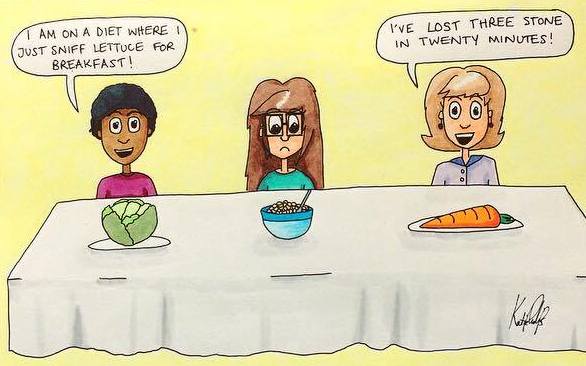
7. Keep diet talk to a minimum if you are on a diet – Obviously when you have an eating disorder, people being on diets can be rather triggering. That said you cannot dictate that nobody who lives with someone who is struggling is allowed to have any say in what they eat. Naturally we all have needs and some people may be prescribed special diets from a doctor which of course they should follow. If this is the case however, the best way to help the sufferer manage the situation is to not make a song and dance about it (aka no conga lines for the fact you have switched to low fat yoghurt and if possible none of those “I LOST THREE STONE” certificates which diet clubs award people plastered all over the fridge).

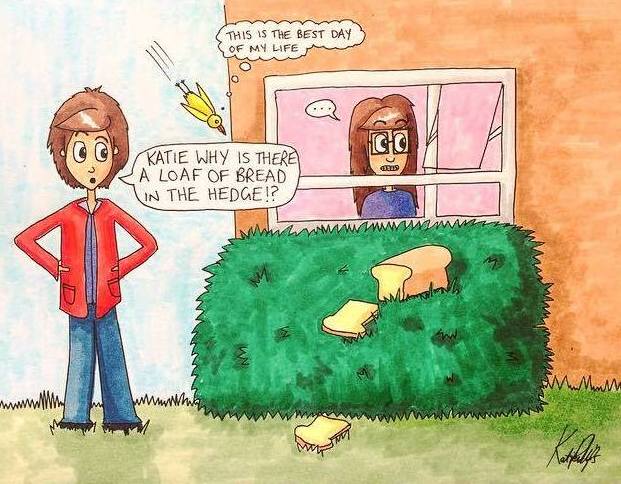
8. Know their meal plan – Again this one depends from sufferer to sufferer but personally I find it helpful when those around me know what is on and what is expected of me in my meal plan as it makes me accountable in some way. Obviously the goal is to get to a point where I don’t need people to know what I should be eating and am able to be responsible myself, but right now my mum having a copy of my meal plan supports me every day. That way, when I am struggling and want to miss things out, I know that it is not a case of “nobody will notice so just throw the bread out of the window” as my mum would immediately wonder where the soft wholemeal has gone (and why there is half a loaf of Hovis stuck in the garden hedge)…

9. Don’t treat them like a disorder – When people see or think of me, I always feel they think of me as “the one with the eating disorder” and that I have no other identifiers to me as a person. It is therefore helpful when living with someone with an ED, to treat them as a normal person with other interests and hobbies so as to remind them that they are more than their disorder and will ultimately still have an identity left, even when the disorder is gone.

10. Do not comment on their meal plan or their body weight – This last one is probably fairly obvious but nevertheless very important so I had to include it. Whatever you do and if you only follow one of these tips as to how to support a loved one, make it this one and for the love of all that is holy NEVER comment on how much weight someone has gained on their recovery meal plan and NEVER comment on how big someone’s meal is. Eating disorder recovery meal plans may look totally normal but there are some that may perhaps be bigger than normal. Whatever the meal plan though, the person will need all the food prescribed to treat their malnourished body and repair all of the damage that has been done internally. If someone is soldiering through their meal plan trying to reassure themselves of this, the last thing they need is a comment like “blimey that is a lot of food, I couldn’t eat that”. Hand on heart a bank HCA in hospital with no experience in eating disorders sat next to me one meal time and after I had finished my main/was picking a spoon up to dive into my rhubarb crumble with custard, they commented “I don’t know how you can eat that. My main course was half the size of yours and I am already too full to eat another bite”…THAT IS NOT HELPFUL INFORMATION.

So there you have it, ten ways in which family/friends can support people with eating disorders (at least in my experience), without actually having to do much at all. Being desperate to help a loved one and wanting to support them doesn’t have to be carried out in dramatic acts like white water rafting or playing Pictionary, Sometimes all you need do to be the most helpful and make the biggest difference, is the little things like asking them for help with a crossword over their cornflakes or giving an encouraging nod at lunchtime.

Take care everyone x

supportsomeonewithed

How To Deal With People On Diets When You Are In Recovery From An Eating Disorder

When it comes to treating an eating disorder, there are about a million ways out there that people go about it. It is like the overall goal of recovery is the Triwizard cup from the Triwizard tournament played out during Harry Potter and the Goblet of Fire, and all people with eating disorders are standing inside this perilous maze running down various paths to try and find their way to victory in recovery (and hopefully not a surprise encounter with Voldemort as happened to Harry. By God that was unfortunate). Some people take the path of medication, others attend groups, try various different kinds of therapies, visit hypnotists, but of all eating disorder recovery journeys you can guarantee they will all, at some point, share something in common: a meal plan. Sometimes people construct these meal plans themselves, others are prescribed them by therapists or dieticians, and some have their meal plans dictated by doctors and nurses in a hospital setting.
Obviously eating the meal plan is hard enough in terms of having an eating disorder and the thoughts that go alongside that, but one thing that can make following your meal plan a hell of a lot harder than just carrying out the basic set of instructions, is the almighty trigger of people on diets.

Picture the scene. You are sitting there at home, ready to eat your healthy balanced lunch prescribed by your dietician. All your basic food groups are present (protein was a little late to the table as he got held up by a tractor on the motorway but everyone is there now). You are anxious but determined to soldier through the meal in your journey to recovery. Then a member of your family comes to join you. You smile and wave, grateful for the company, anticipating a nice bit of conversation to distract you from the eating disorder screaming at you not to pick up the fork, but then the family member sits down. Glancing at their plate, your face falls. All they have is lettuce. THE NERVE OF IT.
If you are anything like me it is around this point that you will start to feel very angry and indignant, and your already difficult task of eating lunch becomes a hell of a lot harder. Suddenly your recovery meal plan lunch looks like it has doubled in size like some unwelcome food multiplication miracle in the style of Jesus and all those loaves and fishes. The already intimidating quantity feels even more excessive and unnecessary than it felt before and the thoughts are churning. “If I eat this when they are just sitting there with a salad I will be greedy”, “clearly I don’t need this much for lunch if that is all they are having for the equivalent meal”, “why should I eat this food when they are allowed to eat lettuce” etc etc. Then things escalate, and before you know it you have hit your lunch time companion over the head with the left over half lettuce in the kitchen, torn up their copy of Slimming World magazine and crumbled any diet pills they were taking to dust, dust which you then sculpt into a giant sand castle prison to lock them in until they agree to eat normally again (not that I have ever thought this through in detail prior to writing this post you understand). Basically, it sucks, but for all you people out there who struggle with this trigger, never fear, for I have words of potential wisdom that I hope will help, as there is a key thing to remember in all of this.

The most important thing to remind yourself when you are at that table, eating your recovery meal plan around potentially salad chomping dieters, is that you are in a completely different situation to that person, so different and far apart in fact that you are actually not even on the same table.
If you are in recovery for an eating disorder and have been prescribed a meal plan to follow, that meal plan is your medicine, and the nonsense in your head trying to tell you not to eat it because someone else is eating less than you, is a voice that makes as much sense as someone with an ear infection refusing to take antibiotics because nobody else in their household is.
Who knows? Maybe that person on a diet has been prescribed their low calorie meal plan by a doctor because their previous diet was giving them health problems, or maybe they are just doing one of those silly fad diets for a few days after an advert they saw in a magazine. Either way, that does not mean that automatically you should not follow the meal plan that is prescribed/necessary for your body, and following it does not make you greedy simply because you are eating “more” than someone else.

When you are at the table trying to eat your meal plan and you are with someone who you know is having less than you, the most helpful thing to focus on for me is imagining the distance in your situations (aka a person with an eating disorder and a body damaged by the effects of starvation and malnutrition vs a person without an eating disorder who is not malnourished), as a genuine distance in physical location.

For example, imagine an explorer standing in the Arctic as representing a person with an eating disorder (for the purpose of this example we will call him Eggbert because I would imagine that people called Eggbert are rather adventurous/like the cold). Eggbert is surrounded by a blizzard, a glacier is rapidly approaching from the North and a polar bear to his left is giving him very funny looks (even the polar bear looks a little on the chilly side despite being designed as fluffy enough for these conditions).
Now picture a holiday maker on a beach in Barbados as representative of people without eating disorders. Doreen, for that is the name of our sand loving pal (actually that’s a lie…her real name is Doris but she had to change her name because she is on the run from the law…SHHHH!), is on a beach in Barbados with temperatures so hot that the local chicken eggs are laid hard boiled.
Now imagine the food aspect of things as a giant pile of coats and blankets.
Eating disorders aside, I think we can all agree that in these circumstances, Eggbert who is shivering with the polar bear in the Arctic, is definitely in need of all the coats and blankets and hot water bottles available to him. Indeed it is vital for Eggbert’s survival for him to take those things on board and snuggle up regardless of what Doreen is wearing on her beach in Barbados. By keeping all of the blankets to himself and not sharing some with Doreen somehow, Eggbert is not greedy, he just is at a place in life where he has different needs to Doreen to keep him alive. It is a situation in which Eggbert is using necessary resources to keep himself safe, and he still needs all those blankets and hot water bottles even if Doreen is lying elsewhere on a beach towel fully nude (AVERT YOUR EYES CHILDREN).

That may sound a bit of a drastic difference in situation to illustrate the point, but it is vital to acknowledge the difference in situation between you and the person you are eating lunch with if they are eating less than you. You are not on a weight loss diet because you do not need to lose weight, their diet magazines do not apply to you, and if you tried to attend their weekly weight loss sessions for more weight loss tips you would be turned away. As hard as it is, you really do just have to cut that person’s weight loss mission, diet and exercise out of your life and not allow the voice to trigger you to use someone else’s behaviour as a reason to avoid doing what you need to do. As with needing jackets in the Arctic, you need the food, even if the person sitting next to you is as naked as the day they were born and munching on lettuce. What a lovely image to end a post on. I really hope you enjoy it.

Take care everyone x

newyeardiets

52 Non-Food Related Ways To Celebrate Christmas When You Struggle With An Eating Disorder

If there is one group of creatures on earth who find Christmas dinner more stressful than all the turkeys out there do, it is people with eating disorders. Actually scrap that, when it comes to having an eating disorder it isn’t simply Christmas dinner that is stressful, it is the entire build up over the festive season when suddenly it feels as if EVERYTHING is about food.
There are Christmas meals out with friends to attend, boxes of chocolates being thrust under your nose at every turn, Christmas puddings, mince pies, Christmas cake, chocolate log and mile upon mile of buffet tables. You can’t even look at a calendar to see what the date is in December without it trying to throw a chocolate at you!
Don’t get me wrong, I love all of the Christmas food traditions we celebrate with in order to make the season extra special and I do not want the food aspect of Christmas to be banished forever. Indeed I love the idea of building gingerbread houses, opening the door on your advent calendar to see what shape chocolate you will find that day and the tradition of turning all the lights off, setting fire to the Christmas pudding and sitting for several moments “oohing” and “ahhing” at the blue flames waltzing across their dried fruit dome of a dance floor. Nevertheless, as fun as all the food aspects of Christmas can be, with an eating disorder they can be incredibly stressful and thus make December a particularly difficult time of year, especially if you find yourself unable to join in with the traditions your loved ones are carrying out and thus feeling more isolated than usual.

For this reason then, I thought I would use today’s blog post to offer a list of suggestions of ways to celebrate Christmas that aren’t food related. Obviously if you find you are able to join in with the usual food activities then by gum join in and have a jolly old time (does anyone say “by gum” anymore…I quite like it…screw it I am bringing it back), but if you can’t, allow me to offer up some new potential traditions that will hopefully get you into the festive spirit without all the festive anxiety…

The Official Born Without Marbles List Of Alternative Non-Food Related Ways To Celebrate Christmas

  1. Buy a live Christmas turkey and take care of it
  2. Go carol singing (if you sing like I do your neighbours may not be thrilled about you knocking on the door whilst belting out “Good King Wenceslas” but if you do it with enough enthusiasm I am sure they will enjoy it in the end. Maybe include hand gestures to go along with the lyrics or a intricately choreographed dance routine.)
  3. Make Christmas wreaths
  4. Buy an entire supermarket’s supply of crackers and have an evening of cracker pulling madness
  5. Perform a fashion show wearing all the paper hats you earned in your cracker pulling evening
  6. Perform a stand up routine of all the jokes you earned in your cracker pulling evening
  7. Stop performing and take a break by watching a Christmas film (I am a sucker for “Love Actually”…until the part where Emma Thompson cries to Joanie Mitchell because Snape bought a necklace for a home wrecker…OH GOD HERE COME THE TEARS)
  8. Dry the tears you have cried watching Love Actually and read a Christmas book instead (my personal favourite is the classic Christmas Carol by Charles Dickens.)
  9. Dress up as an elf and dance around the streets
  10. Play Monopoly and get into an argument with a family member about who gets to be the silver dog (nothing says Christmas like a board game argument involving statements like “No, I am the dog. You can be the iron!’)
  11. Plant a Christmas tree
  12. Decorate a Christmas tree (hint, it is has been scientifically proven that the beauty of a Christmas tree increases dramatically when decorations are penguin themed)..
  13. Find the machine they used in the film “Honey I shrunk the kids”, miniaturise yourself, whack on some wings and a wand and then sit on the top of your Christmas tree to be the family fairy on top (maybe take a cushion to avoid spikes. Fir trees can be prickly)
  14. Make a Christmas present filled shoe box and donate it to a charity who send out gifts to those who need a present
  15. Grow a beard
  16. Dye beard white
  17. Stroke beard and shout “Ho Ho Ho” at passers by
  18. Hang out with a reindeer
  19. Put fairy lights all over the front of your house and enjoy the groups of strangers that gather at your doorstep to appreciate your display
  20. Volunteer with a charity to help take care of those who are alone at Christmas
  21. If you are a Christian/fancy something a bit traditional, go to church
  22. Invite burglars into your household and then take them down with paint cans and tarantulas in a re-enactment of the classic Christmas film Home Alone with Macaulay Culkin
  23. Come up with a good explanation as to why the house is a state and why there are two unconscious burglars in the basement for when your parents/house mates return home
  24. Find snow
  25. Go sledding
  26. Go skiing
  27. Build a snowman
  28. Direct your own one man nativity play (I will leave it up to you to decide how to simultaneously play a sheep, the Virgin Mary, Joseph and the baby Jesus…you are the director after all)
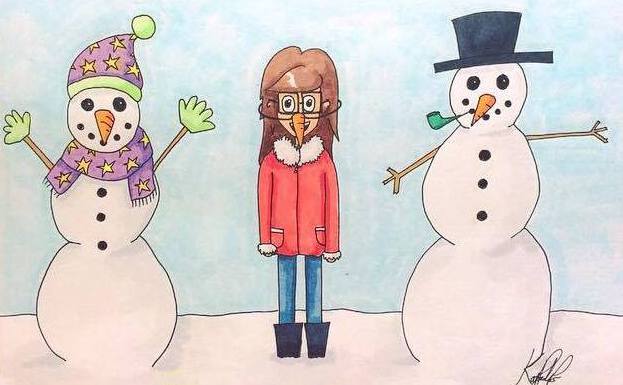
  29. Tie a carrot to your nose and stand in people’s gardens pretending to be a snow man
  30. Make Christmas cards
  31. Knit your own Christmas stocking
  32. Find Santa’s workshop and offer to help making all the presents this year
  33. Make your own advent calendar and hide treats that are not food related behind all the doors
  34. Go and watch a pantomime (if you find it hard to find the theatre on the night of the performance just turn around. Chances are it’s behind you)
  35. Stand under the mistletoe and wait…
  36. Keep waiting…
  37. Keep waiting…
  38. Just a little longer…
  39. Give up standing under the mistletoe and run to a mirror. Stare at your reflection and then compliment yourself out loud with the utmost sincerity because you are beautiful and if people don’t kiss you under the mistletoe then it is their loss/a sign of their bad taste/not a reflection on your personal levels of fabulousness.
  40. Tinsel. I am not sure what exactly you can do with tinsel but it is christmassy and not food related so do something with it.
  41. Find a pregnant lady called Mary and ask if she would mind coming with you to give birth in a barn where the cattle are lowing
  42. Lie any babies born in a manger
  43. Offer the baby Frankincense
  44. When the baby turns its nose up at frankincense (literally…that stuff STINKS), offer it a rattle instead
  45. Play pin the tail on the reindeer (WITH A PAPER REINDEER PLEASE)
  46. Go ice skating
  47. Sit under a fir tree with a bow on your head and pretend to be a present
  48. Laugh at all the fools who actually mistake you for a present
  49. Jingle some bells (jingle them ALL the way)
  50. Find loved ones
  51. Hug loved ones
  52. Scout the supermarkets from the 22nd of December onwards to see which one starts selling easter eggs first. The first place winner gets nothing at all as a reward and should be ashamed of themselves for perpetuating consumerism/the capitalist agenda.

So there you have it! A list of fifty-two alternative ways to celebrate Christmas when you have an eating disorder. Of course part of me hates writing this post and in an ideal world I would simply tell you all to just join in with everyone else and the “normal” food related activities rather than having to follow any of my suggestions (fabulous though they may be).
As any sufferers out there will know, eating disorders are soul destroying, potentially fatal illnesses that should not be allowed to dictate and ruin your Christmas. They shouldn’t dictate your behaviours, interfere with your ability to be “Merry and bright” and make social interactions around a crowded dinner table utterly terrifying, but unfortunately, a lot of the time, no matter how hard you try, eating disorders do all of those things without caring as to whether they should or shouldn’t.

That is why I have made this list. It is not because I agree with any of your eating disorders telling you that you can’t join in or that there is anything wrong with the food celebrations at Christmas time, but because this is not an ideal world (remember, this was the year Mary Berry left The Great British Bake off), and as much as I wish I could wave a magic wand and banish your eating disorders to enable you to have the ED free christmases you deserve, I know that such a dream is vastly overestimating my abilities as a magician.
Hopefully one day there wont be any eating disorders so this post and these alternative Christmas celebration activities won’t be necessary anymore, but until then I just want to try and help you come up with ways that you CAN join in at Christmas regardless of your eating disorders so that you don’t have to hide all December and become lonelier than the last toffee penny in a tin of quality street.
I have every faith that we will all eventually get to the day where the highlight of Christmas is a roast dinner and flaming pudding with all the family. Until then though, let’s just find fun where we can, knit our stockings and look forward to a time when all of this mental pain is a thing of the past.

Take care everyone x

snowmaned

A Message To All The People Out There Who Are “Pro-Ana”

Before I get on with the main bulk of this post I just want to preface it by clearly stating the fact that eating disorders are not a choice and are horrible illnesses that barge into and take people’s lives without those people having a chance to stop the aforementioned barging. However, as involuntary as eating disorders are, there are some people out there who for some reason see them as a glamorous and desirable life choice/thing to aspire to. It is to THESE people and not all involuntary sufferers out there, to whom I address this post. All clear? Cool, let’s get on with it…

In life, there are many types of people that I do not understand. For example, I do not understand people who eat a piece of Christmas cake and leave the icing/marzipan behind (THAT IS THE BEST PART WITHOUT THAT IT IS JUST RAISINS), neither do I understand the people planning to vote for Donald Trump in the upcoming election. Possibly the most confusing people to me however, are those who frequent “pro anorexia” websites online (yeah. That’s right. They confuse me even more than Donald Trump supporters. At least Donald Trump has floppy hair you can laugh at when he is spouting bile. Anorexia has no floppy hair and therefore no room for visual comedy). If you didn’t know already, pro-anorexia websites are basically as horrendously sick and disturbing as they sound. Having avoided them like the plague myself, I cannot provide an in depth image as to what they show, but from what I gather it is pretty much a lot of pictures of skeletal bodies that people stare at in order to inspire them to achieve the beauty of collarbones that make you look like you have swallowed a coat hanger. There also may be forums where people can discuss diet tips, encourage each other not to eat and who generally see anorexia as something that is desirable, that they want to have (hence the ‘pro’ in the name).

Now I am not one to tell people what to do. When I do not understand someone’s life choices I am not going to stand in their way and insist they change their deepest desires. Though I do not understand people who leave the icing and marzipan from the top of Christmas cakes (or indeed people who choose to eat Christmas cake when the other option is chocolate log…there is no decision there…obviously it is chocolate log every time), I have never spied an icing abandoner, approached them in outrage and chased them down the street waving the forgotten almond paste and fondant. This is because although I do not understand this behaviour, I trust that they have tried icing before and following the full experience and all the knowledge available, they know that cake without icing is really what they want.
When it comes to people who want eating disorders however, I simply cannot allow myself to sit back and let them make these life “choices”, as in my eyes the only person who would ever make such a decision as to get an eating disorder would be a poor uninformed soul who doesn’t really know what they are getting into. For this reason then, today I thought I would just write a little post to all those people who want eating disorders, in order for them to realise what life with an eating disorder really is like. Basically I am enlarging the font of the little set of “terms and conditions” that accompany the joy of being thin and not eating, so that people can be sure it is what they want. So to all people who want to have an eating disorder, that is cool, but before you go ahead and seek one out, here are a few things that I want you all to know:

1. Eating Disorders are not great for your physical health: Not eating is great and all but it is important to be aware that not eating is potentially fatal and is the reason that eating disorders are the number one killers in terms of mental health problems. Even if you don’t die they will definitely wreck your body, so before investing in an eating disorder you may want to say goodbye to your health first, as lord knows you wont be seeing it for a while. For one thing your hair is going to fall out in clumps, your skin is going to become dry and pale and you will probably have bags under your eyes so big that you can fit a week’s food shop in them (no more paying 5p for a carrier from Tesco for you! Bargain!). You are also going to be freezing cold all the time no matter what the weather, so in preparation you may want to purchase forty to fifty hot water bottles, blankets and thick thermal fleecy undergarments (sexy). This does have the benefit of making you a good pastry chef (as all bake off fans will know, cold hands are essential to a good apple pie), but on the down side you won’t be able to eat that pastry without agonising guilt afterwards… Also you may want to buy a wheel chair or walking stick as eating disorders love to screw with your bones (picture anorexia as a dog having a good old gnaw on your elbow until most of the bone has chipped away, leaving an osteoporosis filled powder). Oh yeah, and if you want kids anorexia will probably render you infertile too, but hey, who cares! You will save a tonne on child care and you get to be thin right? Wrong…

2. Eating Disorders do not make you thin: This disclaimer is a tricky one but allow me to explain. Basically there seems to be this idea that when you have an eating disorder attacking your mind, this will be physically evident in a lot of weight loss. For one thing, not all eating disorders involve weight loss, and for another thing even if they do, you will not be able to appreciate it. Sure you will be able to get on the scales and see the numbers go down but when you look at the reflection in the mirror it is likely you will not see that weight loss at all. Interestingly, when you don’t eat enough and become underweight, self perception becomes more and more distorted, so you may even see yourself as having gained when really the opposite is true. Its just a fun little game eating disorders like to play (the jokers!), so if wanting an eating disorder to “look thin” then maybe look elsewhere in terms of life goals and ambitions as looking thin is not a package deal with an eating disorder. The physical complications mentioned above are a package deal no matter what though, so no worries there.

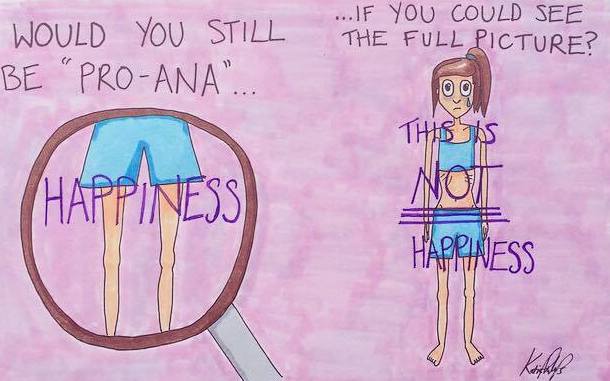
3. Eating Disorders do not make you happy: Much like the myth that eating disorders make you thin, there is the idea that they will make you happy (probably because there is the association that being thin makes you happy but the happiness idea remains nonetheless). Yeah, if you want an eating disorder because you think it will make you happier, once again I would advise you to reconsider, as being undernourished is actually a way to encourage our good friend depression to join the party rather than the desired eternal bliss. Often anxiety will pop round too, so again be aware that those two delights are part of the package deal. You will often note that in these pictures on ‘thinspiration’ websites there will often be “models” without a face (primarily the images show thigh gaps and rib cages), and the reason for this is because were consumers to see the full image, the whole thing wouldn’t look so appealing. After all it is a lot more difficult to sell the idea of how beautiful a hipbone is when the owner of said bone is crying and waiting for the pain inside to end.

4. Eating disorders will mess up your social life: Aside from the effects eating disorders will have on your body and mood, it is also important to note that they affect your social life, and by “affect” I mean utterly destroy it until you are left all alone. You can have the best friends in the world but ultimately with all the “catch ups over drinks” and “dinner reservations” you will constantly find yourself avoiding them as you cannot join in with any activity whatsoever. You may be thinking “Ok I will ruin pizza night but I can still go out to play mini golf with friends”. That is a really nice thought, yet alas this will get ruined as well. Even if an activity is not revolving around food, you will still not want to go either because you have exercises to do or because you are too miserable, anxious/hate yourself and are too self conscious to socialise.

5. Eating disorders will/are likely to cause some issues in the workplace: Much like socialising with friends, working or holding down a job will also become impossible with an eating disorder, even if your job is not food related. Again we have the classics of depression and anxiety making it hard to leave the house, as well as the required sick days for your battered physique (you may pick up virus’ and illnesses a lot easier than most people due to damaged immune system, so stock up on the cough syrup). Bigger than that however will be the issue of concentration. Yeah…with an eating disorder your ability to function mentally will spiral away faster than water down a plug hole (especially water down the plug hole in your bath remember as all your hair will have fallen out and blocked the pipes with soggy wodges of entangled strands). Ahh, nothing says “living the life” like a Saturday night spent in the house pulling hair bundles the size of kittens from your drain (top tip: if you put goggly eyes on those bundles they look even more like kittens. They are adorable. Great Christmas presents too and December is coming! Get malting!). With mental functioning at an all time low then, it is likely you will lose any job you do have and money problems will likely follow as well as our old pals who love to join money problems for a party, depression and anxiety!

So that is only five of the terms and conditions important to be aware of when wanting an eating disorder (there are millions, trust me), but I think that for now I have made my point/ helped potential eating disorder investors to be a little more aware of what they are desiring/encouraging when scrolling through those pro anorexia websites. Like I said, I am not one to tell anyone what to do so if these points don’t diminish the glamour of the thigh gap photos, then go ahead and have fun. I just want you to know what you are getting yourself into so you can make an informed decision. There are people out there who want eating disorders, but I doubt they would find the unwelcome surprises that come with them as appealing.

Take care everyone x

pro-anorexia

The Great Eating Disorder Bake Off

If you live in England it is likely you are a viewer of, (or are at least aware of), The Great British bake off, a show otherwise known as “The Greatest Program on Television ever”. Seriously, if you don’t watch it you really should give it a go…That is unless you have an allergic reaction to the phrase “soggy bottom” or deep seated hatred of collections of people baking in tents and having their creations critiqued by a bearded man who likes to squash bread into balls and then complain about the consistency of the bread he has just mashed back into a dough…If that is the case maybe give the bake off a miss…
Luckily, none of those things bother me, so I am able to enjoy the bake off in all of its pun filled, icing topped glory. However, every time the annual bake off rolls around, it always reminds me of a certain symptom common to many people with food related mental health problems. The symptom? Many people with eating disorders are obsessed with baking.

Obviously not everyone who has an eating disorder bakes and not everyone who bakes has an eating disorder (if they did Mary Berry would be in need of some treatment immediately). On the whole though, it is a very common problem that many people are unaware of, and that rarely comes up or gets talked about other than by the people whom it affects. To some of you out there, it may sound a bit ridiculous to write a post about the issue that is eating disorder patients finding any excuse to whip out a spatula. After all what is the problem with a bunch of anorexics liking to bake a few sponges now and again? Why worry when someone with bulimia gets out a wooden spoon and starts sieving flour with eyes squinted in concentration? Why complain about someone bringing fresh homemade cookies into work purely because the baker has been diagnosed with EDNOS? Well, the problem is that often people with eating disorders who are obsessed with baking, are obsessed in a very unhealthy way that can be detrimental in recovery and serve the eating disorder rather than the baker.
Seriously, it is such a common and big issue that many of my disordered friends and indeed I myself, have been placed on multiple “baking bans” by mental health services during treatment for anorexia, an experience much like being a smoker on a smoking ban, only I was rocking back and forth cradling a wooden spoon rather than a packet of tobacco.

Like I said, not everyone who bakes has this problem and the problem isn’t within baking itself. Baking is awesome, and there is nothing like the satisfaction you get from people admiring your perfectly risen soufflé, but the issues arise and things get disordered when the baker dedicates an unusual amount of time to their pursuit, yet refuses to try even a lick of icing from the bakes they produce themselves.

For people who haven’t experienced an eating disorder, this probably doesn’t make much sense. Why would someone with a difficult relationship with food surround themselves and actively go about creating the culinary masterpieces that they themselves fear to sample?
Well, as always I can’t speak for everyone suffering from a mental health problem. Though similar on the surface, we are still all so varied inside (much like how chocolate chip cookies and raisin cookies look alike but are actually completely different). Nevertheless, I thought I would at least try to explain here why I personally love to bake, in the hopes that maybe I will provide an explanation and speak for a few others out there.

When I bake, it isn’t just about taking part in a little hobby to pass the time, it is about serving a purpose in terms of my anorexia.
Don’t get me wrong, by involving food it is still a scary activity (for example I often worry about touching fatty ingredients for fear the fat will sink into my skin or I worry that the smell of a cake has calories in it), but overall baking is an outlet, a thing I can do with food that other people can do, and most importantly, a way I can take part in the cultural aspect of food.

Normally in my life with anorexia, when it comes to food/events related to food, I see myself on the outside of things. Whenever someone has a birthday cake, a dinner party or hands round a box of chocolates at Christmas, I watch it all play out like an observer. In the room but not really involved, almost like I am in a theatre watching a scene being played out on stage whilst I am firmly seated in the audience. For over a decade I haven’t been able to join in with many food related things. I haven’t shared a pizza or bucket of popcorn with a friend, I haven’t accepted a bourbon offered over a cup of tea or indeed eaten something at a meal table that was the same as other people eating around me.
Baking then, serves as a way I can get a bit more involved in all of those things, only without the terror I would associate with joining in like a “normal” person.

When I bake a cake it is as if I can stand on the stage with everyone else rather than having to stay firmly seated in the audience, watching from afar through my little pair of binoculars (this may be an analogy but I am unable to afford good theatre seats.)
Instead, I can bring out the cake for the characters to start eating in the next scene, I have a role, a part to play in the action, I am not merely an observer but up there in the spotlight as “The bringer of cake”.
If people talk about food I haven’t tried or made I cannot join in. When people comment on something I have made however, I am involved. They can ask questions about what is in the bake and I will know the answers. Okay I may not have eaten the food myself, but in creating it, I can relate to it in a way that sounds as educated and informed as if I had. If people comment “oooh is there vanilla in this?”, I don’t have to just stand there staring at the confection trying to spot a pod of vanilla, or turning to other people to see if they can taste vanilla too, I can answer for myself that there is indeed vanilla in the cake, and for one second I can actually feel like a human being, part of something “normal”, joining in.
That is why I love baking despite having an eating disorder that prevents me from tasting any of my creations myself, and perhaps that is why a lot of other people with eating disorders like baking too.

In writing this my aims are not to encourage any disordered bakers out there to pack up the pastry or to tell carers of the mentally ill to confiscate their whisks.
If you enjoy baking and it makes you happy, do it more often, but still I have written this because I think it is important to question yourself if you are one of those bakers who would never consider having a nibble on their own Battenberg, and important for people to be aware of the fact that in some cases, a baking obsession can be a symptom of an eating disorder. If you as a reader ever feel compelled to get busy in the kitchen, my only hope is that you bake your cake and eat it too. Sure it may be nice just to partake in the creative process, to play the role of “the bringer of cake” in scenes you would otherwise watch from the wings, but the experience is a hell of a lot sweeter when you are actually able to fully join in with the eating part and share a Victoria sponge with friends. It is scary, but as a Bake Off challenge I would encourage you all to give it a go, and, if ever in doubt, just ask yourself: What would Mary Berry do?
(Answer: she would eat it, and as a British national treasure you should really follow her example).

greatedbakeoff

Food Demonising And Eating Disorders

During the month of April 2016, the food company that manufactures “Dolmio” pasta sauce issued a health warning telling people that they should not consume certain varieties of their products more than once a week due to high levels of salt, sugar and fat. The next day, the newspapers were covered in ridiculously dramatic headlines like “The Bolognese sauce in your cupboard is plotting to kill you” and “Research suggests it is safer to drink bleach than creamy tomato pasta bake”. Supermarkets gathered up all remaining stocks of Dolmio sauce and threw them into the ocean where over one million fish were knocked unconscious by the sudden downpour of jarred carbonara, and people fled their homes to set up new lives abroad as the sudden media frenzy had inspired such fear in their hearts that they’d rather safely escape from their kitchens without a backwards glance, than risk having a heart attack trying to dispose of a jar of pesto they had foolishly lurking in the cupboard. Now I will admit that this is perhaps a slight exaggeration on what happened after Dolmio’s announcement, but the message I am basically trying to convey here is that some pasta sauce company said there was some sugar and salt in their sauces and absolute chaos ensued.

This chaos probably doesn’t seem worthy of a blog post, especially on a website that focuses on mental health, but the problem is that this whole Dolmio extravaganza is not an isolated incident when it comes to the fact that the world has suddenly become obsessed with “clean eating” and being healthy. Just the other day I saw a headline on a magazine that asked “Which is more dangerous: Carbs or Fat”, a ridiculous question considering the fact that people need carbohydrates and fat to stay alive. It is far more dangerous to not eat enough of those food groups than to eat over whatever amount of grams the government has said is acceptable or required for every single one of us individually, despite vast differences in age, height, weight and exercise regime across the population. Ok too much of certain food groups can be bad for you, but no individual food group is especially dangerous, they all play a part, are all vital, and this food demonising obsession of recent years is incredibly disordered and unhealthy both in terms of mental and physical wellbeing.

Eating healthily is great, but being obsessed with what you eat and counting every calorie, every fat gram and every grain of sugar is not normal and is something that, prior to recent years, I had only seen in fellow people with eating disorders. Food demonising and counting “macros” is such an issue in the eating disorder community that groups are offered to try and challenge these behaviours, which would be a hell of a lot easier if the rest of the world wasn’t suddenly condoning the thoughts and fears around a potato that you have been told are unwarranted.
During one of my hospital admissions there was a brand of cereal bar that we had as part of the meal plan every day. It came in a variety of flavours but I always went for the blueberry one, because it was the lowest calorie option…However, one fateful day at the hospital, disaster struck. WE HAD RUN OUT OF BLUEBERRY. I suggested we should call the police immediately to deal with this heinous crime of cereal bar deprivation, but for some reason the staff thought this was not the way to respond and told me I would have to have another flavour bar. And they call me crazy? Still, as they were the staff, I had little choice in the matter and ended up having a different flavour that was a mere one calorie more. The next day I gained weight at weigh in and I put all the blame on that different flavoured cereal bar. I did not think of all the meals I was eating in the hospital, the fact I was on a weight gain diet and an eating disorder program designed specifically for weight restoration, no, all I thought about was that cereal bar, and I immediately decided that that flavour was dangerous and never to be eaten again. In my eyes that bar had caused my weight gain and I demonised that bar so extremely that I pictured Satan as that cluster of oats and honey I had consumed, presiding over the underworld with an iron fist and chunks of real fruit (Gosh I shudder at the memory). Hopefully anyone reading this will see that demonising that particular flavour of cereal bar was ridiculous, clearly irrational and that obviously there were many other things influencing the number on the scales at that time. Yet still the message is being spread that we should demonise and run from certain foods (like Dolmio pasta sauce) in the name of “health”, without remembering that health is another thing influenced by hundreds of complex variants and not determined by the macaroni cheese you had for dinner.

In the mental health world, being obsessed with “clean eating” is called Orthorexia, a term coined in 1996 to address the unhealthy fixation on healthy eating suffered by some people with eating disorders and it is a big problem. I myself have been obsessed with government guidelines when it comes to food intake, and due to all the scare stories I have developed a fear of salt. At times I have been so afraid of salt that I have avoided eating a single milligram, because low salt diets are “healthy”, but it has never done me any good. In fact I have ended up in A&E multiple times due to this lack of salt causing low sodium, a key electrolyte that people NEED in order to keep the heart working.

We really need to stop avoiding food groups or labelling them as “dangerous” when it is so much MORE dangerous to become obsessed and potentially develop a fatal eating disorder. Ok if we ever discover crowds of potatoes rallying in secret, plotting to take over the world, then maybe we can see a danger in the carbohydrate department, but until then can we all just sit down and eat some damn pasta like we used to rather than this spiralised courgette nonsense that suddenly seems to be so popular.

I suppose that the message I really want to get across here is that in no circumstance is a food or a food group to be considered a danger in itself, as the real danger here is actually food demonising that condones and can potentially lead people into serious eating disorders. Obviously you should still eat your greens at dinner and whack a banana on your cereal, but you should also be able to eat a bowl of actual spaghetti rather than a courgette that has been cut to ribbons. Take government warnings with a pinch of salt (literally, remember, sodium is important), and stop seeing any food as the ruler of the underworld. It isn’t just an apple a day that keeps the doctor away, sometimes you also need a piece of good old chocolate cake.

Dangerous potatoes

Veganism Vs Eating Disorders

I first became vegan in 2012, and at that time I didn’t know anyone else who was a vegan. From my viewpoint, they were pretty rare and sparse, much like some herbivorous creature David Attenborough would have to spend weeks stalking before he could actually get one on film. Recently however, I seem to be seeing a lot of vegans springing up all over the place. As a vegan myself, obviously I think this is great, as it strengthens a movement and cause that I agree with and am passionate about, but the concerning thing is that a lot of people I have seen suddenly start milking almonds are people in the eating disorder community (both online and in real life).
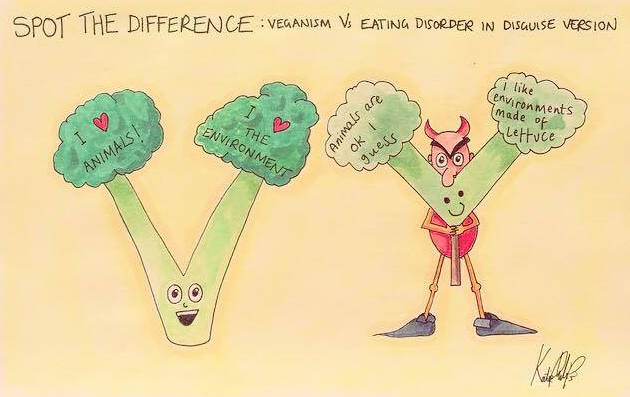
Obviously “veganism” and “anorexia” are two very different things, one is an ethical movement, the other a mental illness, so naturally being vegan does not mean that someone has an eating disorder, just as someone having an eating disorder doesn’t mean they are vegan. Nevertheless there can unfortunately be times when they cross over, and the lines between the two normally very separate labels become a bit blurred, much like the colours of a carrot and a stalk of broccoli do when you put them in a blender and switch it on high speed. It is here that the problems start, problems people need to be more aware of and open to discussing, as it is here people can start using veganism as a mask to cover what is really an eating disorder, a dangerous trick that can leave many people unaware that they have a problem or mean that others do not pick up on what is a potentially fatal illness.
In other words it is hard to work out which bit is broccoli and which bit is carrot, so I feel it is important for people with eating disorders who are vegan to question their lifestyle decision, not because it is wrong, but to make sure it is for the right reasons. Therefore in order to try and help people who are unsure about either themselves or a friends dietary choices, below I am going to list several things to look out for as signs that your veganism is actually something a lot more dangerous…

1. Why are you vegan? What was the initial cause or reason and how did you come to the decision? – When you or your friend became vegan, what was the drive behind it? Was it to benefit the environment? To fight animal cruelty? Or was it to use as an excuse to mask why you are taking things out of your diet? With eating disorders, veganism can sometimes unfortunately be used as a get out of jail free card. If you start refusing all standard cakes or ice cream, family may be concerned or question whether or not there is a problem. Wave the vegan flag however, and you have given yourself a more socially acceptable disguise for your refusal, as I think we can all agree that “I am not eating that because I am vegan” tends to go down a lot better than “I am not eating that because I have an eating disorder that is slowly killing me”.

2. Restriction or alternatives? – An important thing to bare in mind when considering someone’s veganism is how they go about it. For example, veganism is NOT about cutting things out, it is about swapping them. Used to get protein from meat and eggs? You can swap that for chickpeas and beans. Had your fat requirements from full fat dairy? Introduce yourself to Mr avocado and his civil partner Señor peanut butter. Veganism is about still getting all of your daily needs but from plant based sources, it is not about emptying all the cupboards and then living off a bag of lettuce.

3. The “Imagine you accidentally” game – Imagine you (as a vegan), ate something that was not vegan by complete accident and without having any way of knowing about the non-veganness before hand. What do you think? Is it all “oh my God I just ate something with cream in it I am going to get fat! My thighs will be wider than the widest wide thing in the Museum of very wide things”, or is it more along the lines of “Oh Damn! That is annoying, I feel guilty about the animals but I guess it was human error, not my fault and I will just have to check ingredients more thoroughly from now on”?

4. How has veganism impacted your lifestyle overall? – Obviously being vegan involves dietary changes, but changes are not limited to food alone. By deciding not to contribute to the exploitation of animals, you are deciding not to use animals for your own gain, not just deciding to avoid eating them and their produce. For example when I became vegan, my entire make up collection, shampoos, shower gels and toothpaste all changed to animal friendly versions. If the only aspect of veganism you care about is the food side of it then maybe examine why this is, to make sure it isn’t because the food changes are actually about something other than animal ethics. After all it makes little sense to avoid eating a cow whilst wearing a leather jacket, so finding out and questioning your stance and opinions on the non food related parts of veganism can be handy in giving you a clue as to where your head is at.

5. The Vegan bakery test – Imagine a friend wants to support your decision to be vegan and takes you to a vegan bakery. There are vegan brownies, cakes, muffins, the lot. When you look at the display what do you think? Is it a case of “Oh no my excuse to get out of cake is gone! What do I do? I must reach behind the counter, grab a wooden spoon and whack my friend on the head to distract them whilst I run away”, or is it more similar to “Oh my goodness I want that chocolate peanut butter muffin in my face immediately”. This test is a fairly good guide in my opinion as to how much your veganism is impacted by possible animal or disordered eating factors. It is also a good test as a guide to find out how much you like your friends, because if you are that eager to hit them in the face with a wooden spoon you may want to consider socialising with other people.

In an ideal world obviously I would love for everyone to be vegan, so I don’t want this post to be seen as telling people with eating disorders to run off and bite the nearest sheep immediately.
What I am saying is that if you are vegan or have a friend who has recently turned vegan, be sure to question it (especially if they have a history of eating disorders), and be fully aware of why that choice has been made. In my opinion a vegan diet is one of the healthiest diets around, so if you have an eating disorder and your veganism is a separate entity to it, then go ahead and carry on loving your lentils. Hell, have a shower in chickpeas and build a house out of a giant cabbage, just be sure to distinguish whether or not you are dealing with real veganism or a potentially fatal eating disorder wearing a vegan mask. After all, no cow is going to be particularly grateful that you stopped drinking its milk because of a voice in your head that is trying to kill you.

Stay safe all vegans and non vegans and people reading this in general. Cheerio for now.

Vegan