The Difficulties Of Communal Life In An Inpatient Setting

If you put one fish in a fish bowl, that fish will probably be very happy, especially if you give that fish one of those little plastic castles that sit at the bottom of fish tanks in cartoons. Fish love castles. Nothing makes them feel more content than a nice turret.

If you then add another fish to this bowl, there is a chance that both fish will be happy and will be able to enjoy their plastic castle together, ruling over their water sphere of a home like aquamarine royalty. Add another fish to the bowl however, and the chance of problems will naturally arise as while all fish love castles, every individual fin flapper has their own specific tastes and preferences. Some fish may like a drawbridge on their castle, some may enjoy a moat, maybe there are even a rare few who, dare I say, like their castles without those lofty turrets.
The more fish you add into the fishbowl then, aka the more individuals you have trapped in a confined space, the harder it will be for those individuals to breathe/swim about without accidentally smacking a passer by with a wayward fin and in this sense, psychiatric units are very much like fish bowls (except with really mentally ill fish and no castles…God I wish I had a turret…some fish don’t realise how good they have it).
Like fish bowls, psychiatric units are small confined spaces where you can often find yourself trapped living amongst a group of people you have never met before and it is unlikely that you will get along with all of them, not because any of them are bad people, but because all people, like fish, are different. I think it is easy to think of going into hospital as a very private, individual experience between the patient and their inner struggles and in essence I suppose it is, but that doesn’t take away the community side to inpatient treatment and how difficult it can be living in close proximity to people who are, like you, working through their own personal hell.

No matter how much you go into hospital focusing on yourself, I think a lot of people forget or don’t know about the community side that is bound to be a part of any inpatient admission. Every inpatient setting and inpatient group will have a certain feel, an ambiance if you will that creates some kind of atmosphere, be that positive or negative, on the ward. Sometimes that atmosphere can be constructive and helpful in advancing recovery but as with the fish in the bowl, eventually there are going to be disagreements about whether you install a drawbridge or start knocking down all the turrets, and that can be really difficult and affect your personal treatment more than you would like to admit.

It is a side of treatment that is really difficult to manage and not often discussed, but over the years I think I have realised that there is only one way to manage the difficulties of life in a fish bowl with your fellow mental mackerel, that way being:

  1. Be friends with everyone
  2. Ignore everyone

On the surface, trying to do both of those things are the same time sounds like kind of conflicting advice to give, but then again a lot of great things in life involve components which at first appear to be conflicting.
Just think of the person who invented sweet and sour sauce or the hero that discovered salted caramel. People said they were crazy, that their ideas involved too much conflict between opposing opposites, and where are those legends now? Living the high life in their very own castles (with turrets). And as for the naysayers? Why, they are all cowering shamefully in their hollow lives devoid of delightfully sticky sauce accompaniments with their egg fried rice and of sweet milk chocolate coated toffees set off by the salty tang of the sea.

Personally, I really struggle with the communal living side to hospital admissions and every time I go into an inpatient unit I privately vow to speak to no-one, close my eyes and hope that because I can’t see anyone else, they can’t see me either…But like I said, this is unrealistic and at the end of the day, it doesn’t matter how social or unsocial you intend to be, you do have to live with these people and if you want to survive a shared space of communal compromise, you are going to have to get along to some degree.

I guess it is very much like any communal office or work place where a group of people are forced to spend long periods of time together, regardless of whether or not you have anything in common. Though I have never worked in an office like you see in the movies with all the rows of desks and dividers, I highly doubt that people who do work in those kinds of places would be willing to give all of their colleagues their last Rolo, but you couldn’t get through the day if you held grudges and took things too personally, and I am pretty sure people would be fired if they weren’t at least civil to each other and forced themselves to be a little extra on the polite side.

Maybe you have an office neighbour called Janet who keeps stealing your stapler, puts empty cartons of milk back in the fridge after making a cup of tea and is well known for dropping those little white paper circles that fall out of hole punches all over your paperwork (if this is you then damn it Janet, pull yourself together and keep your little white paper circles to yourself for the love of God.)
If we all had a Janet and behaved as we wanted to (aka smacked her over the head with that stapler she clearly loves so much and changed all the passwords to “Empty milk cartons go in the bin Janet”), it is unlikely we would keep our jobs for very long and nobody would get anything done in life. To keep the country moving and employment rates up then, people tend to bite their tongue at work around their own personal Janets, to keep the peace. That is sort of what it is like in an inpatient setting. You will be in a close proximity to a variety of people for large portions of the day and basically if you want to survive, you have to treat others with all the kindness and respect that you can muster and get on, as good a group of friends as you can.

Sometimes it isn’t even hard to be friends with everyone in an inpatient setting and it is a thing that comes naturally with no extra effort required. After all you are all stuck in a very similar situation going through similar experiences that not everyone in the outside world can relate to. Whilst in hospital it is easy to feel disconnected and isolated from any friends or family members who come into visits talking about holidays abroad and new umbrella decorated cocktails they have tried, whilst the only trips you have been on have been to a walled garden and the only cocktails a brand new combination of anti-psychotics (little umbrella not included).
Fellow patients will be able to relate to that kind of thing and can certainly make you feel less alone. They can also be a great support system who you share a lot in common with and often the most helpful things you can find in treatment are people you can relate to, who maybe give tips as to what has helped them in the past. I have even had admissions where the whole group of patients have got on so well that it has actually been like one giant sleepover in a boarding school with friends and you build such strong relationships that you won’t know how you would have survived the inpatient experience without them. Dare I say it, on special occasions when the brain devils are not out to play, you may even have a few laughs and leave inpatient with a fondly remembered evening of choreographing dance routines to “Spice up your life” by the Spice girls, after a rebellious water fight to cool off in the summer in the wet room (not that I have any experiences of such things personally you understand).

That said, when inpatient it is also important to stick to the second “way” of surviving the experience, aka part two “Ignore everyone”. This is not to say that when a fellow patient greets you with “good morning”, you keep your eyes on the floor and pretend that they don’t exist (a nice smile and “morning” is a far nicer option for both parties involved), but you do need to keep yourself to yourself to a certain degree. As helpful as it is having people you can relate to, it can also be triggering in ways detrimental to your mental health and wellbeing.
When you are in the fish bowl, everything is intensified and feels more dramatic than it might do in the outside world. In the outside world for example, like in the workplace, there is one Janet out of a global population of several million billion thousand other humans (that is a rough estimate…I lost count). Thus your Janet/difficult person in life makes up a tiny 0.000004% of the population or something and so it is easy in a way to avoid that person, avoid conflict and take yourself out of a situation. Say however that when inpatient there is one person you don’t get on with and it is a 10 bed ward, that is ten percent of the population, so the actions of that person can feel a lot more dramatic.
It is therefore important not to get too caught up in other people’s business and let them affect you , rather it is safe to keep yourself to yourself with your blinkers on and focus on your recovery and goals for admission.
I know I really struggle with getting caught up in the inpatient bubble, very distracted and involved in the lives and worries of people in the other bedrooms along the corridor and it is only when you start to get things like leave that you realise there was a whole other world still outside of those walls and half of the things that were incredibly dramatic whilst on the ward are totally irrelevant back home. When you are in hospital, those people you see everyday are constantly on your mind because they are constantly in view, but when you are home with family and friends living your life and benefitting from all the hard work you did on the unit, you are unlikely to think of them at all (unless you keep photos of them on your bedside or something…don’t do that…that would be weird.)

As much as an inpatient stay is an individual experience then, there is a lesser discussed fish bowl style communal element and that is going to be difficult. There are however ways to deal with it, and for me, this blog post is how I get through and is the advice I would give to anyone else who is currently stuck in a mental hospital fish bowl or anyone looking to an admission in the near future. Never forget that any unit is really just a small glass orb on a coffee table and there is a flipping massive ocean to swim in when you get back out.

Now if you don’t mind, I am off to the nurses’ office to demand we get an immediate emergency supply of turrets on this ward. Fish get whole castles and damn it. I WANT A TURRET.

Take care everyone x

Fishbowl

Five Things You Need To know About Re-feeding During Eating Disorder Recovery

Whenever you enter treatment for any kind of eating disorder, you will often be given about a million worksheets, pamphlets and photocopied passages from text books, about the mysterious topic of “re-feeding”.
Indeed, over the years I myself have been handed many of these scientific attempts to explain the various processes the body goes through during re-introduction of food after periods of starvation, and having been through those various processes multiple times, I thought I knew it all. I thought that when it came to re-feeding a patient with anorexia, I was an expert, an oracle of knowledge when combining my scientific genius (aka facts I memorised in text books) and personal experience. So arrogant and confident was I in my “know it all” attitude, that had I been asked to take part in the UK gameshow Mastermind, I would have chosen “the re-feeding process in treatment from an eating disorder” as my specialist subject and would have had a cabinet built for the trophy in my living room before I had even answered the first question. Luckily, nobody has ever asked me to be a contestant on Mastermind because if that had happened, I would have looked like a fool and would have had a very sad and lonely, empty of trophies, trophy cabinet.

Today then, rather than sit and mope with regard to my lack of trophies (and whopping great useless cabinet in my living room), I thought I would use my current situation as “person attempting re-feeding” to share with you the five things everyone needs to know about the re-feeding process when in recovery from an eating disorder.
This is not just the explanations that you get from the science books, this is the Born Without Marbles, real life, honest guide to get you through all the surprises that can happen during the re-feeding experience, even if you have been through it before and think you already know it all…

1. Taking it slow is important: I think there is often this misconception that the more food you can get into a person who has been starving for a long time the better, when really, that can be quite dangerous. When your body isn’t used to being given food, it sort of turns off and goes into a stand-by mode, so booting it up again is a process that needs to happen gradually. It is like if you had an out of work clown, to get them back into juggling you need to start again with 3 soft balls rather than going straight in with 10 flaming knives and a live alligator riding a chainsaw. When coming into hospital for example, people are often started off on half portions to build up from gradually over the space of a few days, to avoid the body going into too much shock and sending your electrolytes and cardiac functions all berserk. Now, this is not an excuse to let your eating disorder sneak in with “well, if it is dangerous to eat much even though you are in recovery, you should probably just eat a little bit of lettuce” because NO. All I am saying is that when you are getting back into the habit of giving your body food, you need to be gentle and start off slowly, preferably under medical supervision/working with a dietician to keep you both physically safe and to make certain you are gradually building up to the amount of food you need rather than sticking to the initial “half portions” of the first stage.

2. Any weight changes on the scales are not going to make any sense: In life, I think we treat scales a lot like calculators, machines that give us logical results and answers to various calculations of input and output made over the week. Unfortunately this is not the case, especially during the re-feeding process of recovery from an eating disorder, and instead of giant body calculators, I would encourage you to treat scales like a very drunk friend following a night out at the pub. This is not to say I advise taking your set of scales to the local takeaway for some cheesy chips and a lamb kebab (scales prefer pizza with a side of garlic bread), rather it is to say you should take everything they say not as fact, more as a vague approximation of reality/what is going on. I am not going into specific numbers here, but when I was admitted to hospital almost three weeks ago (my how time flies when you are in a mental institution!), I ate less than I had been eating at home, due to anxiety and because everything served to me was different and none of it was what I considered one of my safe foods. After a week of eating less than half I had been previously, I stepped on the scales expecting to lose weight. To my horror, I gained. A lot.
“Oh my goodness” I cried out dramatically fainting on the clinic floor. “What is this? My body is broken! Everyone says that when you eat more food you gain and when you eat less you lose weight but I am defying medical science. Someone send me to a laboratory for experimentation!”
When the doctors increased my meal plan, I was even more terrified than I had been before, figuring that if I was already gaining when I wasn’t eating, were I to eat more, my weight would spiral up and out of control. Therefore I continued to restrict in an attempt to lose the weight I had gained…and I gained again.
Soon enough, I had no choice but to start complying a bit and eating a little more, so on the next weigh day, I braced myself for another increase in kilos. You can imagine my surprise then, when I actually lost all the weight I had gained over the previous week despite having eaten double the calories. Logically, that made no sense to me, but, bodies and weights do not make sense during the re-feeding process. As food is reintroduced, chemical reactions explode like fireworks throughout the body, electrolytes get confused, the fluid levels go all over the place so when you get on the scales, any shifts you see are likely to be “false” weights due to all the internal changes going on. Thus, going back to the drunk friend comparison, when they show you a number aka tell you a story summarising the night before, though they will be able to give you a vague idea of what is going on/what your body weighs, they will not provide a logical accurate explanation of your situation/true body weight that you can gain any real knowledge or conclusions from.

3. Your body is going to do some very weird things: When people talk about the re-feeding process they will often whip out phrases like “nourish to flourish”, as if the second you start eating again, sunlight will start shining from your eyes and you will find yourself skipping gaily in a field of daisies. Admittedly, one does need to nourish in order to “flourish” and become physically well, but again this is a gradual process, and at the beginning it is likely your body will do less flourishing and more random weird things that you never expected or understand.
You will probably get tummy aches and indigestion, feel full one minute and ravenous with hunger the next, your bowels may go to sleep or into overdrive, you may fall asleep all the time or even be unable to sleep at all, night sweats and drastic changes in temperature may occur, blood sugar levels will be unpredictably random (recently mine were highest after a day of very little food and then too low after the biggest meal of my admission so far – another reason why medical supervision in re-feeding is vital), and you may experience abdominal bloating as well as this weird thing called Edema. Edema is basically when your body goes through dynamic fluid shifts and parts of your body (mainly your feet and legs) may puff up.
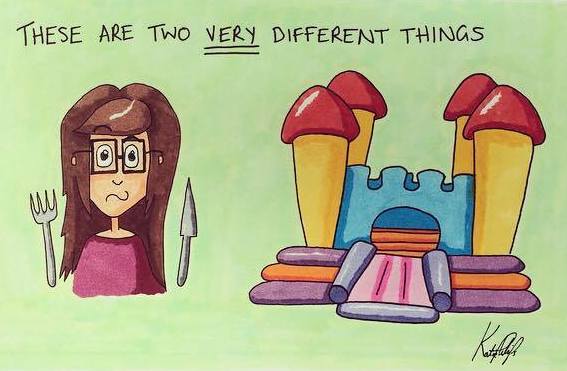
This Edema thing has been especially bad for me this time and my legs and feet swelled up as if someone had thought I was a bouncy castle and plugged me into one of those air machines (during this time I learnt that life is hard when you are a bouncy castle as children are constantly jumping all over you. On the positive side, if you are business savvy you can charge them a few quid a time and make a tidy profit to buy yourself something nice/ice packs to soothe all the bruises made by violently jumping feet all over you).
I think the Edema one had me especially scared because naturally your mind will convince you that rather than water retention your legs are swelling with actual weight and fat, and as someone who is currently managing Edema I can hand on heart promise that is not true. Like I said, I swelled up like a bouncy castle, but after keeping my feet elevated for the past fortnight my legs and feet have started to deflate a little. It feels as if it is a disaster and going to last forever, but it DOESN’T. Me warning you of all these things is not to put you off the re-feeding process, far from it, as it is far more dangerous to remain undernourished with no chance of flourishing in the near future. Instead what I am trying to do here is let you know what might happen so that if it does, you are prepared and know that this kind of thing is totally normal and it is not an excuse for your eating disorder to convince you that it is your body and yours alone being weird and “rejecting food”.

4. Your mind is also going to do some very weird things: You would think that with your body off galavanting and causing mayhem, your mind might perhaps wait to kick up a fuss until after all the physical stuff is over, but no, your mind is going to go a galavanting as well and will also be doing some very weird things. The re-feeding process is very much like the descriptions of puberty I was given in a lesson by my primary school teacher (good Lord was that a terrifying conversation), in that your emotions are going to go all over the place. Like I said, when you are not eating, your mind and body go into standby mode and occasionally emotions shut down. When you start eating again however, the emotions turn back on at weird and unpredictably inappropriate moments. One minute you will be numb and feeling nothing at all, the next you could be laughing hysterically at your shoe, then you will be filled with rage for no particular reason before being overwhelmed with sadness and crying yourself to sleep…It is a lot more fun than it sounds…actually it is not, but again this is not to put you off the process, rather so that you know what to expect!

5. It is different every time: This is probably the most important lesson I am currently learning as I go through the re-feeding process and I imagine it will also be the most important one for people who, like me, have been through it several times before and may be reading this thinking “this is not new information, I know what to expect” much as I may have two weeks ago. I thought that because I knew how my body had reacted to re-feeding before, I would be able to predict how it would be this time round, but that was not the case. Every time you go through re-feeding it will be a different experience and your body will react differently. The longer you have been ill or the more trauma your body has been through, the weirder the experience may be. Like I said, I have really struggled with Edema this time round, and the reason I mentally struggled with it so much is because it has never happened to me before.
I knew all about it and had seen it happen to other people, but when my legs swelled up I was convinced that it was real weight rather than water retention, because my body hadn’t reacted like that on any previous occasion and therefore I thought that kind of problem could never affect me. Had I had Edema before I think I would have coped better with it, as well as the weird things I have noticed this time round on the scales, but it was the fact that “my body doesn’t do this usually” that had me frightened that something was going on and I was actually gaining and swelling with actual weight. Just because your body hasn’t done something before it doesn’t mean it won’t give it a whirl this time and if there is one thing I would want you to take away from this post it is that for all the preparations you make, this is still going to feel very random and very unpredictable…

…What a great final point to end on! Basically I have just told you a list of things to expect during re-feeding and then told you to go into it with no expectations because you cannot predict what will happen…hmm…Great advice…Good one Katie…

To be perfectly honest with you all, I have no idea what is currently going on with my body, what it will do tomorrow and quite frankly I don’t understand a damn word or second of this re-feeding malarky right now.
All I know is that it is scary, it doesn’t feel necessary to me, and I am still doubting the words of every doctor I come into contact with/struggling to accept or trust any of this.
Regardless of any of the mental rationale behind this admission or eating however, this is an honest account of what is and what can happen physically during the re-feeding process as I am trying to get through it, so if you have ever wanted to know what to expect or are going through similar things and are scared, you know that it is not just “your” body being weird and that there is someone else out there with swollen legs covered in the bruises of toddlers who have mistaken you for a bouncy castle.

Take care everyone x

Refeeding

The Difficulty Of Trusting Psychologists When You Have Mental Health Problems

Trigger warning: This post mentions the eating disorder behaviour of distorting your weight from professionals, so if that would trigger you then flee! Flee I say!

When I was younger, I was always taught not to trust someone who promises to give me sweets if I climb into the back of their van (unless of course those sweets involve any kind of combination of chocolate and peanut butter in which case who cares about potential kidnap, get in the damn van and don’t let those beauties drive away).
Unfortunately, somewhere in my brain as I have got older, “don’t trust strangers with sweets in a van” has morphed into “don’t trust psychologists” (regardless of whether or not they drive a van containing a portable candy heaven). Turns out however that when psychologists say they are going to do something and give you ultimatums, you should believe them.

Since coming out of hospital post “appendix explosion gate”, every week in my eating disorder appointments my psychologist has been telling me that I need to increase my intake in order to regain the weight I lost. To be fair, I have been trying, but a problem I have is that unless someone gives me specific deadlines for things I am scared to do, I will procrastinate until my arms fall off and tentacles grow in their place (not eight tentacles like an octopus though…that seems a little excessive…four is enough for me thanks.)

Every time my psychologist would tell me to increase I would hear her, try, but ultimately think “it is fine, she will just say the same next week and I will do it then”. Two Tuesdays ago though, my psychologist gave me a proper ultimatum with proper dates and deadlines by which I had to carry out her instructions. I was given one week to gain a certain amount of weight with the alternative being that I would be recalled back into hospital under the Mental Health Act. Seeing as how my brain works, you would think that this fairly clear statement would be easier to adhere to than the alternative casual “you need to eat more”, but still my head found ways to procrastinate, not because I wasn’t listening, but because I didn’t believe her. This was a mistake.

As much as I know I am mentally not very well at the moment in some aspects, physically I am finding it hard to see that there is a problem at all. Hearing threats and statements about my health that are designed to scare me, therefore make little sense. It is like telling someone over and over again that they are going to die of alcohol poisoning and that their liver is failing because of alcohol when they know that this can’t be the case because they haven’t touched a drop of liquor in their lives.

Back home I tried to increase but I was so scared of gaining weight that it didn’t go well, partly because I didn’t believe the “consequence” I was told about were I to fail to do so. Still, I didn’t want my psychologist to be disappointed or angry with me for failing her, so on the morning of weigh in I drank the weight I had needed to gain in water so that the scales would show the increase required and keep everyone happy. I hate “water-loading” before weigh in (aka the behaviour some people with eating disorders do whereby they drink a lot of water prior to weigh in to manipulate their weight on the scales and prevent therapists from knowing their true weight). It always freaks me out because even though I can know that I have just drunk water, whenever I see the number go up on the scales, my head will convince me that it is real weight and not just excess fluid swishing about in my bladder.

Thus I stepped on the scales prepared to be triggered, but somehow, it didn’t work, and I saw that I had not reached the goal set for me at all. Initially I didn’t really panic because I thought as always that my psychologist had been lying and that I could get out of it. I thought I could easily insist that I would just “meet the target” next week, but she hadn’t been lying and to my utter shock and horror, I couldn’t get out of it. What happened next? Well, considering I am writing this at a hospital desk in an inpatient eating disorder unit, I think you can guess. That’s right, that is the update this week, Born Without Marbles is back in the loony bin, and to be blunt, it sucks.

People keep saying things like “at least you know the place” and “you have done it before” but that doesn’t serve as much comfort because even though I know that, this time it feels different, so unnecessary and therefore scary. If you believe there is a physical problem it is easier to understand the need to take the medicine needed to cure it (in my case that medicine being “Food/general nosh”), but this all feels like one terrible mistake. I don’t need to be here and thus I do not need the medicine.

I am almost waiting for ward round on Tuesday where everyone discusses how things are going and for them all to turn around, apologise for the inconvenience and send me on my way.

The scales may say that I am under my CTO weight (a full explanation of the Mental Health Act and CTO’s can be found here: Demystifying The Mental Health Act…With Penguins, but basically a CTO is a legal document under which you are sectioned but allowed to live in the community as long as you adhere to certain conditions aka in my case, stay above a certain weight), but I don’t think I have actually lost any weight. I can read the scales and everything so I know that the number is lower but I am 100% sure that this is purely because I had my appendix removed and thus the weight of a whole organ has gone. If you chop someone’s arm off their weight is obviously going to go down but it doesn’t mean they have lost “weight” all over, it just means that there is some rude reckless person running around cutting people’s arms off.

I am so scared in here and I don’t know what to do. I am trying my very best to work with people and “listen to the professionals” but it is harder than I thought. Trusting them feels the same as trusting all those terrifying people with vans and sweets when I was a child (especially that particularly frightening lollipop obsessed child catcher in Chitty Chitty Bang Bang…seriously if you ever need to teach kids that “don’t get into vans with sweets lesson” just show them that film and you will be sorted…of course they will also learn that cars can fly and that dressing up as a Jack in the box will get you through security at a royal palace, but I think the worth of the sweets lesson trumps the potential misinformation spread by the latter).

So yeah…Mental health awareness lesson of the week: trusting professionals with medical degrees and things who should technically know more than you is hard when you have mental health problems. Very hard.

Other than that, I don’t really know what to say today. I just want to go home. I feel I should write an extra good, extra long blog today considering I am in hospital and certainly have free time to write but the words won’t come. Maybe I should offer them some sweets as encouragement.
I am also struggling to keep this update upbeat rather than explode all over you, so I think I will sign off for now and hope that I am a little bit more coherent in the next post. Sorry.

Take care everyone x

ChildCatcher

The Dangers Of Drinking Too Much Water When You Have An Eating Disorder

So in last week’s blog, I talked about a recent lesson I had learnt about the importance of familiar surroundings when you struggle with OCD, and funnily enough I have learnt something else in the past week too.
I am learning a lot of things lately. It is like being back in pre-school only Daniel Jones hasn’t stolen my green crayon (if you are reading this Daniel then yes I know it was you and I still want it back), and the topics of these recent lessons have been far more focused on mental health and less on how messy one can get whilst finger painting/what noise a cow makes (hint: it is moo).

In life, we are constantly being told to drink more water. If you have ever sat in a doctors’ waiting room you will have no doubt seen several posters about how drinking a lot of water is very important, how kidneys love the stuff, how dangerous it is to get dehydrated, and from all of these posters and health warnings you may assume that the more water you drink the healthier you are, which…well… isn’t exactly true, especially if you are someone who is struggling with an eating disorder.

Drinking too much fluid is by no means something common to all people with eating disorders however, and in my years of experience getting to know fellow sufferers, there seem to be three camps of people and how their disorders manage fluids.
In one camp we have the people with eating disorders who struggle to drink enough water and end up extremely dehydrated, then there is a second camp of people who could drink a whole swimming pool if they had a big enough straw, and then finally in the third camp there are the people with eating disorders who do not have a problem with maintaining safe fluid levels and would therefore like to leave the camp I have just put them in and go back home to a habitat that is slightly less tent like.

As it happens, I am in the second aforementioned camp (ours has a lovely log fire and on Saturdays we roast marshmallows), and I struggle with drinking too much water even if I am not at all thirsty.
It is odd because I have always known that drinking too much liquid isn’t good for you, but when it comes down to it, me gulping down glass after glass of water is like some uncontrollable compulsion, a kind of outer body experience.
Many a time I have been pouring myself another litre and in my head have been thinking “NO. STOP! THIS IS DANGEROUS NOW” but my body won’t listen and carries on filling up my glass anyway. It doesn’t matter how ill I feel, drinking the water feels like an urgent and necessary task as if I need to dowse a fireball that is burning somewhere in my stomach, no matter how much water it takes.

Even in the camp of people with eating disorders who struggle with drinking too much water, it is likely that everyone will do so for a variety of reasons and it is rare for two sufferers with the same disordered behaviours to have the same reasons for carrying them out.
When it comes to me though, my compulsion to drink a lot of fluid is partly because of posters I used to see at my local gym telling me that if I didn’t drink enough my body would hold onto water (leading me to fear that the number on the scales would go higher), but mainly it is because no matter how many doctors or dieticians talk to me about the science of the intestine, I am convinced that if I do not drink ridiculous amounts, any food I eat will get stuck in me forever.

Technically I know all about stomach acids and the body’s ability to break down solid foods via various muscle contractions and other clever things that go on behind one’s belly button, but in my head, eating anything solid conjures up an image of that solid thing getting stuck in a tube. Say for example I eat an apple, it doesn’t matter how much I chew it, when it is in my stomach I still picture it as a big red cartoon like shiny apple with the stalk attached, a lump that will stay there unless I am able to create enough waves to erode and wash it away.

For this reason, to try and keep my drinking under some form of control, I have been on a fluid chart for years where I write down everything I drink to try and keep an eye on things so that it doesn’t get out of hand. If I don’t write my fluids down my brain tends to trick me and convince me that I haven’t had a mouthful of water in days (even if I am surrounded by empty bottles of Evian and have been peeing every five seconds), so it is safer for me to keep a record of it so that when the compulsion to drink a lot comes, I can remind myself that I have already drunk more than enough and need to distract myself elsewhere. Last week however, this fluid chart thing went a little bit off plan with the disappearance of my parents on holiday.

I have had several people message me asking what on earth happened after the mass break down described last week, whether my parents ended up cancelling the holiday or whether we gave it a go despite plan A being a rather sizeable fail.

Well, after people had realised that I couldn’t stay at my parents’ friends’ house for the duration of the holiday, the immediate conclusion was that the holiday would be cancelled, but eventually we managed to come up with an alternative plan wherein mum and dad would go off to Malaysia as planned and I would stay at home with my sister and my most legendary friend of all time alternating sleeping over to try and help me stay safe.

It was going rather well for the first few days (or at least better than the disaster that had been plan A), but as time went on I started to get more and more anxious about my parents being away and consequently the urge to drink increased in order to wash all of that anxiety and stress away. I know it sounds pathetic but without my mum there to verify how much I was drinking and suddenly in total control of my fluid intake myself, things started to get out of hand. People who stayed over would be able to support me in the day time but when up late at night I couldn’t help but manically gulp glass after glass of water over the sink. All the people who write those “yay kidneys like water, stay hydrated” posters would probably be thinking that is great but as with most things in life, moderation is key and you can have too much of a “good thing”.
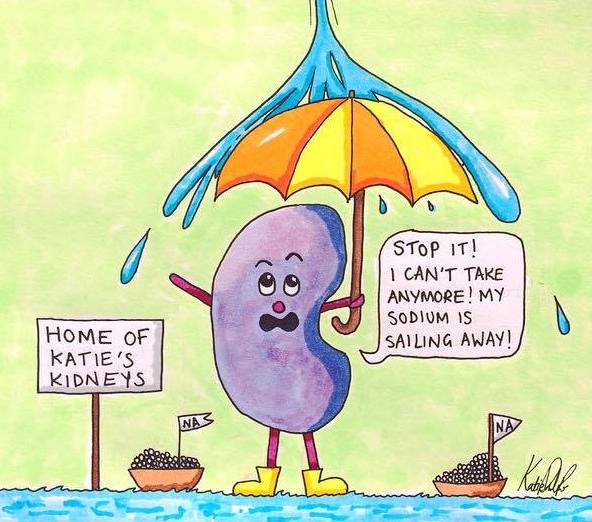
Drinking too much water can cause problems for anyone who has been hitting it hard on the old H20 because your kidneys cannot process it and consequently the water stays in you where it can dilute the salt/sodium level in your blood and cause a condition called hyponatremia, which doesn’t sound particularly exciting but in general language this is known as water intoxication, and I am pretty sure that phrases containing the word “toxic” are never good phrases to hear describe someones physical health.

In healthy adults eating and maintaining a healthy diet, a few extra glasses of water will not cause this kind of thing, but the risks when it comes to people with eating disorders is often greater purely because they may not have been consuming enough salt/sodium in the first place, and essentially there is a risk of drowning your cells on the inside. This then leads to things like heart problems, fainting, water on the brain, seizures, psychotic episodes, death, and basically a lot of things that mean you “aren’t very well” which is exactly what happened to me a few days after my parents flew off to Malaysia and is exactly why my poor sleepy friend had to call an ambulance at 2am on a Saturday morning having been woken by me banging around, generally delirious and spouting nonsense (and a little bit of water. I was like a living water feature. Delightful).

The reason I stayed in hospital for so long however is a slightly more complicated story which I will have to get around to next week, just so that we are all up to date and clear as to why I was so rude as miss a blog post two Mondays ago (Oh the shame. And I was raised in a house with such good manners!), but as an initial explanation, the problem was that I was hospitalised for drinking too much water, and it is now after some severe tellings off from several health professionals that I feel the need to write this post about it so that people realise just how dangerous drinking too much water can be when you have an eating disorder, in case it is something other people struggle with themselves and seriously need to seek support for. If you are one of those people who struggles with drinking too much water I know you are probably doing what I used to do upon hearing these kind of things, the whole “surely it can’t be that bad” and “it would never happen to me” but trust me when I say that water intoxication is extremely dangerous and potentially fatal so if you struggle with it, even if your head tells you “you will be fine”, it is vital you get regular blood tests to check your sodium balance.

Luckily after a few days of being on a water restriction in hospital (good lord was I thirsty), my sodium levels returned to a more acceptable level…it is just that other things started to go wrong after that but again, patience dear friends! All in good time!

Now what I don’t want is for someone who already struggles with drinking enough to read this blog and suddenly panic and start restricting their fluids more than they already were because that is NOT what I am saying you should do and that is dangerous for a different bunch of reasons all on their own. I am just saying it is dangerous to go ridiculously overboard when it comes to fluid consumption even if your eating disorder tries to force you in that direction, and that instead of not drinking anything, just do it all in moderation. Water isn’t dangerous, everyone loves a good paddle or dip in the swimming pool, you just have to keep it at a safe level and be careful not to drown.

Take care everyone x

Kidney

P.s I am sorry if this blog is a little bit all over the place. Physically I am still not in the best place right now and my ability to write is somewhat affected but please bear with me! I am sure recovery will hurry up soon!

The Frustratingly Illogical Existence Of Life With An Eating Disorder

A few days ago, I met up with a friend who I have not seen for 15 years. It was a friend I have known since the tender age of zero after we stumbled across each other at an antenatal class our parents had been attending in the hopes of learning what the hell to do with the new humans they were about to produce and were expected to raise without any prior knowledge of how to do such a thing.
We may have only been newborns but our connection was instant, we bonded over Thomas the Tank Engine and have been friends ever since (although like I said, we haven’t seen each other for fifteen years because when you get to senior school and puberty a lot of nonsense gets thrown at you and there isn’t any time left to discuss the wonderful intricacies of your favourite blue tank engine…senior school is cruel.)

Recently however, after reconnecting over the 21st century miracle that is “social media”, we decided to meet up, and thus it was that I found myself sitting opposite my oldest friend in a coffee shop several days ago.
I think when you meet up with anyone, either new to you or as old a friend as your life itself, there is always a tendency to compare yourself to that other person in some way. Frustratingly, even though I know that appearance and weight are the least important of all things, my eating disorder automatically compares my body to those around me and without fail will always manage to convince me that I am an inferior disgrace who should go home and hang their head in shame. Like I said, I know weight doesn’t mean anything and I quite frankly don’t care what other people weigh. The number of pounds shown up on someone’s bathroom scales does not matter to me in the slightest, nor does it affect my opinion of them, yet for some reason when it comes to me specifically and my body, weight is of the highest significance and summarises my self worth as a person.

When I saw my friend standing there then, I felt really embarrassed and had it not been for the desperation to see her after such a long time, I probably would have run out of the coffee shop and would still be hiding in a bin somewhere.
Eloise Unicorn McGlitterface (I may have added the “Unicorn McGlitterface” myself just for fun…she really likes unicorns…and glitter…), looked fabulous, and I wished I could look like her.
Immediately my eating disorder was triggered and the thoughts telling me to lose weight struck up their familiar bellowing.
I didn’t want to be thinking about these things at all, as I left I wanted to be thinking about how lovely it had been to see my friend, but as I got in the car to go home, my head was screaming at me to lose weight, and here is where I get confused.

I know for a fact, that my friend Eloise Unicorn McGlitterface, on paper, is a healthy weight, and even though I don’t believe the “facts” my psychologists tell me about me being “underweight”, I understand them, sort of like someone understanding the theory behind someone’s religion without believing in that religion themselves. Logically then, according to doctors and science, most people would conclude that in order for me to look as fabulous as my friend, I would need to gain weight. On paper and if talking to anyone else, I would easily be able to agree with this argument yet somehow, when it comes to me, even though I cannot explain the science behind it myself, I am convinced that the only way for me to look like someone who weighs more than me…is that I need to lose weight. WHAT KIND OF LOGIC IS THAT.
When I tried to explain this to my mum I couldn’t. Naturally she thought that I sounded irrational and like a lunatic (she would have a point), yet despite my inability to explain the science behind my thoughts, I remain utterly convinced of their truth without really understanding them…
I even thought that if I tried to write this blog post and tried to explain my theory I would realise how ridiculous I sound, how my thoughts make no sense and therefore cannot be true, yet still here I sit, unable to explain how my body defies science and needs to lose weight to look like someone who weighs more than me, yet utterly convinced that this is the case.

There are a lot of things I believe that make no sense to other people when it comes to my eating disorder, but at least I can see the logic behind them. I know it doesn’t make rational sense that I cannot eat unless my hair is tied up in a very specific way at a very specific angle, but I understand where that belief/behaviour comes from and the rationale behind it according to previous experiences. I know it doesn’t make sense that I cannot eat with forks, knives or plates and am only able to use spoons and bowls, but again I understand the reason I feel this way. There is no science behind it, but it makes sense to me and I could explain it to people.

This however, I do not understand, yet like I said, this doesn’t make it any less compelling. I guess going back to the religious comparison, it is like being a devoutly religious person who can hear all the arguments against their beliefs but believes nonetheless and is convinced in their heart by pure faith. I don’t want to insinuate that my eating disorder is at all some kind of religious movement, it is a murdering mental illness that destroys lives, but I think this example goes to show that when you have an eating disorder your belief in your thoughts are held and driven mainly by a faith that you cannot explain the logic behind. In my experience at university studying theology and when talking to religious friends, if you ask them to explain “why” they hold their beliefs, any explanation will be secondary to the feeling they hold inside them. They can say “why” but when it comes down to it the thing that convinces them is a faith, an indescribable feeling that they have which means that they “know” what they believe to be true even though they can hear people arguing about why they might be wrong.

I don’t wholeheartedly believe my eating disordered thoughts because I am stupid and don’t understand science, somehow I believe them in spite of that understanding. This whole “to look like my healthy friend I need to lose more weight” thing is exactly like my obsession with green tea. I hate the stuff and over the years hundreds of people have told me that it makes no difference to your weight, I have read the studies and I know they are true and more scientific/rational than any thoughts I get from my eating disorder…yet somehow I am still convinced that if I don’t drink a certain number of millilitres of green tea I will gain several stone overnight. Consequently I drink that green nasty fluid that I am horrified is held in the same category as all other teas. WHERE IS THE LOGIC HERE EATING DISORDER? HMM?

I think what this really proves is the fact that eating disorders make no sense and that even if their thoughts don’t have a reason behind them, they are nevertheless believable. People with eating disorders aren’t stupid people who don’t understand how bodies work, they understand all of those things, often better than most, yet still the disordered thoughts are so strong and so compelling that they are convinced to follow them without being able to say why. Eating disorders have the power to make science sound ridiculous and nonsense sound like fact. I guess this example also proves the fact that eating disorders are flipping stupid and will always manage to convince you and tell you that you need to lose weight no matter what the facts of any situation.
Usually when I write blogs about eating disorders I do it to try and explain the reasoning behind
them to people who don’t understand, but clearly, sometimes life with an eating disorder is about not understanding a damn thing about your thoughts yourself and just basking in a frustrating confusion.

Take care everyone x

NonsenseBin

Being Afraid Of Your Own Brain When You Have Mental Health Problems

I feel like there is someone in my brain who is trying to kill me. It feels like I am being stalked by something, like a lion stalks a gazelle, but I can’t see how close or far away they are because when I turn around there is nobody there. Nobody else can see them either, they are in my head and unfortunately my eyes are positioned in a way that I can only see the outside world rather than what is going on internally (sort it out evolution for goodness sake, you gave us opposable thumbs now can you please work on swivelling eyes…And whilst you are at it can you please take this appendix away because it is taking up valuable storage room).
I am scared that this thing in my head is going to succeed in trying to kill me and I am also scared that it will fail. I don’t like being chased and sometimes I just want the thing to catch up and get whatever it is planning over with.

You might be wondering how on earth it is possible for someone to be afraid of their own brain because surely if the brain belongs to me, I am in control of it and what it decides to do. You don’t go round worrying that your own fist is going to punch you in the face because if your fist were to ever get such an idea it is likely you would tell it that you would rather not be punched in the face and could it maybe do something more helpful like make you a cup of tea.
That’s the thing though. I don’t feel in control of my brain and I don’t feel like I know what it is going to do at any given moment anymore. I always thought that if I owned my brain and my brain was me, then I would know my way around it. I would know every lobe, every memory, every thought and every desire because…well…they are supposed to be mine. If I have a secret that I keep from other people I tuck it away in my secret brain cupboard so they won’t be able to find it, but lately it has felt like my brain has a whole separate section where it is keeping its own secrets in its own secret cupboard that I cannot access.

“Maybe it is a nice secret” I hear you cry, “maybe your brain is preparing you a surprise party” but I don’t think that is the case, partly because it doesn’t feel like a nice secret and partly because I know for a fact that my brain hasn’t been balloon shopping recently and as I have said many a time on this blog, one cannot have a party unless there is at least one balloon present. If there is something magical in this secret cupboard, I know that it is not Narnia and is more likely to be a direct doorway to the White Witch.

I am worried that I am not making any sense and that I am being confusing in this post but if I am I guess that would be an accurate representation as to how things feel with my mental health right now, confusing and making little sense.

The Depression and BPD are still there, the OCD, and anorexia still have their claws in and dictate every one of my actions, yet still it feels like there is something different, something weird going on. I am more out of control than ever and half the time I don’t know who I am or what is going on.
I keep seeing things and I can’t tell if they are real or if I am imagining them. It started off as spiders, not the most pleasant things to imagine crawling around you and I would far rather imagine waddles of penguins approaching if I have to imagine anything, but I don’t think I have much of a choice in the matter. I started seeing spiders out of the corner of my eyes yet I was able to turn to face the place I thought I saw a spider and I could see that there was nothing there. Now though the spiders are bigger and they have tails. They also have fur and have lost four of their legs. They are rats now. Even when I know I am alone in a room I can feel people standing behind the curtains or crouching just outside beyond the window sill. I don’t know what they are doing there and it must be incredibly stuffy wrapped up in a curtain for hours every day (I can confirm this after years of playing hide and seek as a child), but they stand there anyway.

I am scared that I am actually “going mad”. More often than not I have been having to wake my mum up in the middle of the night to come in and sleep in my room because I don’t feel safe from my brain. It is as though, if I close my eyes and go to sleep for a minute, I am leaving myself unguarded and it will be able to sneak an attack in whilst I am busy being unconscious. I don’t understand the logic behind this fear as surely if I am asleep, my brain is asleep too, yet still I feel so disconnected from it these days that I can’t be sure what it is up to when I am not looking. It is clearly doing something underhand during my snoozing of late because I keep waking up screaming and often have no idea why.

I stay awake all night to keep myself safe and I also have stay awake all night to guard the house, because if I go to sleep ,not only will my brain start wreaking havoc but the people outside below the window sill will also find a way in somehow. It is ridiculous, if there ever was an intruder in reality I highly doubt my presence would be the thing to deter them (a point my psychologist pointed out last week…I think she was trying to be helpful but to be honest I took it as rather rude because clearly rather than assuring me of my safety she is actually implying that I don’t look as terrifyingly strong and powerful as I clearly am and I take the insinuation that I could not intimidate a burglar very offensively.) Still, logical or not, sense or nonsense aside, the feeling that I must guard the house is always there.

It is just a difficult situation to be in because I know that I should be responsible for my own mental health and therefore should be responsible and keep myself safe. I am 25 years old, certainly old enough by society’s standards to look after myself but I don’t feel responsible or in control and consequently I don’t feel certain I can keep myself safe. I have been disassociating for days on end (I will do a post soon explaining exactly what that is because it is an important mental health topic I somehow haven’t discussed yet…FOR SHAME!), but basically it means that there are a lot of days where I am not really “present” and therefore I have a lot of blank spots in my memory. It is all so frustrating I could scream, yet I don’t think that would make any difference. All that would mean was I was scared and could hear myself screaming and I would rather have the former without the latter if I have to have the former at all.

Like I said before, I am worried that this post won’t make any sense as I am not sure I understand it either, but still I wanted to write about how this feels. To try and explain or raise awareness of this side of mental health problems, the side where your brain is so mixed up all over the place that you are frightened of it, just incase there is anyone else out there experiencing the same thing and feeling as scared and alone as I do right now. Sometimes my mental health problems involve being depressed, being suicidal, or self harming. A lot of the time they focus on being afraid of germs, being afraid of food, and now, apparently they involve being afraid of myself.

Take care everyone x

ScaryBrain

How Summer Can Affect People With Eating Disorders

When you live with an eating disorder, there are a lot of things that can affect it. For example my eating disorder rules are often impacted by things like my location, what time it is, who I am with, what is going on for the rest of that day, and, as I have learnt very recently, what season it is.

I have always known that things like the season can affect my eating disorder, but never have I realised this more than this summer, especially the past few weeks of June. If you do not live in England you may not be aware of what has been going on, so to clue you in, you should know that for the majority of June, England has been doing its very best impersonation of a Sauna. IT WAS 34 DEGREES.
For those of you who are used to living in hot countries this may not sound particularly hot, but for people who have always lived in England, 34 degrees feels like you are wearing three hundred woollen jumpers and have been thrust into a furnace with a hot potato shoved down your trousers, a feeling that is not helped by our inability to go for more than 24 hours without a good cup of hot tea (seriously we can’t do it. This isn’t a joke. Tea withdrawal disease is a very serious problem in the UK and 90% of hospital admissions are poor folk who cannot find their favourite teapot).

Now when the weather is hot, people like to take off their clothes or at least wear as few clothes as possible. Gone are the winter coats and snow boots and out come the shorts and crop tops, items that I find rather terrifying due to my eating disorder and body confidence issues. Throughout the year I live in large baggy jumpers so as to cover my body up and out of sight, so that people cannot see all of the disgustingness I see when I look in the mirror, which is a slightly problematic practice when the weather is hot. In summer when you have an eating disorder or body dysmorphic issues, you basically have two choices, stick to your normal wardrobe and roast to death or wear sensible clothes that allow a little bit of breeze here and there but that simultaneously leave you incredibly uncomfortable/stuck in the high street rigid with anxiety because you are wearing a pair of shorts.

I don’t know about anyone else, but I also find summer and warm weather extremely triggering to my eating disorder because I am so used to being cold and being cold is a symptom of being “unwell”. Indeed being cold is a feeling so synonymous and such a documented symptom for people with eating disorders that thermometers were shoved in our ears multiple times a day in hospital to see if we were at risk of hypothermia (an unpleasant experience though I suppose better than that of having a thermometer shoved anywhere else…).
Every time I say or am told by someone that I feel cold, doctors will say things like “it is because you are underweight” or “it is because you don’t eat enough”, so when I am not cold, I panic.
Due to the association with being cold to not eating enough, if I feel warm or heaven forfend “hot” at any time, my head will immediately convince me that it is because I must have accidentally eaten ten buckets of lard and have gained one thousand kilograms. If I feel warm, my eating disorder states that I also must be fat.
It is completely nonsensical but I cannot help it. As much as I try to apply logic to the situation, my brain will always convince me that being warm has absolutely nothing to do with the giant ball of fire burning in the sky (aka the sun…calm down this is not the apocalypse), and has everything to do with what I have eaten and how much I weigh. For me then, eating becomes a lot harder in the summer time because it is easier for my eating disorder to convince me that I don’t really need the food seeing as I am already abundantly covered in enough flesh to keep me toasty warm.

Another problem I have faced this year more than ever, is that of the longer daylight hours we have in summer. I know a lot of people find that sunlight is beneficial to their mood and can actually help them with mental health problems like depression, but for me it is the opposite. I hate sunshine (which is why I live in the UK).
In the sunshine everything feels too bright, too loud, too intense, and I feel calmer in the quiet winter months when people are tucked up inside rather than running around out doors with no clothes on.
I have also always struggled to eat when the sun is up, a problem that has somehow got worse this year. You see, I am currently sectioned under a CTO, a part of the mental health act that means I am allowed to live at home as long as I adhere to certain conditions like staying above a certain weight and going to appointments. I want to say that my main motivation to eat is to be healthy but as true as that is, I am ashamed to say that if I am completely honest, the main push that gets me eating is the fear of going back into hospital and having to eat more food and gain more weight. In the day time however, that fear is not as strong. When the sun is up my brain thinks “hey it is fine, you will stay above your CTO weight, if you don’t need to eat now, you can do it later”.
When the sun is down, there is no later though, and I realise that if I want to maintain my weight and with it my freedom, I am going to need to get some munchies out. The problem is that I know my weight will be acceptable as long as I eat and does not depend on when that eating happens, so naturally as with most things you fear/dread in life, I avoid it as long as possible.
In the winter, this was not such a problem because it was dark by 4pm, but in the summer with all this daylight savings malarky, it isn’t dark until around 10pm and as the months have gone on I have found my eating getting later and later in the day until the point I am at as I write this, a point where I am basically carrying out a year long, eating disorder motivated version of Ramadan. This would make sense if I was a particularly devout follower of the Muslim faith, but my adherence to such rules is not driven by a special spiritual meaning or importance, it is is because I have an eating disorder in my ear who is a total idiot.

In summer as well as taking their clothes off, people tend to change their way of life in the sense of what food they eat and the roast dinners and steamed syrup puddings of the winter time are replaced by cold salads and ice cream.
Again however, this is another seasonal transition that my eating disorder leaves me struggling with, because I eat exactly the same foods in the exact same proportions every day and one of these foods is porridge, aka that boiling hot bowl of oats that most people don’t whip a pan out for until there is a significant chill in the air.
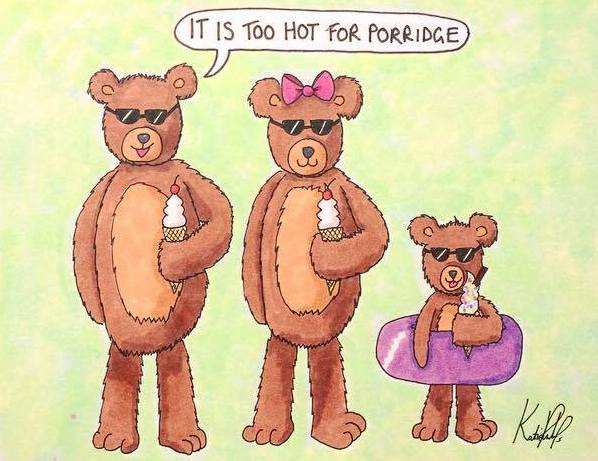
When it is 34 degrees outside, nobody in their right mind would start getting oats out of the cupboard to perform their daily Goldilocks’ impression, but I am not in my right mind, so that is exactly what I do (the slight difference in my impersonation being that I am a brunette version of Goldilocks…Oh yeah and I don’t break into people’s houses to get my oats, especially if those people are bears).

In June then, during the hottest week England has seen in my lifetime, I was stuck in the predicament of being boiling hot and thus convinced that I didn’t need to eat because I was clearly obese. Then by 10pm when the CTO fear would hit me, I would force myself to eat despite being so warm, only I would trigger myself even more and make it even harder by making the food I was consuming a steaming bowl of porridge.
“Eat cold porridge” I hear you cry, “try overnight oats which is the exact same thing but you don’t cook it”, yet even that couldn’t solve my problem as OCD has rules about how porridge is prepared and naturally has me convinced that unless my porridge has been cooked for exactly 4 minutes and 40 seconds with stirring at the appropriate intervals, I will kill everyone on the planet. What logic!

As you can see then, summer/the season and weather in general is one of the many things that people may not think about affecting people with an eating disorder, another thing that complicates the simplified idea that people with eating disorders “just don’t eat”.
They are complex creatures, mysterious as the dark side of the moon (10 points to anyone who got that reference), and the control they hold over a person’s life creates anxieties and difficulties most people might not think about. I am of course happy for everyone out there who loves summer and if you are one of those people living in England, I really hope you are having a lovely time in the June sunshine and are feeling as sunny as…well…the sun…
In the meantime I guess I will just have to suck it up and count down until the winter months when jumpers, porridge and 24 hour darkness are socially acceptable again. My God I am a jolly soul!

Take care everyone x

SummerBear

41 Ways To Celebrate Easter When You Have An Eating Disorder

If I were to tell you that within the next seven days, a giant mole would appear in your garden and would hide chocolate potatoes amongst your shrubbery, you would probably look at me as if I were mentally ill (and you would have a point). If however we were to change that giant mole to a rabbit and the chocolate potatoes to chocolate eggs, I am sure your reaction would be a little different and more akin to “hooray, I love Easter!”.
Indeed, I would share in that hooray, as I have also always loved Easter and the whole  celebration of days that go alongside it. When I was younger, Shrove Tuesday or “pancake day” was the highlight of my year and I vividly remember having competitions with my grandparents as to who would be able to eat the most pancakes (spoiler alert, I won every year). I also loved making hot cross buns with my mother, mixing melted chocolate with shredded wheat to make “birds nest cakes”, and the annual tradition of putting Cadbury mini eggs into my plastic purple duck who would “lay” one of these eggs every time you pressed his head (please note this does NOT work with normal ducks no matter how hard you press them on the head. All you get in that situation is no chocolate egg and a very very angry duck).

Whenever I received an Easter egg as a child I remember being so excited that I couldn’t choose which one to eat first and from the age of five years old I would line them all up in order of expiration date just to make the decision for me. Even with this excitement I would make my eggs last for months and months, only having a little bit a day as a treat because I didn’t want them to disappear, so that it wasn’t unusual for me to still have an egg on the go at Christmas. In senior school they were so invested in festivities that there was even a giant egg hunt around the school grounds on the last day of term before we broke up for Easter and this was taken VERY seriously. People got into teams to compete, eggs were hidden with the utmost secrecy, and four or so teachers would even dress up as rabbits and hide in especially difficult to find spots, with bonus points going to any team who managed to find a bunny and drag them to the finish line. If you found a bunny, you were guaranteed a place in the top five teams and one of my fondest memories of my school days was watching as a hoard of screaming teenagers ran across a field in pursuit of the deputy head, who, after being found hiding in a tree, was sprinting for his life complete with bunny ears and a fluffy tail. It was truly a remarkable sight and Sir, if you are reading this, may I say you suited that fluffy tail perfectly and should seriously consider adding it to your daily wardrobe rather than saving it for special spring time occasions.

As I am sure you can see from all of those memories however, food is a key part of the Easter celebrations, so joining in with the festivities when you have an eating disorder can be quite difficult and lead to the Easter weekend being a stressful, as opposed to enjoyable time. Obviously, as I said when faced with this similar situation at Christmas, it would be great and ideal that for Easter we would all be able to set our eating disorders aside and join in. Eating disorders are horrible, potentially fatal illnesses that should not be allowed to dictate or ruin your Easter, and as my dad quite rightly says “eating a few chocolate eggs once a year isn’t going to do anything to you”. Alas eating disorders are not so easily persuaded by such demonstrations of logic and even with the best intentions and determination, they often interfere with one’s ability to join in with a lot of the “normal” Easter activities. Of course, if you are able to challenge yourself and join in with the more anxiety provoking aspects of Easter this year, then I would encourage you to go ahead and have a cracking time, but nevertheless, today as I did for Christmas, I thought I would offer you a blog post containing a few suggestions as to how to get involved and celebrate a holiday with your family in alternative ways that are not so focused on the food components of pancakes, buns and eggs…

41 Ways to celebrate Easter when you have an eating disorder

  1. Buy some of those little yellow chicks you can get to stick on cakes and instead of an Easter egg hunt, distribute the chicks around the house or garden and use them for your Easter themed hunt instead.
  2. Make an Easter decoration by doing some Papier-mâché on a balloon. Then when it is dry decorate it with as much paint and glitter as you can find to create the most fabulous egg you have ever seen.
  3. Email me a picture of your creation.
  4. Make an Easter wreath.
  5. Plant and decorate an Easter tree.
  6. Sit behind a bush with a leaf on your head and make noises like a lettuce in order to try and attract the Easter bunny.
  7. If the Easter bunny doesn’t show up, change tactics and try making noises like a cabbage instead (as we all know cabbages speak with a far lower pitch so maybe take someone with a deep voice for this one).
  8. If the Easter bunny still doesn’t show up, set off on an expedition around the world in search of your little rabbit friend.
  9. If yet again efforts fail, give up in your attempts to find the Easter bunny and simply become the Easter bunny yourself.
  10. Congratulate yourself on having become the Easter bunny and throw a party to celebrate your new job.
  11. Travel around the world as fast as possible and leave chocolate eggs for everyone who celebrates Easter (I know it is a big job but I think you will find you took it upon yourself).
  12. Rest after exhausting yourself doing number 11.
  13. Weave an Easter basket.
  14. Have an egg and spoon race (I know this technically involves an egg which can be considered as a food BUT the activity of an egg and spoon race doesn’t actually rely on consumption aka eating of the egg and is far more centred on putting the egg on a spoon and running as fast as humanly possible).
  15. Go to a pottery class and make an egg cup.
  16. Paint your egg cup.
  17. Play pin the beak on the chick (A PAPER CHICK).
  18. Buy a female chicken.
  19. Buy a male chicken.
  20. Leave both of your chickens in a barn.
  21. Add mood lighting to create a romantic atmosphere.
  22. Quietly play romantic songs into the barn (I recommend Dolly Parton. I am not sure why but I feel like chickens would like Dolly Parton.)
  23. Give your chickens some privacy.
  24. Wait until an egg has been laid.
  25. When an egg has been laid, ensure it is kept warm and is well cared for until it is ready to hatch.
  26. Watch as the egg hatches and congratulate yourself for creating a romantic partnership that has led to a new life in the form of a real life Easter chick.
  27. Realise that there is no way for you to achieve all of this in the next few days as Easter is only a week away and it takes considerably longer than that to progress from step 18-26
  28. Research how long steps 18-26 will take realistically.
  29. Check what date Easter is next year and put a date in your diary as many days/weeks before Easter Sunday needed to realistically carry out steps 18-26 in order to actually have an Easter chick born on Easter Sunday.
  30. Make pop up Easter cards to give to friends and family.
  31. Learn to knit and make some cuddly Easter bunnies.
  32. Turn those few bunnies into several hundred bunnies because as we all know, in nature these creatures tend to multiply rather rapidly.
  33. If you are religious, go to church.
  34. If you are not religious, maybe give someone without a car who is religious a lift to church.
  35. If you are not religious and don’t know anyone who is, simply kidnap a passer by and take them to church in the interests of traditionally celebrating Easter Sunday. I am sure the Pope would approve.
  36. Lie completely flat on the floor and impersonate a pancake.
  37. Plant daffodils.
  38. Water your daffodils with a watering can shaped like a bunny.
  39. Become a daffodil (please note you can only do this one if you didn’t do suggestion number 9 for as we all know it is far too much responsibility for one to be both the Easter bunny AND a daffodil.)
  40. Wear all of your winter clothes at once, get very angry and then play crazy golf. If anyone asks what you are doing answer that you are celebrating Easter by having some “hot cross fun”
  41. Roll your eyes at number 40 and wonder why on earth you are still reading the blog of someone who is clearly an idiot

So there you have it! 41 Non food related ways to celebrate Easter when you are suffering from an eating disorder! If you are a friend or family member of someone with an eating disorder, maybe suggest one of these activities to them in order to make them feel included in the festivities, or maybe ignore all of my suggestions and come up with a more sensible non food related way to celebrate to make sure that your friend/family member feels included with the holiday. Hopefully if you yourself reading this are a person with an eating disorder, one day you will feel able to participate in the more “traditional” chocolate egg/hot cross bun parts of Easter and maybe one day you will be fully recovered and able to enjoy Easter as much as you did before your eating disorder rudely entered your life. Either way, whatever stage you are at, I hope you all manage to have some fun this Easter weekend and that things aren’t too stressful. Stay calm, stay strong, and if in doubt, just become the Easter bunny.

Take care everyone x

EasterED