“But You Don’t Look Depressed”

Have you ever played real life Where’s Wally but instead of a man in a bobble hat and a striped jumper you had to find someone with depression? Hopefully you answered no, (if you answered yes I would advise you to make some changes to games you play for recreational purposes and would suggest Scrabble as an alternative). If you did answer no though, it is a game I do not recommend because playing such a game would be practically impossible (again, maybe try Scrabble).

Despite the fact that we now live in a time where there is a fairly wide understanding that depression is a “mental” illness, I still feel like there is the idea that somehow it is as visible as a broken leg. In fact I have lost count of the number of times someone has discovered I have depression before responding in surprise with that oh so familiar phrase to anyone with depression, “but you don’t look depressed”.
To be fair, no, no I often don’t. Then again Ralph Fiennes didn’t look like Ralph Fiennes when he was playing Lord Voldemort in the Harry Potter films with his nose all squished out of recognition, but underneath all that make up/genuine wizardry, he was still Ralph Fiennes.
Much like Ralph Fiennes, people with mental health problems like depression are often great actors, dare I say even better than the ones you see on TV to be honest, as we don’t even need green screen or CGI fake noses.

Whenever people say that I “don’t look depressed” I almost want to ask what exactly someone who has depression should look like considering I am clearly not living up to their expectations.
I think the traditional depressed person is supposed to look like the pictures you see when you search depression on google images or look at any of the pamphlets they hand out at doctors’ surgeries. In the majority of these images, the people are curled up in a corner somewhere with their heads in their hands, but like the images you see of skeletal anorexics in the media, this is not always the case, and it is dangerous to think so.
Admittedly sometimes in my life living with depression, there is a lot of curling up in a ball for a good cry (often with Celine Dion – “All By Myself” playing in the background), yet that is not my constant state of being and not something I allow many people to see.
Inside I may feel like staying in that soggy ball all the time, but at family occasions or social events for example, I always put on my “sane” face and play the part of “human who has life together” as required by expectations upon me, much like many other people do at work or when they are in front of their children.

Contrary to portrayals in the media, often both I and other sufferers of depression really do just look like “normal people”. However well disguised a depression suffer is though, it doesn’t mean they are any less ill or need be taken any less seriously than those who are visibly struggling. Indeed, what a person looks like on the outside will tell you nothing of the severity of their condition, and you cannot compare sufferers based on the number of tears they have cried in the last fortnight.
Depression may be one illness, yet it expresses itself and feels different to every individual who suffers from it, so how one depressed person behaves could be totally different to someone else who also has the condition.
Even single individuals can present the illness in totally different ways depending on what day you come into contact with them so you can’t even classify people in groups of “loud person with depression” or “quiet person with depression”.
Like I said there are some days where my depression means that I physically cannot talk or get out of bed, and then aside from the days I have to pretend to be a certain way in front of family members, I have days at home in private where I am so depressed that I spontaneously burst out into hysterical laughter despite being alone and “allowed” to show how I really feel without upsetting anyone. It is almost like those situations in which people without depression hear a piece of bad news and instead of reacting with tears as would be appropriate, they just start laughing because their brain physically cannot cope with the shock/that amount of sadness. Truthfully I have had days where I can be so depressed that I spent half an hour hysterically guffawing (I believe the kids today call it “LMAOing”/“Loling”) at a pencil. Yes, you read that right, I laughed for half an hour at a pencil (not even a particularly funny pencil. His jokes were terrible. No idea of timing when it came to landing a punchline).

Much like the problem I discussed in my post about people with eating disorders not always being underweight, this misconception that someone must “look depressed” to be depressed is actually a mistake that puts many people at risk as well as being frustrating.
It is often due to this “depressed people must look depressed” problem that sufferers may feel unable to “come out” and be honest with family members about their issues for fear that they won’t believe them or take them seriously. Admitting to someone that you have depression is hard, often embarrassing and can take a lot of courage as it is, but to do so and then be told that you must be mistaken because “you don’t look depressed” is a sure fire way to make someone feel more devalued, ashamed and deluded than ever.
It is when people feel the need to keep their illnesses quiet and not seek help for fear of this response that they end up feeling more alone than they already did and in some circumstances take their own lives. How many articles about a suicide victim have you read where the family conclude by saying “we knew this would happen. Too much crying/head holding in the corner”? Most likely none, as usually such columns end with the far more unfortunate “we had absolutely no idea”.

When it comes to those with depression, in this post I really want to urge people to see them/us, not as head clutching Celine Dion fans, but instead as ninjas, masters of disguise who can pop up anywhere without people realising (only without the resulting violence that often ensues around ninjas).
That jolly person who served you in the supermarket? They could have had depression. That milkman that never shows any emotion at all? They could have depression. That girl you saw cycle past your house this morning? They could be a penguin in disguise, which isn’t exactly the same as depression but it just goes to show that you cannot make any judgements based on appearance alone.
Literally the only way it would ever be possible to play Where’s Wally where the aim is to spot the person with depression would be to make every sufferer of the aforementioned condition wear a Where’s Wally jumper at all times, and thankfully, that is never going to happen… At least I hope it doesn’t… I really don’t suit horizontal stripes.

Take care everyone x

dontlookdepressed

Why I Like Being Diagnosed With Mental Health Problems

Before I get into this post, due to the potentially controversial/misleading title if people simply read that and not the rest of the blog, I really want to emphasise the fact that I am not saying in any way that I like having mental illnesses. As you all know, I hate having mental illnesses, and if I could find a magic wand to make them all go away for everyone on the planet then I would do so faster than the flap of a hummingbird’s wing (they do 50 flaps a second just incase you were wondering). That said, I have to admit that recently, at a time in which I am struggling a lot with my various disorders, the fact that I am diagnosed with such disorders, is the one positive thing I am holding onto. Confused? Allow me to explain…

Every morning I wake up exhausted from the previous day yet knowing that I have to basically relive that 24 hours again and fight the same daily incessant battles once more. Everything I do, from showering, making a cup of tea and putting on my slippers to eating a bowl of tomato soup (if Covent Garden are reading this then please be aware that I eat your fresh plum tomato soup everyday and am practically keeping you in business so please send me all the free soup available), is a challenge.
Now if I was to be told that the way I live my life is normal, then to be honest I wouldn’t want to take part in it anymore. If life is about constant fear, dread, terror and anxiety, and if it is normal to worry that your mum will die because you touched a towel wrongly, then quite frankly I would give up right now. I don’t enjoy my life as it is at the moment, I simply endure it, and the one thing that gets me through is knowing that none of what I do is normal and that none of this is how life has to be.

Of course I understand that everyone in life has a hard time. Just because you don’t have mental health problems doesn’t mean everything is sunshine and rainbows, so I am well aware that if I ever get better from any of this, life is not going to be easy or enjoyable all of the time. I do however like to think that general day to day life would be a bit less of a struggle.
It comforts me to see other people out there living their lives differently to how I do, touching doorhandles and eating food without crying, because it shows me a world that one day I might be able to be a part of. It gives me hope and something to aim for.
I like that my being told that the reason I struggle to eat is because I have an illness called anorexia, that the reason I cannot enjoy anything is because I have an illness called depression and that the reason I am compelled to perform futile routines for hours on end is because I have an illness called OCD. By identifying and diagnosing these things as illnesses, it suggests that they are things that one can get better from, just like with any purely physical illness.

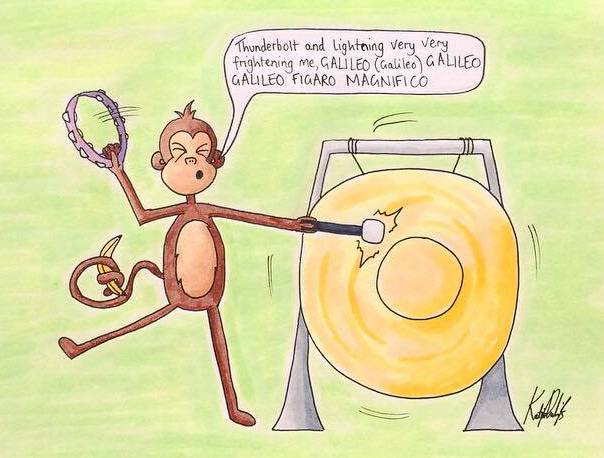
Imagine you have the flu. You cannot sit up because your whole body aches in places you never knew existed, you have a headache that feels like there is a monkey in your brain banging a giant gong and waving a tambourine (to be more specific he is trying to play Bohemian Rhapsody but it isn’t going at all well). You go from hot to cold so quickly that half the time you aren’t sure whether you want to be wrapped in a blanket or to sit in the freezer, and your nose and throat are so clogged with flu rubbish (medical term), that it is physically hard to breathe.
Imagine lying there groaning about how horrendous you are feeling, and then someone comes into the room telling you to keep it down because there is nothing wrong with you, that this is what life is like, that this is how you will spend your entire human existence, that the pain you are feeling is “normal”.
I don’t know about you, but whenever I have the flu or any other unpleasant physical illness, the comforting thing is the thought that it will go away, there is some evil germ doing something horrible in my body but one day it will be gone. It may be frustrating that I can’t get out of bed and have to cancel plans to meet a friend, but in a week or so I will feel more up to it and we can rearrange. Yes, it sucks that I cannot breathe through my nose and that I am drowning in tissues soaked in my own mucus (no need to thank me for that glorious image), but soon all the mucus will be gone and air will start flying up and down my nostrils with refreshing ease again.
When something is diagnosed as an illness, you can look it up, find cures, relate to symptoms that you thought only you felt and find inspiration and hope in people who have recovered from the troubles you are facing. Have a headache that feels like there is a monkey in your head banging a gong and waving a tambourine? Does it kind of sound like he is trying to play Bohemian Rhapsody but is failing miserably and should probably try learning to play the piano instead? Awesome, that is a symptom of an illness you have and should clear up in a few days. You don’t like having the flu, but you like knowing that there is a name for what you are experiencing and you like being able to learn that it will not last forever. It would be a hell of a lot harder for Harry Potter to destroy Voldemort had he not known who or what was the villain he was fighting, but in identifying him, he knew who the enemy was and therefore knew his target/who he should be attacking. By being diagnosed with mental health problems and by giving them names, I can therefore learn about them and work on a strategy to defeat the evil little bastards.

So as I said in the beginning, do I like having mental health problems? No,I hate their existence and whatever devilish lair they sprang from, but I still love, and it is of great comfort to me, that I am diagnosed with them. I know that at the moment I am not “normal”, that I am unwell, so like the person with the flu, I am getting through each hour by hoping that one day when I wake up, I will finally be able to breathe again.

Take care everyone x

monkeygong

How To Deal With People On Diets When You Are In Recovery From An Eating Disorder

When it comes to treating an eating disorder, there are about a million ways out there that people go about it. It is like the overall goal of recovery is the Triwizard cup from the Triwizard tournament played out during Harry Potter and the Goblet of Fire, and all people with eating disorders are standing inside this perilous maze running down various paths to try and find their way to victory in recovery (and hopefully not a surprise encounter with Voldemort as happened to Harry. By God that was unfortunate). Some people take the path of medication, others attend groups, try various different kinds of therapies, visit hypnotists, but of all eating disorder recovery journeys you can guarantee they will all, at some point, share something in common: a meal plan. Sometimes people construct these meal plans themselves, others are prescribed them by therapists or dieticians, and some have their meal plans dictated by doctors and nurses in a hospital setting.
Obviously eating the meal plan is hard enough in terms of having an eating disorder and the thoughts that go alongside that, but one thing that can make following your meal plan a hell of a lot harder than just carrying out the basic set of instructions, is the almighty trigger of people on diets.

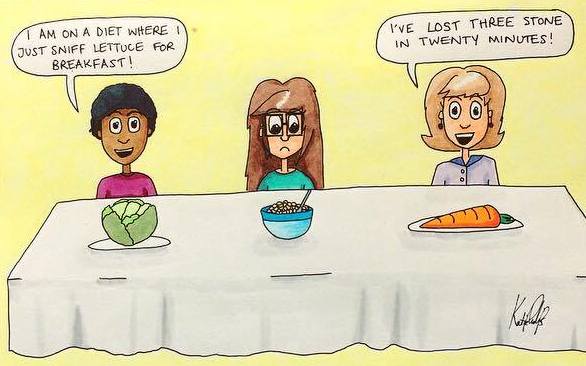
Picture the scene. You are sitting there at home, ready to eat your healthy balanced lunch prescribed by your dietician. All your basic food groups are present (protein was a little late to the table as he got held up by a tractor on the motorway but everyone is there now). You are anxious but determined to soldier through the meal in your journey to recovery. Then a member of your family comes to join you. You smile and wave, grateful for the company, anticipating a nice bit of conversation to distract you from the eating disorder screaming at you not to pick up the fork, but then the family member sits down. Glancing at their plate, your face falls. All they have is lettuce. THE NERVE OF IT.
If you are anything like me it is around this point that you will start to feel very angry and indignant, and your already difficult task of eating lunch becomes a hell of a lot harder. Suddenly your recovery meal plan lunch looks like it has doubled in size like some unwelcome food multiplication miracle in the style of Jesus and all those loaves and fishes. The already intimidating quantity feels even more excessive and unnecessary than it felt before and the thoughts are churning. “If I eat this when they are just sitting there with a salad I will be greedy”, “clearly I don’t need this much for lunch if that is all they are having for the equivalent meal”, “why should I eat this food when they are allowed to eat lettuce” etc etc. Then things escalate, and before you know it you have hit your lunch time companion over the head with the left over half lettuce in the kitchen, torn up their copy of Slimming World magazine and crumbled any diet pills they were taking to dust, dust which you then sculpt into a giant sand castle prison to lock them in until they agree to eat normally again (not that I have ever thought this through in detail prior to writing this post you understand). Basically, it sucks, but for all you people out there who struggle with this trigger, never fear, for I have words of potential wisdom that I hope will help, as there is a key thing to remember in all of this.

The most important thing to remind yourself when you are at that table, eating your recovery meal plan around potentially salad chomping dieters, is that you are in a completely different situation to that person, so different and far apart in fact that you are actually not even on the same table.
If you are in recovery for an eating disorder and have been prescribed a meal plan to follow, that meal plan is your medicine, and the nonsense in your head trying to tell you not to eat it because someone else is eating less than you, is a voice that makes as much sense as someone with an ear infection refusing to take antibiotics because nobody else in their household is.
Who knows? Maybe that person on a diet has been prescribed their low calorie meal plan by a doctor because their previous diet was giving them health problems, or maybe they are just doing one of those silly fad diets for a few days after an advert they saw in a magazine. Either way, that does not mean that automatically you should not follow the meal plan that is prescribed/necessary for your body, and following it does not make you greedy simply because you are eating “more” than someone else.

When you are at the table trying to eat your meal plan and you are with someone who you know is having less than you, the most helpful thing to focus on for me is imagining the distance in your situations (aka a person with an eating disorder and a body damaged by the effects of starvation and malnutrition vs a person without an eating disorder who is not malnourished), as a genuine distance in physical location.

For example, imagine an explorer standing in the Arctic as representing a person with an eating disorder (for the purpose of this example we will call him Eggbert because I would imagine that people called Eggbert are rather adventurous/like the cold). Eggbert is surrounded by a blizzard, a glacier is rapidly approaching from the North and a polar bear to his left is giving him very funny looks (even the polar bear looks a little on the chilly side despite being designed as fluffy enough for these conditions).
Now picture a holiday maker on a beach in Barbados as representative of people without eating disorders. Doreen, for that is the name of our sand loving pal (actually that’s a lie…her real name is Doris but she had to change her name because she is on the run from the law…SHHHH!), is on a beach in Barbados with temperatures so hot that the local chicken eggs are laid hard boiled.
Now imagine the food aspect of things as a giant pile of coats and blankets.
Eating disorders aside, I think we can all agree that in these circumstances, Eggbert who is shivering with the polar bear in the Arctic, is definitely in need of all the coats and blankets and hot water bottles available to him. Indeed it is vital for Eggbert’s survival for him to take those things on board and snuggle up regardless of what Doreen is wearing on her beach in Barbados. By keeping all of the blankets to himself and not sharing some with Doreen somehow, Eggbert is not greedy, he just is at a place in life where he has different needs to Doreen to keep him alive. It is a situation in which Eggbert is using necessary resources to keep himself safe, and he still needs all those blankets and hot water bottles even if Doreen is lying elsewhere on a beach towel fully nude (AVERT YOUR EYES CHILDREN).

That may sound a bit of a drastic difference in situation to illustrate the point, but it is vital to acknowledge the difference in situation between you and the person you are eating lunch with if they are eating less than you. You are not on a weight loss diet because you do not need to lose weight, their diet magazines do not apply to you, and if you tried to attend their weekly weight loss sessions for more weight loss tips you would be turned away. As hard as it is, you really do just have to cut that person’s weight loss mission, diet and exercise out of your life and not allow the voice to trigger you to use someone else’s behaviour as a reason to avoid doing what you need to do. As with needing jackets in the Arctic, you need the food, even if the person sitting next to you is as naked as the day they were born and munching on lettuce. What a lovely image to end a post on. I really hope you enjoy it.

Take care everyone x

newyeardiets

Why Baby Steps Are More Important Than New Year’s Resolutions In Mental Health Recovery

There are two kinds of people in this world, those who like and make New Year’s resolutions, and those who think that New Year’s resolutions are pointless and should actually be renamed as “things you try to do all year but give up on by February”. I myself however, am somewhat in the middle of these two kinds of people (much like I am on the whole Marmite debate. I don’t love it, nor do I hate it. I am truly indifferent…WHAT DOES THIS MEAN).
I actually like the idea behind New Year’s resolutions. I think it is good to see the new year as a chance to improve on whatever happened in the previous one, see it as a fresh start and a clean slate without all the baggage you have dragged around for the past twelve months. That said, I have not made a New Year’s resolution myself since 2010, and that is because I feel that when people make these promises to change, they are far too ambitious and unattainable. They set themselves tasks like “fly to the moon” or “play tennis at Wimbledon” when they haven’t yet thought to apply to astronaut school or pick up a racket. Back in 2010 I made three new years resolutions, those being:

  1. Be happy all the time
  2. No anorexia
  3. No OCD

As midnight approached I felt a surge of excitement. The moment that clock chimed (lets pretend we still live in a time where it is common to have a grandfather clock that chimes..it is a nicer image than me staring at the digital numbers on my phone waiting for 23:59 to become 00:00), my life was going to change, I was determined, and I had made a promise to myself that 2011 was going to be better. Then it happened. The clock struck midnight, and suddenly my carriage that had brought me to the party turned into a pumpkin and I lost a glass slipper!…Wait..no sorry…got mixed up in the life of someone else a little…no, what actually happened was the clock struck midnight and I felt a weight fall from my shoulders (much like a glass slipper was slipping from the sole of a future princess…)

Finally 2011 was here and I was recovered, I never had to do an OCD ritual again, I could eat and I would be smiling for the rest of my life. Looking back I can’t believe I was so deluded, but the first thing I did in 2011 was to run to the bathroom to wash my hands once, just to prove that I was in control again and could stop easily after one squirt of soap. But I didn’t stop. After the squirt had been collected in to my hands my thoughts immediately burst in and I found myself rubbing my hands together vigorously with the same urgency as I had done in 2010. I became incredibly stuck, thoughts flying so rapidly that before I knew it a significant amount of time had passed, over 100 squirts of soap had been used and the only thing I could see through the tears of despair and frustration was a basin full of bubbles. As I went back downstairs to join the others still milling around drinking champagne and watching the odd late firework banging about in the distance, I felt totally defeated. I had failed. I hadn’t even kept my resolution for 24 hours before engaging in the behaviours I told myself I was finished with, and my hopes for change fizzled out like an old sparkler. Granted I was being a bit dramatic by seeing the whole year as ruined and giving up because of one ritual, but logically because of the strict boundaries of “No” OCD, I had in essence failed, so what was the point carrying on? Clearly recovery was impossible.
It is only now looking back that I realise that the problem with my resolution and the reason I had “failed” was entirely the wording and dramatic nature of the resolution I had made. I didn’t set myself a manageable goal of trying to reduce the amount of time in the shower over the course of the year or anything reasonable, a goal that would focus on steady progress with potential slip ups yet still a continuous effort to push forward. Instead I had set myself the impossible task of transforming from a person who had been dominated by mental health problems for the last 7 years to a “normal person” in less than 7 seconds, which is pretty much like someone setting the goal of “flying to the moon” without realising all the steps it takes to get to that point.

Admittedly, I have always struggled with people telling me to “take things steady” and “take baby steps” when it comes to recovery. I am a very black and white person, either I am better or I am not, “baby steps” and little goals like “exercise for five minutes less per day” do not help me. I want total freedom from this mental health cage, not just the same cage with an ocean view.
However, my attitude to all this recently underwent a bit of refurbishment when I was glancing through pictures on Facebook and stumbled across a photograph that I posted online in 2014 to commemorate the fact that I had graduated from university, and for the first time, as I looked at the picture, taking “baby steps” made some sense.

babysteps
As you can see this picture is a comparison shot between little 4 year old me on my first day of school, and 22 year old me graduating from university after a rocky 18 years bumbling through the education system (I look pretty happy in that picture but that was because my mum took it before I found out I wasn’t allowed to keep the funny hat and gown. That was a major disappointment. The only thing I got out of that day was a piece of paper saying I had a theology degree. Who the hell wants that? I didn’t go to university to be educated, I went for the damn hat!)

Looking at these pictures it is very black and white. In one I have a degree (and a marvellous hat), and in the other, I have no degree (and no hat. 4 year old Katie had a hard life). That said, though there is a stark difference in achievement between those two pictures, it isn’t because I made a grand resolution at the age of 4 that changed my life in a second. When I was 4, the thought of getting a degree one day had not entered my mind.
Imagine if someone went back in time now, found little 4 year old me and said “go and get a degree in theology this year”. I would probably have cried (and asked what the hell theology was). When I was 4 there was no way I could just go off and get a degree. I had birthday parties to plan for my teddy bears, letters to write to Santa and hopscotch competitions to attend! I couldn’t tie my shoes yet let alone write essays on Saint Thomas Aquinas or Augustine of Hippo (genuine name…Hippo…it has been years but I am still amused), so setting that goal for me at age four would have been overly ambitious and basically would have set me up to fail.
Had this time travelling person told me to go to school that day however instead of getting a degree right then and there, I would have probably looked at them, nodded and then got on with it. When doing so I wouldn’t have realised that me turning up for a morning of finger painting was actually the first part of my journey to that oh so lovely yet tragically temporary hat (and a degree I am now stuck with forever), but it was. Without achieving all those little steps in-between, the sports days, the story books and the words of wisdom over the years, I would never have got that degree (actually maybe cancel the sports day bit..I don’t think they were particularly important…).

My 2010 new years resolutions to totally recover in the blink of an eye then, were basically the equivalent of me telling 4 year old Katie to go and get a degree before the little tike had learned to read, and it is in realising this that I can see the value in making new years resolutions, as long as they are the baby steps to get you to your goal rather than a leap to success that no Olympic long jumper could make even with a springboard.
If you want to set yourself a resolution for 2017, make a resolution that you can do over time, that allows for mistakes and gradual progress rather than instantaneous results. If you want to recover completely from OCD, make your goal to try and reduced the number of times you get caught in rituals over the course of the year. If you want to recover from depression don’t set the goal of being happy all the time, simply think about the things that could one day make you happy and go out trying to achieve them, even if that goal is just phoning up to enquire about a course. It is the same with progress in eating disorder behaviours as well as any other mental health condition, and though admittedly it takes a lot longer than the midnight miracle method I wished for in 2010, I think it is the only way to make it through this journey.

My hope in life is that one day I will be able to take a picture as someone who is no longer struggling with mental illness and to see it alongside that 4 year old me as a sign of how far I have come in ways other than education, and working towards that is my goal for the next twelve months. 2017 is not going to be “my year”, the year I change, recover totally and get a brand new life, but it is another year in which I will continue my 2016 resolution of doing all I can, listening to professionals, talking and attending all appointments, to one day make that massive goal of recovery. Taking my medication this morning has not made me better, but hopefully it is a baby step along the way.

Happy New Year everyone x

newyear

52 Non-Food Related Ways To Celebrate Christmas When You Struggle With An Eating Disorder

If there is one group of creatures on earth who find Christmas dinner more stressful than all the turkeys out there do, it is people with eating disorders. Actually scrap that, when it comes to having an eating disorder it isn’t simply Christmas dinner that is stressful, it is the entire build up over the festive season when suddenly it feels as if EVERYTHING is about food.
There are Christmas meals out with friends to attend, boxes of chocolates being thrust under your nose at every turn, Christmas puddings, mince pies, Christmas cake, chocolate log and mile upon mile of buffet tables. You can’t even look at a calendar to see what the date is in December without it trying to throw a chocolate at you!
Don’t get me wrong, I love all of the Christmas food traditions we celebrate with in order to make the season extra special and I do not want the food aspect of Christmas to be banished forever. Indeed I love the idea of building gingerbread houses, opening the door on your advent calendar to see what shape chocolate you will find that day and the tradition of turning all the lights off, setting fire to the Christmas pudding and sitting for several moments “oohing” and “ahhing” at the blue flames waltzing across their dried fruit dome of a dance floor. Nevertheless, as fun as all the food aspects of Christmas can be, with an eating disorder they can be incredibly stressful and thus make December a particularly difficult time of year, especially if you find yourself unable to join in with the traditions your loved ones are carrying out and thus feeling more isolated than usual.

For this reason then, I thought I would use today’s blog post to offer a list of suggestions of ways to celebrate Christmas that aren’t food related. Obviously if you find you are able to join in with the usual food activities then by gum join in and have a jolly old time (does anyone say “by gum” anymore…I quite like it…screw it I am bringing it back), but if you can’t, allow me to offer up some new potential traditions that will hopefully get you into the festive spirit without all the festive anxiety…

The Official Born Without Marbles List Of Alternative Non-Food Related Ways To Celebrate Christmas

  1. Buy a live Christmas turkey and take care of it
  2. Go carol singing (if you sing like I do your neighbours may not be thrilled about you knocking on the door whilst belting out “Good King Wenceslas” but if you do it with enough enthusiasm I am sure they will enjoy it in the end. Maybe include hand gestures to go along with the lyrics or a intricately choreographed dance routine.)
  3. Make Christmas wreaths
  4. Buy an entire supermarket’s supply of crackers and have an evening of cracker pulling madness
  5. Perform a fashion show wearing all the paper hats you earned in your cracker pulling evening
  6. Perform a stand up routine of all the jokes you earned in your cracker pulling evening
  7. Stop performing and take a break by watching a Christmas film (I am a sucker for “Love Actually”…until the part where Emma Thompson cries to Joanie Mitchell because Snape bought a necklace for a home wrecker…OH GOD HERE COME THE TEARS)
  8. Dry the tears you have cried watching Love Actually and read a Christmas book instead (my personal favourite is the classic Christmas Carol by Charles Dickens.)
  9. Dress up as an elf and dance around the streets
  10. Play Monopoly and get into an argument with a family member about who gets to be the silver dog (nothing says Christmas like a board game argument involving statements like “No, I am the dog. You can be the iron!’)
  11. Plant a Christmas tree
  12. Decorate a Christmas tree (hint, it is has been scientifically proven that the beauty of a Christmas tree increases dramatically when decorations are penguin themed)..
  13. Find the machine they used in the film “Honey I shrunk the kids”, miniaturise yourself, whack on some wings and a wand and then sit on the top of your Christmas tree to be the family fairy on top (maybe take a cushion to avoid spikes. Fir trees can be prickly)
  14. Make a Christmas present filled shoe box and donate it to a charity who send out gifts to those who need a present
  15. Grow a beard
  16. Dye beard white
  17. Stroke beard and shout “Ho Ho Ho” at passers by
  18. Hang out with a reindeer
  19. Put fairy lights all over the front of your house and enjoy the groups of strangers that gather at your doorstep to appreciate your display
  20. Volunteer with a charity to help take care of those who are alone at Christmas
  21. If you are a Christian/fancy something a bit traditional, go to church
  22. Invite burglars into your household and then take them down with paint cans and tarantulas in a re-enactment of the classic Christmas film Home Alone with Macaulay Culkin
  23. Come up with a good explanation as to why the house is a state and why there are two unconscious burglars in the basement for when your parents/house mates return home
  24. Find snow
  25. Go sledding
  26. Go skiing
  27. Build a snowman
  28. Direct your own one man nativity play (I will leave it up to you to decide how to simultaneously play a sheep, the Virgin Mary, Joseph and the baby Jesus…you are the director after all)
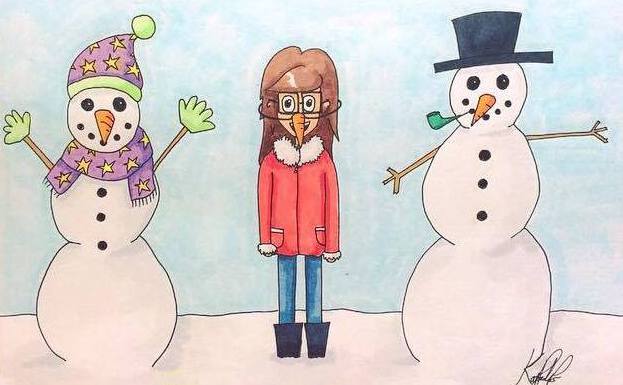
  29. Tie a carrot to your nose and stand in people’s gardens pretending to be a snow man
  30. Make Christmas cards
  31. Knit your own Christmas stocking
  32. Find Santa’s workshop and offer to help making all the presents this year
  33. Make your own advent calendar and hide treats that are not food related behind all the doors
  34. Go and watch a pantomime (if you find it hard to find the theatre on the night of the performance just turn around. Chances are it’s behind you)
  35. Stand under the mistletoe and wait…
  36. Keep waiting…
  37. Keep waiting…
  38. Just a little longer…
  39. Give up standing under the mistletoe and run to a mirror. Stare at your reflection and then compliment yourself out loud with the utmost sincerity because you are beautiful and if people don’t kiss you under the mistletoe then it is their loss/a sign of their bad taste/not a reflection on your personal levels of fabulousness.
  40. Tinsel. I am not sure what exactly you can do with tinsel but it is christmassy and not food related so do something with it.
  41. Find a pregnant lady called Mary and ask if she would mind coming with you to give birth in a barn where the cattle are lowing
  42. Lie any babies born in a manger
  43. Offer the baby Frankincense
  44. When the baby turns its nose up at frankincense (literally…that stuff STINKS), offer it a rattle instead
  45. Play pin the tail on the reindeer (WITH A PAPER REINDEER PLEASE)
  46. Go ice skating
  47. Sit under a fir tree with a bow on your head and pretend to be a present
  48. Laugh at all the fools who actually mistake you for a present
  49. Jingle some bells (jingle them ALL the way)
  50. Find loved ones
  51. Hug loved ones
  52. Scout the supermarkets from the 22nd of December onwards to see which one starts selling easter eggs first. The first place winner gets nothing at all as a reward and should be ashamed of themselves for perpetuating consumerism/the capitalist agenda.

So there you have it! A list of fifty-two alternative ways to celebrate Christmas when you have an eating disorder. Of course part of me hates writing this post and in an ideal world I would simply tell you all to just join in with everyone else and the “normal” food related activities rather than having to follow any of my suggestions (fabulous though they may be).
As any sufferers out there will know, eating disorders are soul destroying, potentially fatal illnesses that should not be allowed to dictate and ruin your Christmas. They shouldn’t dictate your behaviours, interfere with your ability to be “Merry and bright” and make social interactions around a crowded dinner table utterly terrifying, but unfortunately, a lot of the time, no matter how hard you try, eating disorders do all of those things without caring as to whether they should or shouldn’t.

That is why I have made this list. It is not because I agree with any of your eating disorders telling you that you can’t join in or that there is anything wrong with the food celebrations at Christmas time, but because this is not an ideal world (remember, this was the year Mary Berry left The Great British Bake off), and as much as I wish I could wave a magic wand and banish your eating disorders to enable you to have the ED free christmases you deserve, I know that such a dream is vastly overestimating my abilities as a magician.
Hopefully one day there wont be any eating disorders so this post and these alternative Christmas celebration activities won’t be necessary anymore, but until then I just want to try and help you come up with ways that you CAN join in at Christmas regardless of your eating disorders so that you don’t have to hide all December and become lonelier than the last toffee penny in a tin of quality street.
I have every faith that we will all eventually get to the day where the highlight of Christmas is a roast dinner and flaming pudding with all the family. Until then though, let’s just find fun where we can, knit our stockings and look forward to a time when all of this mental pain is a thing of the past.

Take care everyone x

snowmaned

A Message To All The People Out There Who Are “Pro-Ana”

Before I get on with the main bulk of this post I just want to preface it by clearly stating the fact that eating disorders are not a choice and are horrible illnesses that barge into and take people’s lives without those people having a chance to stop the aforementioned barging. However, as involuntary as eating disorders are, there are some people out there who for some reason see them as a glamorous and desirable life choice/thing to aspire to. It is to THESE people and not all involuntary sufferers out there, to whom I address this post. All clear? Cool, let’s get on with it…

In life, there are many types of people that I do not understand. For example, I do not understand people who eat a piece of Christmas cake and leave the icing/marzipan behind (THAT IS THE BEST PART WITHOUT THAT IT IS JUST RAISINS), neither do I understand the people planning to vote for Donald Trump in the upcoming election. Possibly the most confusing people to me however, are those who frequent “pro anorexia” websites online (yeah. That’s right. They confuse me even more than Donald Trump supporters. At least Donald Trump has floppy hair you can laugh at when he is spouting bile. Anorexia has no floppy hair and therefore no room for visual comedy). If you didn’t know already, pro-anorexia websites are basically as horrendously sick and disturbing as they sound. Having avoided them like the plague myself, I cannot provide an in depth image as to what they show, but from what I gather it is pretty much a lot of pictures of skeletal bodies that people stare at in order to inspire them to achieve the beauty of collarbones that make you look like you have swallowed a coat hanger. There also may be forums where people can discuss diet tips, encourage each other not to eat and who generally see anorexia as something that is desirable, that they want to have (hence the ‘pro’ in the name).

Now I am not one to tell people what to do. When I do not understand someone’s life choices I am not going to stand in their way and insist they change their deepest desires. Though I do not understand people who leave the icing and marzipan from the top of Christmas cakes (or indeed people who choose to eat Christmas cake when the other option is chocolate log…there is no decision there…obviously it is chocolate log every time), I have never spied an icing abandoner, approached them in outrage and chased them down the street waving the forgotten almond paste and fondant. This is because although I do not understand this behaviour, I trust that they have tried icing before and following the full experience and all the knowledge available, they know that cake without icing is really what they want.
When it comes to people who want eating disorders however, I simply cannot allow myself to sit back and let them make these life “choices”, as in my eyes the only person who would ever make such a decision as to get an eating disorder would be a poor uninformed soul who doesn’t really know what they are getting into. For this reason then, today I thought I would just write a little post to all those people who want eating disorders, in order for them to realise what life with an eating disorder really is like. Basically I am enlarging the font of the little set of “terms and conditions” that accompany the joy of being thin and not eating, so that people can be sure it is what they want. So to all people who want to have an eating disorder, that is cool, but before you go ahead and seek one out, here are a few things that I want you all to know:

1. Eating Disorders are not great for your physical health: Not eating is great and all but it is important to be aware that not eating is potentially fatal and is the reason that eating disorders are the number one killers in terms of mental health problems. Even if you don’t die they will definitely wreck your body, so before investing in an eating disorder you may want to say goodbye to your health first, as lord knows you wont be seeing it for a while. For one thing your hair is going to fall out in clumps, your skin is going to become dry and pale and you will probably have bags under your eyes so big that you can fit a week’s food shop in them (no more paying 5p for a carrier from Tesco for you! Bargain!). You are also going to be freezing cold all the time no matter what the weather, so in preparation you may want to purchase forty to fifty hot water bottles, blankets and thick thermal fleecy undergarments (sexy). This does have the benefit of making you a good pastry chef (as all bake off fans will know, cold hands are essential to a good apple pie), but on the down side you won’t be able to eat that pastry without agonising guilt afterwards… Also you may want to buy a wheel chair or walking stick as eating disorders love to screw with your bones (picture anorexia as a dog having a good old gnaw on your elbow until most of the bone has chipped away, leaving an osteoporosis filled powder). Oh yeah, and if you want kids anorexia will probably render you infertile too, but hey, who cares! You will save a tonne on child care and you get to be thin right? Wrong…

2. Eating Disorders do not make you thin: This disclaimer is a tricky one but allow me to explain. Basically there seems to be this idea that when you have an eating disorder attacking your mind, this will be physically evident in a lot of weight loss. For one thing, not all eating disorders involve weight loss, and for another thing even if they do, you will not be able to appreciate it. Sure you will be able to get on the scales and see the numbers go down but when you look at the reflection in the mirror it is likely you will not see that weight loss at all. Interestingly, when you don’t eat enough and become underweight, self perception becomes more and more distorted, so you may even see yourself as having gained when really the opposite is true. Its just a fun little game eating disorders like to play (the jokers!), so if wanting an eating disorder to “look thin” then maybe look elsewhere in terms of life goals and ambitions as looking thin is not a package deal with an eating disorder. The physical complications mentioned above are a package deal no matter what though, so no worries there.

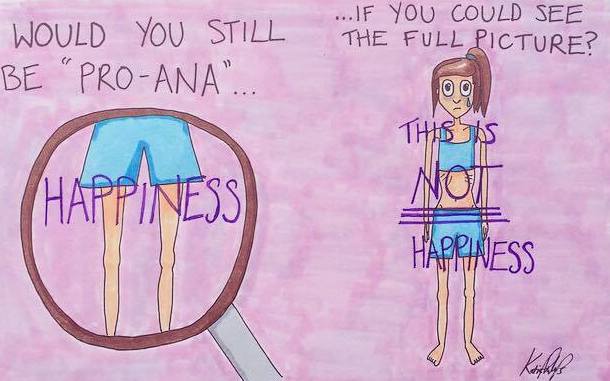
3. Eating Disorders do not make you happy: Much like the myth that eating disorders make you thin, there is the idea that they will make you happy (probably because there is the association that being thin makes you happy but the happiness idea remains nonetheless). Yeah, if you want an eating disorder because you think it will make you happier, once again I would advise you to reconsider, as being undernourished is actually a way to encourage our good friend depression to join the party rather than the desired eternal bliss. Often anxiety will pop round too, so again be aware that those two delights are part of the package deal. You will often note that in these pictures on ‘thinspiration’ websites there will often be “models” without a face (primarily the images show thigh gaps and rib cages), and the reason for this is because were consumers to see the full image, the whole thing wouldn’t look so appealing. After all it is a lot more difficult to sell the idea of how beautiful a hipbone is when the owner of said bone is crying and waiting for the pain inside to end.

4. Eating disorders will mess up your social life: Aside from the effects eating disorders will have on your body and mood, it is also important to note that they affect your social life, and by “affect” I mean utterly destroy it until you are left all alone. You can have the best friends in the world but ultimately with all the “catch ups over drinks” and “dinner reservations” you will constantly find yourself avoiding them as you cannot join in with any activity whatsoever. You may be thinking “Ok I will ruin pizza night but I can still go out to play mini golf with friends”. That is a really nice thought, yet alas this will get ruined as well. Even if an activity is not revolving around food, you will still not want to go either because you have exercises to do or because you are too miserable, anxious/hate yourself and are too self conscious to socialise.

5. Eating disorders will/are likely to cause some issues in the workplace: Much like socialising with friends, working or holding down a job will also become impossible with an eating disorder, even if your job is not food related. Again we have the classics of depression and anxiety making it hard to leave the house, as well as the required sick days for your battered physique (you may pick up virus’ and illnesses a lot easier than most people due to damaged immune system, so stock up on the cough syrup). Bigger than that however will be the issue of concentration. Yeah…with an eating disorder your ability to function mentally will spiral away faster than water down a plug hole (especially water down the plug hole in your bath remember as all your hair will have fallen out and blocked the pipes with soggy wodges of entangled strands). Ahh, nothing says “living the life” like a Saturday night spent in the house pulling hair bundles the size of kittens from your drain (top tip: if you put goggly eyes on those bundles they look even more like kittens. They are adorable. Great Christmas presents too and December is coming! Get malting!). With mental functioning at an all time low then, it is likely you will lose any job you do have and money problems will likely follow as well as our old pals who love to join money problems for a party, depression and anxiety!

So that is only five of the terms and conditions important to be aware of when wanting an eating disorder (there are millions, trust me), but I think that for now I have made my point/ helped potential eating disorder investors to be a little more aware of what they are desiring/encouraging when scrolling through those pro anorexia websites. Like I said, I am not one to tell anyone what to do so if these points don’t diminish the glamour of the thigh gap photos, then go ahead and have fun. I just want you to know what you are getting yourself into so you can make an informed decision. There are people out there who want eating disorders, but I doubt they would find the unwelcome surprises that come with them as appealing.

Take care everyone x

pro-anorexia

Why Halloween Can Be Difficult For People With Mental Health Problems

When I was five years old, I used to get so frightened at the prospect of people turning up to my house in costumes on Halloween, that my mum would have to take me out of the house and drive me around our neighbourhood with a jumper wrapped round my head so that I couldn’t see the hoards of trick or treaters passing by. I am now twenty four years old and a lot of things about me have changed (for example I can now tie my shoes and tell the time unlike my five year old past self), but my terror towards and unusual way of spending the pumpkin laden holiday of Halloween is still very much the same.

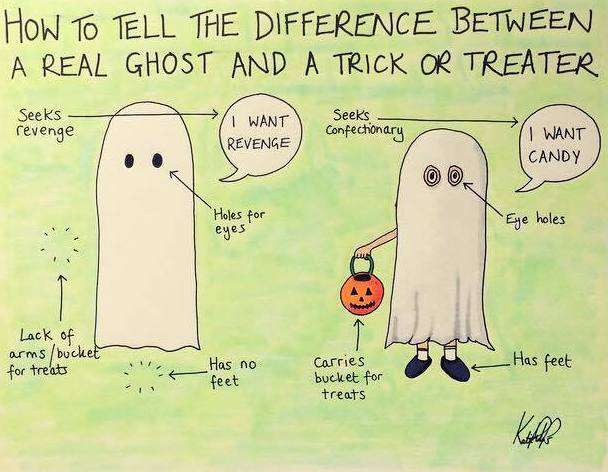
It probably sounds ridiculous to admit that when I am of course aware that a lot of the ghosts you see dragging their chains at Halloween are actually kids with bedsheets thrown over their heads as apposed to genuine supernatural beings. It is after all fairly easy to distinguish the two simply by checking to see if the creature in question is carrying a bucket of sweets (kids wearing old bed sheets tend to be more interested in seeking candy than seeking revenge, unlike the true ghostly counterparts on which they base their fashion choices). However my issues with Halloween are not because I am convinced that the trick or treaters appearing at my door are real monsters, but are due to a hell of a lot of mental health fears and stress that I am sure a lot of other people struggle with as well. So, if you have ever wondered how Halloween feels when you have mental health problems, sit back and rest assured, for I am here to tell you all about it…

Let us begin with trick or treaters. When you have problems with anxiety it is likely you will be anxious about a lot of things (ground breaking information right there I know), and with social anxiety these things are likely to involve pieces of general daily interaction like answering the phone or the front door. I know that for me, hearing the sound of the doorbell or the ringing of a telephone sends shivers down my spine/causes me to leap under the nearest blanket and clamp my hands around my ears until the noise stops and the person goes away…and that is when I am expecting a call from a friend. Indeed, I have been known to ask visiting chums to text me when they enter my road and then a second time to say when they have reached the door step.The vibration of my phone to signal the receiving of a text scares me too, but it is far better than the alternative hellish chimes of the doorbell. As you can imagine then, when the people turning up at the door are unexpected strangers, the anxiety is even more intense.

That is bad enough when it is general unexpected strangers, say a postman dropping off a parcel or a window cleaner asking to be paid, but on Halloween it is even worse because the strangers I am already in fear of are wearing goblin masks designed to make them look all the more terrifying!Some may even be dressed to look like the Grim Reaper or be carrying fake blood soaked foam axes to create the impression that they are a murderer on the loose, which, when you live in fear of terrible things happening on a day to day basis is a sight that will do little to calm any stresses already spiralling in your neurotic anxiety riddled brain.

It isn’t even as if you can just decide not to answer the door to avoid the unexpected goblin visitors, because if you ignore them they will threaten to throw eggs at your door! Who the hell came up with that idea as a means of celebrating a holiday that originated as a way to honour the dead? Which dead people have ever said that they wish for that to be the way in which they are remembered?
I know that it is all supposed to be “just for fun”, but I certainly don’t enjoy an evening of people turning up in horrifying attire, demanding I choose between the options of providing them with sweets or having my abode bombarded by the unfertilised albumen/vitellus of low flying poultry. That isn’t a choice! I don’t like either of those options! Whatever happened to the joy found in socialising with friends and celebrating any occasion over a cup of tea or a game of snakes and ladders?
Then again, even if you decide to brave opening the door despite the potential terror lurking on the other side and give your tormentors the sugary treats they require, you have the added stress of actually having to buy the candy, yet another nightmare for multiple anxiety related illnesses, most of all eating disorders.
Everyone knows that people with eating disorders often fear eating food themselves but for some, even walking into a supermarket to buy it in the first place is a difficulty. Personally, I know anorexia makes it hard for me to buy tins of chocolate or biscuits for presents at Christmas even though I am aware that I don’t have to eat them, and I have several friends who find that things you would potentially buy for trick or treaters are “triggers” which they would usually avoid having in the house. For some, there may be certain foods that they know they are likely to binge and/or purge on, so obviously it is easier to keep them on the supermarket shelves out of harm’s way and not in the next room, much like someone giving up alcohol rids the house of bottles in an attempt to remove temptation. If therefore, you have an eating disorder and this is the case, Halloween is a night where you either have to buy products that you know will potentially send you on an out of control rampage back home, or avoid the products and spend the evening scraping egg yolks out of your letter box.

Reading back all that I have just written, it is pretty easy to see how Halloween can be an utter nightmare for people with various anxiety laden mental health problems, and here I have only touched on the dread that comes with trick or treaters, which really is a small part of Halloween on the whole. I haven’t even mentioned the serious potentially frightening situations like Halloween parties, other social gatherings with people disguised as intimidating warlocks and of course the most petrifying festive activity…apple bobbing (cue dramatic lightening, crash of cymbals and the high pitched cackle of a hyperactive banshee).

If then like me, you have a mental health problem that sends you into a state on Halloween, my advice for managing this evening would be to try to hang out with friends or family who are not dressed to look like the Grim reaper, to distract you and help with any goblin like visitors. Either that or of course there is the option of hiding under a blanket with your hands over your ears waiting for the day to be over/getting a friend to drive you around the neighbourhood away from any doorbells with a jumper tied around your head. Remember, it is just one night of the year and if things really are terrible I hope this post has let you know that you are not alone in feeling scared of a holiday everyone else seems to look forward to. I am not sure how knowing that I am also terrified will help much when the doorbell rings and you are faced with the “say hello to a masked creature or clean eggs from windows tomorrow” dilemma, but I guess it is always nice to know that you are not alone and to have the knowledge that someone out there understands. Also if you don’t have mental health problems and none of these things are relatable, I hope I have at least answered any questions you may have wondered on in life about what it is like to have mental health problems on October 31st.
I hope you all have a fabulous/as anxiety free evening as possible. Happy Halloween!

halloweenpost