Why We Need To Rename The “Loony bin”

In terms of mental health, there are many slang terms used to refer to a psychiatric hospital, (“nuthouse/funny farm etc), but while these terms are still offensive, there is a particular slang term that I think is particularly dangerous. I understand that slang is useful in society and I am not demanding the removal of all slang from now on, but issues can arise with slang when the term becomes more notorious than the correct phrase and actually alters the perception people have of whatever is being referred to. That is the unfortunately the case with the term “loony bin”.
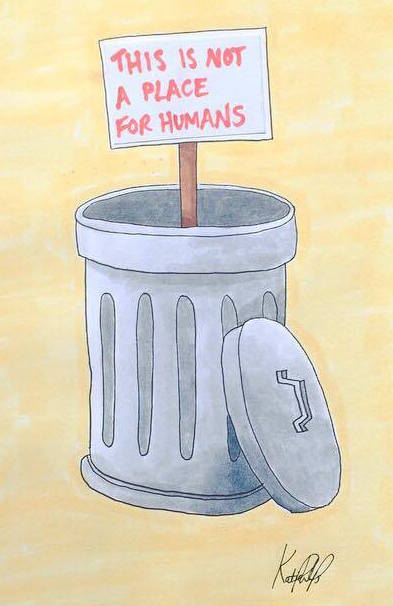
I realise calling a psychiatric unit a “nut house” isn’t accurate either, for example I have never encountered a “nut” when in hospital (other than the odd almond or macadamia in my fruit and fibre…I once heard someone claim they found a pecan in their bowl but I think that was just a myth so don’t take my word on it), but the “loony bin” slang term is particularly damaging as it conjures up ideas of a place into which the rubbish is tipped, a place that people don’t come back from and if anything is utter trash, it is that image.

I myself have had several admissions to various different “loony bins” and I can state with the utmost conviction that none of them bore any similarities to a bin, neither appearance wise or in terms of function. Firstly, on the whole they were all very clean (one had the bathrooms cleaned after practically every use so sometimes I was unable to shower BECAUSE they were being made extra clean), but more importantly none of the patients were anything like waste needing to be dumped.

The problem with the phrase isn’t even just damaging to the self worth of current or ex-patients. Potential inpatients may be scared of, and thus refuse admissions for treatment that they desperately need, because this whole “loony bin” perception has made people fear they will go in and never come out, that they are a lost cause who needs to be locked away from society for good. Admissions to a psychiatric hospital however, are not final destination. Instead they are more of a holiday. Ok, I will admit they are not exactly like a holiday, I know I would prefer a beach in the Caribbean over a stark white bathroom with a staff member watching me pee, but what I mean by this comparison is that they are a place that people come back from (albeit without the much revered tan or photo album). Going into hospital doesn’t have to be a terrifying endgame, define people or morph them into the branded mental patient to be impersonated at Halloween parties.

There is of course also the issue of this “bin” (a name of a place usually reserved for objects not people), being used as a place for “loons”. “Loons” sound like magical creatures, inhuman half breeds who are fundamentally different to “normal people”. The whole idea just emphasises the false distinction between “mental people” and “sane” ones when really they are both exactly the same. People in mental hospitals are not a different species, they are human just like you (unless dear reader, you are in fact a penguin in which case may I congratulate you on finding my blog without opposable thumbs).
I think it is comforting to label people with mental health problems as loons to be kept in a separate lidded inhuman/object bin world of restraints and locked doors, because by separating the sane and the insane, making a “them” and “us” situation, it perpetuates the idea that those crazy people are different and therefore you are not at risk of being contaminated. To think that a person screaming and being held down to be injected with anti anxiety medication is just like you is frightening and prompts all kinds of questions like “what if that happens to me”? It is nicer to think of all of that stuff as things that happen to “other” people, that the person cradling a wooden spoon and singing nursery rhymes is different, no possible image of you in the future. It is nice to put the lid on the idea and leave it outside the house for the rubbish collectors to remove so you don’t have to deal with it in your home.

The derogatory slang of “loony bin” and resulting “loon/human”, “them/us” dumping ground view of psychiatric units really is a use of language that has the ability make patients feel hopeless and forgotten, doomed waste discarded for good, and it creates judgement in people without mental health issues that just continue the stigma and fear that surrounds it all. I urge people to know that none of this is true.

For patients who have been admitted I want to say that life is not over, and being in hospital doesn’t mean that you are rubbish or damaged beyond repair and the landfill is not your future and final destination.
If anything I would say the slang for a psychiatric hospital should be “the temporarily out of order and in need of repair tray”, just like “normal” hospitals that treat only physical illnesses. It is not a place to be thrown in when you don’t have a place in the real world anymore, it is just a place in which you remain as human and as worthy of life as anyone else on the planet, you just have a few cracks in your porcelain skin that needs a little glue to help them stick back together.
We need to stop seeing psychiatric hospitals as bins or end games for the weird wastes of failed humanity, but as places for ordinary people who are just struggling in life and need a little support to get back into full working order, simply time and space to patch things up and get them well enough to leave that repair tray so they can go back home.
1

What To Do If You Think Someone Is Struggling With A Mental Health Problem

Having mental health problems sucks, but so does seeing a person you care about struggling with them when you have no idea what to do. It can be frightening to see someone becoming more and more unwell without necessarily seeking help for whatever reason, and sometimes it is necessary for friends or family to step in. Unfortunately this can be a very awkward situation, after all nobody wants their friends to gather them round the fireplace for a good old “we think you are insane” discussion, so in this post I am going to try and help people who are concerned about someone’s mental health and don’t know what to do about it. These things are at least what I would like my friends and family to do if they ever suspected I had a problem, (though I would like to point out that there is no need to do any of these things now family, rest assured I am well aware that I am a bit funny in the head), so hopefully other people will find these approaches acceptable too…

OPTION ONE: The first and best way to deal with someone you love struggling with mental health problems alone is of course to approach them in some way and discuss your concerns. If you plan to talk to someone directly about the issue, the key with this is to not go in all guns blazing, in fact, do not involve a gun in the situation at all. If you must have a prop, take a cup of tea or something, everybody likes tea and nobody likes guns (a mantra that might make this world a better place if more political leaders followed it but I will try and stop wars at a later date, for now I am just going to tackle mental health problems. Please be patient.) The problem is that mentioning someone’s mental health in conversation is also one of the more difficult options as it can be an awkward topic to bring up. For this reason, if it were me, I would always suggest writing someone a letter (or email if necessary but a letter is more personal), instead of talking to them directly, and it is actually an approach that is beneficial to both parties. By writing a letter you can make sure you get all your points down and really say what you want to say clearly, rather than gabbling some incoherent speech out of nerves in the moment, that doesn’t really get what you want to say across. It also helps the person you are approaching, as having someone tell you that they think you are crazy is difficult and often embarrassing to hear. This embarrassment may then cause someone to become defensive and say things that they don’t really mean either, perhaps snapping back because they are insecure or laughing and trying to brush it off to distract you from the conversation (a technique I myself am world champion of). With a letter the person can read it in their own time and thus really think about it properly without giving in to the initial emotional response conversations can bring. It also gives them some privacy to deal with the topic and means that they can re-read it at a later date if it is something they want to think about and come back to. When it comes to talking to someone about their mental health, writing things down in a letter is awesome.

OPTION TWO: I would always say that bringing up someone’s mental health with the person themselves should be the first plan of action, as it can be upsetting to know you have been discussed by other people behind your back. However, in some circumstances, if for whatever reason, option one is too difficult or has been tried and failed and things are getting serious, talking to someone’s family can be a great second option. If there is a misunderstanding and the family can confirm the person is fine then great, but if not it is important for the person struggling to have some people close who are perhaps more aware of what is going on than they are. Families often miss things because they are around their loved ones so much that they don’t notice subtle gradual changes over a long period of time and sufferers may not realise what is going on either or be in full blown denial about it. Having a friend or outside point of view can therefore be really valuable.

OPTION THREE: People often think that mental health helplines are for people who are themselves mentally ill but this is not the case at all. Samaritans for example is available to anyone for any issue regarding mental health (or things that are nothing to do with the workings of the brain, you can call them about anything, even if you lose your keys and want to yell at someone, though I WOULD NOT advise this), so calling them to get some support may be a good thing to do so that you have someone looking out for you too. Samaritans don’t give advice, but if you are worried and have nobody to talk to about your friend, it can be therapeutic for you to get it off your chest and take care of yourself. There are also a lot of other helplines including ones like “Rethink mental illness” who may be able to offer advice, so I will put a few numbers at the end of this post. After all as my favourite nurse at my previous hospital said to me, “you can’t look after other people if you don’t look after yourself first”. Wise words indeed. Think of calling a helpline, or maybe visiting a mental health charity website, as fitting your own oxygen mask on a plane before you help others (only closer to the ground and with what I hope would be an ample supply of oxygen).

OPTION FOUR: Once you have managed to somehow bring up the topic of mental health with someone you care about, the next step should always be to get them to go to a GP. Maybe offer to go with them as support if that is possible, but either way it is their GP who will know the next course of action and will be able to discuss potential mental health services in their area.

OPTION FIVE: This one probably sounds really dramatic but if you are seriously concerned about someone’s mental health and attempts to bring it up with them or their family directly have not worked then it is always an option to go to A&E or call an ambulance. Obviously this isn’t something to do lightly and should only be done in extreme circumstances, but if you ever think someone is in immediate danger because of their mental health then it can be necessary. With this there is of course a potential risk of upsetting or annoying the person you are calling an ambulance for, but ultimately it is always better to have a very angry live friend than no friend at all.

Overall, approaching anyone because you are concerned about their mental health is never going to be the most pleasant experience and probably not a moment either of you will want to tweet about or document with an album on Facebook. Nevertheless I hope these options at least help give some kind of idea as to how to make it a little more bearable. Unpleasant or not, talking to people you are worried about is very important and shouldn’t be avoided. Who knows, one day the person you are confronting might thank you…and, if they don’t and get really angry at you doing any of these options, just tell them it isn’t your fault and that a weird bespectacled person on the internet was the one who gave you the advice that they followed, I am more than happy to take the blame.

Stay safe everyone and have a great day.

TeaAndGun


HELPLINES AND FURTHER ADVICE

Samaritans:
08457 90 90 90 – 24 hour support seven days a week

Rethink mental illness:
0300 5000 927 – Monday to Friday 9.30am-4pm
Rethink also have a really good web article about this whole topic here: https://www.rethink.org/carers-family-friends/what-you-need-to-know/worried-about-someones-mental-health

Carers UK:
0808 808 7777

Sane Line:
0300 304 7000 – 6pm-11pm every day

Support line:
01708 765200

What are they doing about the fact that you are insane?

Every time my parents pick me up from a psychiatric appointment, they ask me the same questions:

  1. “So what did they do to you today?”
  2. “What are they doing about the anorexia/OCD/depression?”

They are only trying to be nice and just want to understand more about what is going on with the crazy person living in their house, but I often wonder what exactly my parents expect me to answer when they ask me these kind of questions.
What did they do to me? Well first I was strapped to a table and then they hit me on the head with a mallet to smash the crazy out. What are they doing about the anorexia/OCD/depression? They are cornering it with a sleuth of angry bears (that is actually what a group of bears is called, “a sleuth”, trust me I looked it up on google), so that it runs off of a cliff into a flange of angry baboons (I may or may not have just discovered a website that tells you what the collective names for various kinds of animals hence the uses of ‘sleuth’ and ‘flange” in this post).

The truth is, the psychologists and psychiatrists and support workers I see don’t “do” anything, but at the same time that does not mean they don’t do anything. Sometimes I may do pieces of “work” or try courses of various therapies, discuss changing my medication or upping the dose, but on the whole the majority of my appointments are taken up by simply talking about things. If I say that to my parents, they worry that because nothing is being “done”, I am not receiving any treatment, but what many people don’t realise is that simply talking as a treatment, is seriously underrated.

By telling someone how you feel, you can release some of the emotions you are bottling up; by explaining a problem you are having to someone who doesn’t understand, you may understand things that even you didn’t know you were feeling; and by sharing a secret or a burden/pain, you share the weight of it and are allowed a little brain space to breathe. Like they say, “a problem shared is a problem halved”, not that I know who they are but they seem pretty smart to me. I know it all sounds very wishy washy, which is probably why the idea of “just talking” is sometimes not viewed as “treatment”, but mental health issues are far more complex and confusing than people can really comprehend, and you only learn about them through exploring. I have been in treatment for over a decade yet still I often realise things about my illnesses and my relationship to them that I didn’t know before, just by talking things through.

I suppose the message I want to get across in this post is that when it comes to recovery from mental health problems, it isn’t straight forward, there isn’t a set thing to “do” or fixed course you follow. As cheesy as it sounds, recovery really is a journey of self exploration, and everyone/everyone’s journey is different. People are individual and unique, so their experiences of their illnesses are individual and unique, different and relative to them alone, so “just” talking about things is really important. Only when you really understand what is going on with you and how your life is affected personally, can you really tackle the problem. If you are just starting to receive therapy or are supporting a loved one in therapy and are worried that nothing is really “happening”, please do not feel despair. It may not feel like it, but things really are being “done” and you are working towards recovery even if you don’t realise it right now. Words are power. Use them.

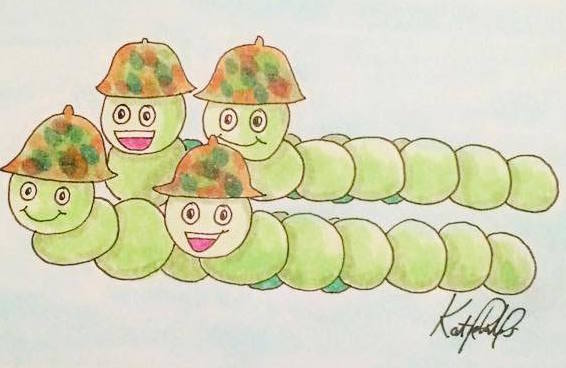
Just going to end this post here by letting you know that a group of is caterpillars is called an army. How hilarious is that? The answer is very. Caterpillars are literally the most non-threatening looking animals in the history of the world, yet still if a lot of them came into your house you would have to say that you had been invaded by an army. Now if you don’t mind, I am off to gather my own caterpillar army to help in my quest to destroy mental health stigma. Cheers.

12922297_10207348201637151_15230091_o