Why It Can Be Scary To Take Medication For Mental Health Problems

Recently, my psychiatrist prescribed me a new medication to help me with some of my mental health problems. I am on various medications already with a variety of different purposes and have been for some time, but in terms of what these new tablets are “supposed to do”, the aim is for them to reduce some more of the anxiety that my current medications are allowing to linger long after they have done their jobs. Ironically though, despite having had this packet of anti anxiety medication on the kitchen worktop for over a month, I am too anxious to take them.

I think being scared of taking medication for a mental health problem is extremely common and to be fair it would be weird if people weren’t a little afraid of whatever tablet their doctor has recommended them to take. A big reason for this is of course the long list of side effects that comes in any box of medication from Calpol to Morphine, although when you think about it there are no medications that have side effects, there are only effects.
Tablets do a lot of different things and it is the scientists/elves (I am not sure who makes medicine these days but I am sure it is one of the two) who decide which effects to put in the “Purpose of tablet” column and which go in the “side effects” column, aka the effects that are harder to advertise. For example, for some people Paracetamol can have the effect of giving them yellow skin so that effect is categorised as a side effect because that effect is less easy to advertise than the more attractive “this will help take your head ache away” effect (unless of course you are dealing with someone who wants yellow skin so that they can look like a Simpson, in which case I suggest body paint which is probably a lot safer).

I think mental health medication is scarier to take than “normal” body medication though, because there is a fear that it will fundamentally change you as a person, your characteristics, interests and identity. When you take a physical medication that may turn your skin the colour of a freshly picked banana, there is a separation there between you and the skin. Ok the skin is your skin, but aside from holding all your body parts together your skin doesn’t affect who YOU are and no matter what the colour of your skin, you will be the same person you were before and will be able to react and interact with friends and family in the same way as you did prior to your sudden transformation into a Simpson. The skin is just the irrelevant wrapping paper on the more important gift. If you wrap a new video game in white paper and then colour it yellow, you will still have the same present inside.
With mental health medications however, they are designed to interfere with how your brain works and the side effects of that can feel more personal. By changing your mind, it feels that they are changing an integral part of you, so that one second you could be a lover of Julie Andrews dancing round your kitchen belting out “the hills are alive” and the next you are on some uncontrollable rampage to burn every copy of the Sound of Music and Mary Poppins
I think we can all agree it is infinitely less stressful to take a tablet that might change the colour of our wrapping paper rather than one that risks turning the games console under the Christmas tree you have been waiting months for, into a sardine which in comparison is about as much fun as…well…a soggy sardine.

Indeed, I know from experience that medications can change fundamental parts of my personality. When I was a teenager there was one medication that practically turned me into the incredible hulk. I was filled with rage all the time, a rage without reason, and I became violent and out of control. I am really ashamed of a lot of things I did during that time of constant fury, as it changed my character so dramatically that I ended up doing a lot of things I wouldn’t normally do like kicking through a glass door.
As well as medications that have changed my character, I have experienced medications that have simply had mental side effects that were unpleasant such as one tablet that pretty much knocked me out and left me sleeping twenty four hours a day. I guess it did its job of reducing the number of OCD rituals I was carrying out, but that was only because I was a comatose zombie who could barely lift a duvet let alone shower for several hours.
I have also been on a medication that gave me hallucinations (if the police are reading this I would like to make it clear that these tablets were prescribed to me by a medical professional and were not in any way purchased in a dark alley from someone in a rather large coat). This was yet another unpleasant side effect, and every day I found it even harder to tell the difference between what was real and what wasn’t, what had happened in reality, and what was just a figment of my imagination. Luckily, during this time I was in hospital so there were nurses around constantly to help me distinguish between the two or sit with me through the scary ones, and though a lot of that time is a blur, looking back I find it easier to separate events that actually happened during that time from the more fantastical fictions written by my dodgy brain chemistry, based on what things are most likely to be true. For example nowadays I reason that it was most likely a hallucination when one of the nurses danced around my bed waving an assortment of Hawaiian shirts but obviously real life when I was awarded the Nobel prize for literature and rode around the country on an ostrich…I just wish I could find the prize money…and the ostrich…

It is also scary to take a mental health medication because the same medication can affect two people in completely different ways so it is impossible to hear of someone else’s experience with a particular tablet and know what to expect when you swallow it yourself, so you sort of go into it blind like some medication Russian roulette. Will you continue dancing around the kitchen singing “supercalifragilisticexpialidocious” or will you wake up next day to a smouldering pile of ashes in which you can vaguely make out the image of Julie Andrews dressed as a nun.
Indeed I have friends who have taken the same tablets as I have but with completely different results, and the medication that turned me into the Incredible Hulk (a medication I was swiftly removed from), is the same medication as the one that my friend has been taking for years because for her, the effect is far more calming than the urge to kick through the conservatory door.

With this medication I have been prescribed most recently though, the fear I have isn’t actually one that is related to the fear that it will change my brain chemistry and me as a person. To be honest things are so difficult at the moment that I wouldn’t give a curtain wrapped Von Trapp child if the medication changed me as a person (please forgive me Julie Andrews).
No, this time, the fear is more about the physical side effects listed in the instruction manual, most specifically the one that says “possible weight gain”. I know that whenever medications put this as a side effect it generally means that the tablets may increase a person’s appetite, consequently leading them to eat more food and gain weight because of that, rather than directly from the medication itself, so as someone with an eating disorder who eats the exact same rigid meal plan and amount every day without taking heed of hunger cues, that reason for weight gain would not happen to me. However again, as someone with an eating disorder, the fear of risking a random weight increase because of a tablet, even if I don’t change my diet, is terrifying. If that were to happen I would feel totally out of control, more anxious and likely to restrict my diet more than I already do. It is a difficult thing to balance, on one hand I could take this new medication and it could help me with anxiety, and on the other it could simply make things worse.

I know that medication is not always the answer, neither does it solve all your problems (a topic I really want to come back to sometime if you are willing to stick around as a reader of my blog…I will give you cookies…), but right now I do think that I need to give this medication a go considering the fact my brain isn’t responding to any of the other therapies/attempts to sort it out. In a few weeks time my psychiatrist will ask me how the new medication I have been taking for the past few months is going and at the moment I will have nothing to tell him because all I have done is look at it and I can wholeheartedly confirm that staring at the tablet has had no therapeutic benefit to me whatsoever. I really am determined to try it…at some point…possibly…definitely…I think…It is just the case of taking the first one and getting over that hurdle, cracking out a pot of maple syrup – going with the grand advice that a spoonful of sugar will make the medicine go down and not my weight go up…Good lord, where is Mary Poppins when you need her eh?

Take care everyone x

WheelOfFortune

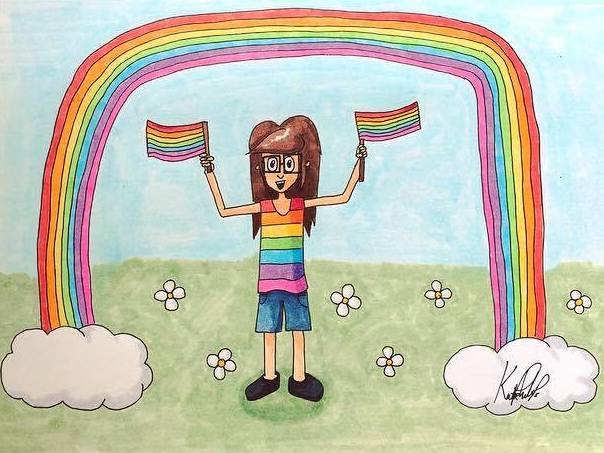
Mental Health Problems In The LGBTQ+ Community

This is just a little note to say that this post mentions incidents involving self harm so if that would trigger you, I thank you very much for joining us today but maybe go and treat yourself to a good cup of tea and biscuits instead. Safety first pals!

I once had a psychologist who, during a talk about my mental health and how broken my brain is, asked me if I thought any of my issues “were because of being gay”. I was appalled.

“How dare you!” I replied. “What homophobic nonsense is this? I am deeply offended! You think people who are gay must also be mad because nobody with common sense would be queer? For-shame! A plague unto you and your ancestors! Watch me flounce out of this room waving my rainbow flag in a fury! Watch me flounce I say!” (please note that this was what I replied in my head…in reality I think I just squinted my eyes a bit and formed a quizzical expression).

At the time I didn’t see what being a member of the LGBTQ+ club, had to do with my mental health at all, but after a little bit of discussion, research, and no actual flouncing, I realised that this psychologist was on to something.
Turns out, rainbow folk in general show higher levels of anxiety, depression and suicidal thoughts than heterosexuals, so seeing as it is Pride month in the UK this month, I thought I would use this post to think about why that might be. It’s like that old saying, “if you are gay and you have mental health problems, it is your duty to mush those experiences together and write a blog about it.”

In my experience,I wouldn’t say that for me personally, being a member of the LGBTQ+ community has been THE trigger that led to all of my personal mental health problems, although I know that for some people, it can be.
Often I think it can be things like homophobic bullying and external discrimination that are the reason people who are LGBTQ+ might go on to suffer problems, and in that respect, I have been very lucky.
I have never been bullied for my sexuality, my family have always been very accepting (my mum to the point where she is basically a walking gay pride parade all year round and always gets very excited/becomes a fan every time any celebrity comes out as a homosexual), and I live in a country/time period where it is safe for me to be “out” without fearing arrest.
The only discrimination I have ever had has been the odd homophobic slur shouted out of a car window at me as I was walking down the street, but this has never really bothered me as I don’t have that much respect for the opinions of people who shout abuse out of car windows… I might admire their ability to project with their vocal chords out of a moving vehicle, but when it comes to their judgements on who I fall in love with, frankly, I don’t give a damn.

However being LGBTQ+ has certainly affected me because of discrimination, it is just that all of that discrimination came from my own head and in the early days of my queerness, led me to feeling very ashamed.
Nobody in my external surroundings was telling me I was weird or shouldn’t be gay, but my head was, and consequently I was scared to tell anyone about it incase they felt the same. Indeed I decided that rather than tell anyone, I would start a grand “make Katie straight” mission so that nobody would ever have to find out. You may wonder how on earth one goes about “de-gaying themselves” as surely to do so is impossible, and in that assumption, you would be right. Little old me however, was convinced otherwise.

The idea came to me whilst watching a television program which funnily enough, was about a straight woman seeing if she could undergo treatment to turn her gay…Good lord they show some weird things on TV these days…
Anyway, in the program, this woman was told by some mad scientist to use this machine that would give her electric shocks every time she thought something heterosexual in an attempt to recondition the brain to stop thinking those things. The theory was that if your brain experiences an electric shock every time you think about something, it will stop thinking about that thing (either that or your hair will stick out all over the place forevermore and you will run up one hell of an electricity bill).
Unfortunately, I did not have an electric shock machine. I did however, have access to a lot of sharp things around my household, and I think you can guess how things went from there without me providing any more detail. As part of my “make Katie straight” plan, I set about trying to literally cut the gay part away from me, a futile pursuit considering “gayness” is not an extra body part or a long fingernail you can clip away at until it is gone. Unsurprisingly, that plan didn’t work, but it did get me into a cycle of self harm that I couldn’t get away from and still struggle with to this day.

Admittedly, my struggle with self harm is not about being gay anymore, but the whole situation introduced the idea of self harm as a punishment, a coping mechanism to try and remove guilt or shame I was feeling about anything in life.
Rather than being a punishment for being gay, it has become a punishment for things like bad marks on a test at school, or saying something mean in an argument, and I actually used to keep a little notebook in my pocket throughout the day to keep track of my “crimes” so I knew how many “punishments” I deserved later.
At first I was only doing a few things “wrong” a day, but because I was scared to talk to any of my psychologists about it as that would involve telling them how self harm started, and though I was ok with being gay, I didn’t expect everyone else to be. Consequently the notebook of punishments escalated and got so out of hand that after a few months, every action was considered a crime deserving of punishment, from using a “large blob of toothpaste” (which would use up the family tube sooner and lead to money needing to be spent on a new one), to “not smiling well enough at my friend in the corridor at school”.

It wasn’t until my mum found some blood soaked clothing in my bag which I had been trying to smuggle into school to wash in the school sink before she could see it in the laundry, that the whole self harm as punishment thing came out, and even then I wouldn’t tell people how it had started.
By the time I did tell people that I was gay, I had already been in therapy for 8 years or so and had been through two admissions to psychiatric hospitals, always keeping that part of my identity hidden. Like I said, being gay has never been a cornerstone in the almighty Jenga tower of my insanity so I don’t think that keeping that part of me a secret severely hindered my treatment. I was still able to talk openly and honestly about the depression, OCD, BPD related problems and anorexia in therapy, yet although it isn’t the source of my mental health problems, when I finally came out to professionals it did serve as some kind of relief. Whether it had been important to OCD or not, I always had to watch what I said in sessions incase I accidentally let a possible clue slip like “I LOVE HELENA BONHAM CARTER AND I WANT TO MARRY HER IN A BIG GAY WEDDING WITH A BIG RAINBOW CAKE BECAUSE I AM A BIG GAY MYSELF”. Being able to talk openly without worrying about that certainly made a difference and made me feel more connected to my therapists, because I think if you are ever keeping a secret from anyone, you are automatically reserved around people even when that secret isn’t being discussed.

As you can see then, compared to some members of the LGBTQ+ community with mental health problems, being queer hasn’t had anywhere near the impact on me that it has on other people. In essence, being gay is the vanilla extract in my giant cake of insanity rather than the flour of which the majority of the cake comprises.
That said there are a lot of LGBTQ+ folk out there who struggle so much with their identity either due to judgement from outside sources or internal judgement on themselves, that being LGBTQ+ can be a direct cause of certain conditions like depression or anxiety and it is for these people that we need to talk more about this kind of thing in the hopes that they will be able to seek help themselves. If shame about your identity leads you to having mental health problems, it is likely that shame will prevent you from seeking help for them, and as we all know that is just going to make things worse.

In this post I do not want to do a shoutout to all the LGBTQ+ people out there who are hiding in the bushes and tell them to run about telling everyone about their identity, because I understand that for some people in certain families or countries, that might not be safe for them.
All I want to say is that if you are struggling and feeling like there is nobody to turn to, you are not alone and I can promise you that there are people out there who understand (I am one of them. Hello, it is nice to meet you. My name is Katie and if you bring me penguins we can be best friends). If being LGBTQ+ is causing mental health problems and it is not safe for you to speak to people around you, there are hundreds of LGBTQ+ mental health charities out there for every country (I will link a page recommending some existing in the UK below), and if you can, I would encourage you to reach out to them for support.
I am not going to demand you just get a rainbow flag and feel proud because it is pride month, as I understand it is not as easy as that, but I do hope to offer some sense of reassurance that being LGBTQ+ is NOT something anyone needs to to be ashamed of or punished for, no matter what that voice in your head tells you.

Take care everyone x

RainbowBlog

https://www.mind.org.uk/information-support/guides-to-support-and-services/lgbtq-mental-health/useful-contacts/#.WV0XKlKZPVo


The Problem With Before And After Photos In Eating Disorder Recovery

A few months ago, towards the end of February, it was Eating Disorders awareness week, so naturally I did as I always do on this occasion and buried my head in the sand for the duration of the week (I also allowed children to use the remaining sand to build sand castles atop my hiding place because I am such a lovely person). This may sound like odd behaviour for someone who is constantly talking about mental health problems like eating disorders in order to raise awareness and for someone who has a strong disliking of sand, but then again odd behaviour is what I am known for. Literally.

The reason that I avoided the internet during that week, and indeed avoid it every year, is that it is a week in which social media is filled with “before and after” pictures, aka photos of someone taken during the depths of their illness, compared to a later photo taken post/during recovery. Don’t get me wrong, these photos certainly have their place and I would be lying if I were to say that I have never been inspired by any of them. Often these pictures will come with an empowering and motivating story of someone’s journey in recovery and triumph over anorexia, and that is brilliant. That is something that should be celebrated, and those stories  are shared throughout the Eating Disorder community to encourage others to fight their illnesses and to give hope to those who doubt recovery is truly possible. I love these stories but it is not the stories of recovery that I have a problem with, rather I have a problem with the “before and after” photos that are often involved in telling the triumphant tale.

Firstly, these images will usually show the person in the depths of their illness as an incredibly underweight individual, with ribs popping out so far all over the place that you could easily use them as a xylophone. Regardless of the inspirational intention with which they were posted, there is always the risk of these pictures going on to be triggers for other sufferers or, dare I say it, “thinspiration” for all those misguided souls who think that anorexia is something to aspire to. They can also make sufferers who are perhaps not as underweight (or who are unable to see themselves as that underweight) consequently see these images and feel that they cannot seek help because they aren’t “thin enough” or “bad enough”, when encouraging people to seek treatment is supposed to be the whole point of a week dedicated to educating and raising awareness of eating disorders. Similarly, in their representation of someone with an eating disorder and someone without, they encourage the myth that eating disorders are about being thin and that eating disorders can be seen, (a myth I have tried to tackle here: Why it is physically impossible to “look anorexic”.)
For people who do not know much about eating disorders and who do not have the time or interest in reading full accounts of recovery journeys, these snapshots may be the only experience they get of someone with an eating disorder, so the risk is that the stigma and lesson of “ill is underweight”, “well is a healthy weight” will be perpetuated without taking into account the far more complex and important internal and mental struggle that is having an eating disorder.

Similarly, as an image to summarise recovery, I feel it is problematic in that the main difference that is visible between the two pictures is weight, which implies that the main difference one goes through is the difference of the number on the scales. It suggests that in recovery, the biggest thing you “gain” is weight, when really weight is probably the smallest of all the things I have seen people gain in recovery. I may not be able to speak as a recovered person myself, but of all the friends I have watched beat their eating disorders into a soggy pulp on the ground that is no longer able to control their lives, the change in their weight has been the least significant change of all. Okay there is a change in weight and perhaps clothes size, but when I see my recovered friends, I do not see the change in their BMI, what strikes me most is the change in their lifestyle and their overall presentation as a person. To me they have not gained weight as much as they have gained themselves. When you are in the depths of your eating disorder, as much as you fool yourself, you cannot maintain a normal life. Your ability to have a job, have normal relationships with people, be happy or even function are seriously compromised, and these things are all aspects of life that can be improved on with recovery. I have seen friends go on to study medicine at university, have romantic relationships, give birth to children, climb mountains (I am talking proper big mountains like Kilimanjaro), and travel the world. They have regained their ability to properly smile, to laugh without having to fake it, and to me seeing all those photos of them skydiving in Australia or getting married and having babies have been far more significant and noticeable changes than what size jeans they wear. It is these aspects of recovery that are the really important reasons that people need to fight and it is these changes in lifestyle that are the really inspiring stories. Yes weight gain is a part of the journey, but what is more important is the places that weight can take you, for example to medical school or up a flipping huge mountain.

On a similar note, my other issue is that I feel before and after photos simplify the process of recovery. In one picture you probably have someone who is underweight and either looking miserable or faking a smile out of dead eyes, and in the other you have someone who has gained weight and perhaps, is beaming at you with genuine joy. This then makes recovery very straight forward, “Being underweight make you unhappy and thus gaining weight will make you happy”. It automatically assumes that the happiness comes as the weight increases, without highlighting the far more complicated journey in getting that weight to be there.

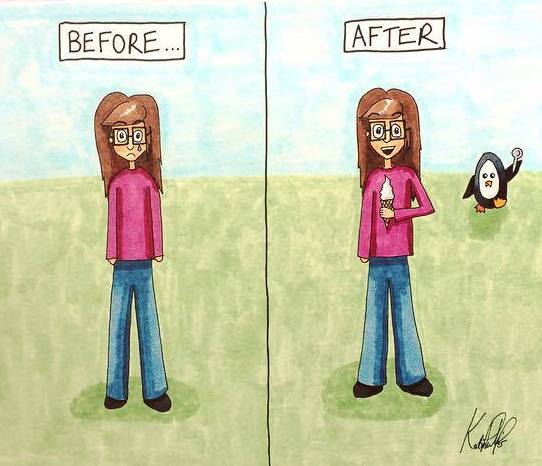
It is hard to explain exactly what I mean, but it is like looking at a picture of someone standing in a field looking miserable, and then another photo of them smiling in the same field but with the addition of an ice cream. At face value then, you can look at these pictures and think “well a person was sad because they didn’t have an ice cream but then they got an ice cream and they were happy” , simple. What the picture will not tell you however, is how that ice cream got there. Little would you know that the person had not simply walked up to the nearest ice cream van, asked for a 99p Mr Whippy and walked away smiling, just as the person in recovery had not simply gained some weight, and in turn, a smile (side note did you know that they don’t even do 99p Mr Whippys anymore? They are now at least £1.50! How do those ice cream men still have the nerve to play jolly tunes as they patrol the streets for customers now that they are basically performing daylight robbery rather than offering a merry treat. You can play Greensleeves all you want but that doesn’t change the fact you are making me re-mortgage the house to buy myself an ice cream. SHAME ON YOU ICE CREAM MEN. SHAME ON YOU.)

Anyway, what the picture doesn’t show is that to acquire their ice cream they were forced to go on a perilous test of their endurance, that pushed them to the limits of mental and physical strength. To get that ice cream in the picture, that person had in fact had to walk across continents and cross oceans to America, the largest producer of almonds in 2014 I will have you know, and then had to hand pick hundreds of almonds ready to blend into a creamy milk worthy of a tasty frozen dessert (this person was lactose intolerant so almond milk was the milk required for the job.)
Then, exhausted from months of trekking, nut picking and milk making, that person had to swim across even more oceans into the freezing cold pole of the Arctic where they stirred their almond milk with a wooden spoon atop a large glacier that acted as a natural freezer for their ice cream churning process. Even when the ice cream was made it didn’t get any easier as they had to then wrestle with a penguin who had cheekily tried to steal the ice cream (I don’t blame him to be honest. I would steal ice cream if all I had ever eaten was raw fish), and then they had to get the ice cream all the way back to that field in their country of origin, back through the hot climate of almond fields in America, without the creation melting. Clearly that is a far more character building excursion to get to that point of “person with ice cream in a field” than the picture initially suggests, and I didn’t even tell you the 5 month side trip it took to make the cone in which the ice cream was to rest (it would take too long to tell you fully but as a brief summary it involved a very angry rhino and a lot of waffles).
The person worked hard to get to the point where they were standing in that field with that ice cream, and all that hard work is eradicated, as it is in recovery journeys, when all you see is a simple before and after shot.

Obviously I am not saying we should stop people from sharing their recovery stories and indeed, if you have recovered from an eating disorder, then I am OVERWHELMINGLY proud and impressed by your determination and strength. If you were here with me now rather than wherever you are reading this, I would give you so many rounds of applause that my hands would fall off and I would be left clapping stumpy wrists to show appreciation of your achievement. What I am saying is that maybe, more often we should be celebrating and telling these stories without the underweight photos that go with them. A story is still a great story without pictures. Hell, look at Harry Potter, that story changed and continues to change generations of people, it has grown theme parks and movie franchises, careers and other astonishing things, all from a pile of words cobbled together with no images at all (For the purpose of this post can we please just pretend that the illustrated versions that are currently in production don’t exist.) Still, even when pictures are added to the Harry Potter books, it will still be the words that are doing all the talking.

So that is why I have a problem with before and after photos when it comes to eating disorder recovery, not because I don’t like inspirational stories or don’t want people to celebrate their achievements, but because those pictures don’t really do anything but diminish and reduce the value and greatness of what has been achieved. As a snapshot ok, a picture may say a thousand words, but a recovery journey is made up of millions of them.

Take care everyone x

BeforeAndAfter

My New Diagnosis

For well over a decade, and since my very first therapy session many moons ago, (aka JUST after the dinosaurs died out and at the time when there were Tyrannosaurus Rex bones still lying about EVERYWHERE after that rather inconvenient meteor), therapists and psychologists across the country have always said that there is “something” wrong with me. Obviously they have always known about my OCD, Eating Disorder and Depression, yet still many have insisted that there is “something else” lurking within me and playing general havoc with my brain.

I have always found this “something wrong” that nobody can put their finger on, (or any body part for that matter), to be rather confusing.
When I was 15 the it was banded about that this “thing” might be bipolar disorder, but after trial and error with a few medications, that suggestion was tidied away as well as all the others and I have tried my best to forget about it. I was doing pretty well with this forgetting thing in my opinion (I had placed the “there is something wrong with you that we do not understand” memory alongside Pythagorus’ theorem in the box of “things I no longer need to know after the age of 16”), but then my forgetting box was rudely ripped open again very recently.
If you have been following this blog for a while you may remember that I had an assessment with a new OCD service in October of last year, a three hour interrogation examining all of my mental health problems and experiences of the world throughout my life. I mentioned nothing of any extra “bonus” diagnosis that nobody was sure of, so for this reason I was surprised when the psychologist I was speaking to randomly asked if I had any other diagnoses, as yet again I was showing signs of this “something else”, that something possibly being a “personality disorder”. I didn’t mention this when I had the assessment all those months ago because I imagined it would go away like all those other conversations of mysterious mental health problems in the past.
When I was told that the OCD service may not be able to facilitate my care if I had a personality disorder and I may need to see another service first however, I was unable to forget it again and became increasingly frustrated. Here I was potentially having issues with receiving treatment because of a mysterious something that I wasn’t even diagnosed with, and it was at that point that I knew I needed answers.

Like I said in my “why I like being diagnosed with mental health problems” blog post a few weeks ago, I like having the labels and diagnoses of my conditions in black and white because it helps me to deal with them and means I know what enemy I should be fighting. If you want a full understanding of why I like being diagnosed with (NOT HAVING) mental health problems, then I fully recommend checking that post out before this one (Why I Like Being Diagnosed With Mental Health Problems – it really is a great read. Trust me it involves a picture of a monkey banging a gong and singing Bohemian Rhapsody), but as a brief summary for all those with an aversion to classic song performing primates, my argument was that I like being diagnosed with mental health problems because it is only when you name a problem and pin it down that you can figure out how to overcome it. It is useless for a person working in a garage to simply say “there is something wrong with your car” because then they can’t fix it. They need to specifically identify the issue that there is a gaping hole in the front tyre, as only when they know that, do they know where they start tinkering and what equipment they will need.

Consequently, after my OCD assessment, I went to each of the three therapists I see in turn and asked them to tell me if there was something wrong and if so, what the hell it was. I can’t remember who first brought it up, but rather quickly a condition (we will call it Penguin condition for the time being), was suggested as the answer to all the questions I have had over the years. From that suggestion I had many appointments discussing the condition and as instructed, I researched it, learnt about it, and I watched a DVD given to me by a therapist, of various people being interviewed about their experience of Penguin condition.

Of course I didn’t relate to every single person on the DVD nor did I agree with some of the explanations of Penguin condition online, but on the whole, when learning about it, something clicked. As I heard people talking about what it was like I was astonished to hear them basically describing things I do/have experienced in life, and although scared and not eager to add a new diagnosis to my list, I was at least a little relieved. Finally I wasn’t just “weird”, I had Penguin condition and maybe if I started dealing with it, things would improve across the board. Perhaps the underlying issue of Penguin condition was the reason for the OCD and eating disorder, perhaps none of the treatment has cured me yet because we were actually treating the wrong parts first, like trying to eat the chunks of brownie at the bottom of a sundae glass before you have tackled the ice cream piled on top of it (ALWAYS SAVE THE BROWNIE BITS FOR LAST. ALWAYS. THAT IS THE RULE. ICE CREAM FIRST, BROWNIES LATER).

For this reason I became eager for the diagnosis to be put in place so that I could finally know where I stood. As well as answering my need for answers I also wanted it made official so that future therapists or medical professionals would know the full story if ever reading my notes, without me having to always add into new introductions the explanatory “I know you have read my notes but just so you know Penguin disorder is also on there but it is not written down”. I wanted it in black and white to be neat, to be clear, and partly because when things are in black and white, they look a little more like a penguin without the beak.

Then, a few weeks ago, I had a session with my psychiatrist and it was decided that we would make it official and the diagnosis would go on my records. At first I was relieved, but then he started to warn me about the consequences of it being made official. Suddenly I wanted to forget all about it and fall back into blissful ignorance again.
Apparently this condition is one with a lot of stigma to it, stigma that can lead to some therapists refusing to see you if you have the diagnosis. This wasn’t really a problem for me. If a therapist isn’t going to see me because I have a certain mental health problem then clearly they aren’t a good therapist or a person that I want to associate with anyway, but the constant reinforcement of judgement that could potentially befall me freaked me out a bit. I am not ashamed of having mental health problems, I talk about them openly on the internet for this reason and to hopefully help others be less ashamed about their disorders, yet with Penguin condition I really was rather scared and embarressed. My psychiatrist said he could treat me for the condition and just not put it on my notes if I would prefer, yet as easy as that would be, I still felt uncomfortable. Yes I wouldn’t have the “shame” of being diagnosed with a condition that faces a lot of stigma, but on some level I would also be admitting that there was shame in the condition and that I should keep it on the down low which is not how I feel about any other mental health problem I have. I am a firm believer that if you have a problem, keeping it on the down low is only going to make it worse and will not raise any of the positive awareness that could potentially be spread with honesty. Nevertheless I am a little afraid, and so for now it is on my notes as “under revision” incase I change my mind by the next appointment and want it removed (apparently without the under revision bit this is something that once on your records, will not come off no matter how much scrubbing or Cilit Bang you apply. Bang and the dirt is gone? Yeah, but the disorder will still be there!).

I have a few days until my next appointment now, and by that next session I have to decide whether or not I want to specify that mysterious something wrong or just sweep it under the carpet again. As well as debating whether to let it on my medical notes I have been debating whether or not to bring it up or “come out” with it in my blog. Again, my initial reaction was no. Even my mum agreed that it might not be the best idea. If you google the condition or do any surface level research on it, people with this disorder are painted as crazed monsters who are unbearable to be around. Reading the articles even I admit that I started to think that I would never want anything to do with someone suffering from the condition, and that was when I made my decision to get over my fear, come clean and talk about it on my blog like I talk about everything else, regardless of whether anyone else is interested. If everyone thinks people with Penguin condition are dangerously insane, then I want to talk about it and I want to raise awareness of the fact that that is not the case and what the people with it are really like. As you can see I am still scared of saying it on here (hence the code name Penguin condition), as I do fear the judgement, but they say feel the fear and do it anyway, so here it goes.

My most recent mental heath update then? After all that waffle what has happened? Well dear friend, I have been diagnosed with Borderline Personality disorder. I am still exactly the same blogger you have been following for however long you have been, with exactly the same issues. It’s just that one of the hidden ones now has a name (sort of like when some women on TV seem to name one of their boobs…it is something that has always been there only now it can be addressed formally in a letter or serious conversation). As you can see this post is long enough as it is so I won’t go into what that means and what myths need debunking here, but for now I feel like telling you is a big enough step. (That said I know many people do not know what this disorder is or have many misconceptions so, before I can provide an explanation of my personal experience I have linked a PDF below from the charity “Mind” which I feel is the best and least stigmatised description around, so if you want to learn more, dear god please go there rather than to a general google search).
Maybe I will delete this post before I upload it but I hope I don’t, and if you are reading it then I guess I have been brave. Nobody should be ashamed of their mental health problems, and I for one am going to live by that, even if doing so is something that scares me right now.

Take care everyone x

diagnosispicture


http://www.mind.org.uk/information-support/types-of-mental-health-problems/borderline-personality-disorder-bpd/#.WLRDi7GcbVo

Managing Christmas With Depression

In day to day life, I think there is a certain pressure to be happy.
People are always singing about looking on the “bright side of life”, and whenever it is time to celebrate the anniversary of someone’s birth we tunelessly make our way through the all too familiar song that usually comes prior to the blowing out of some candles on a cake, a song that urges the person to feel joy that they are no longer entrapped by the walls of a womb. Even at Easter or New Year the pressure to have a “Happy” time is plastered into the holiday by cards and pictures willing joy at that time of year (this is why I like Lent. There is no pressure to be happy at Lent. Good for you Lent.)
Obviously, this is all makes a lot of sense as people want other people to be happy during celebratory times or indeed all year round. It would be a pretty miserable world if every birthday we received cards that said things like “I hope you have a horrendous day and that everyone forgets to buy you a cake” or “I hope you spend the day wishing you were back in the womb as I have since the day you were born”, and it certainly would make party hats and balloons look a little out of place.
Nevertheless, of all the times we are told to be happy, there is no holiday with a greater pressure for merriment than the month long December festival of Christmas. If you can be happy then that is great, but when you have depression this pressure for jovial smiles and antler hats can be incredibly difficult and is one of the reasons I think people with mental illnesses often find Christmas to be one of the most difficult times of the year.

Seriously, the pressure is everywhere, both from fellow humans and even foods that pop up in the bakery aisle at the supermarket, grinning at you from their cellophane packets like it is the easiest thing in the world (yes gingerbread men. I am talking about you. Smug bastards…On another note can someone please tell me why gingerbread men have buttons…as far as I can see they are naked little creatures and without clothes I cannot see the necessity for holding those non existent garments together with bright Smartie buttons…are their clothes invisible? In which case why can I see their buttons…or is the gingerbread man actually a biscuit version of a normal man in a gingerbread suit of which the buttons are a part…Oh my goodness I bet that is it…the outside of a gingerbread man is actually a costume to disguise the nature of the fact we are all eating standard biscuit men instead of these fictional gingerbread creatures…we have all been lied to…TRUST NOBODY THIS FESTIVE SEASON).

There is even pressure to laugh at meal times what with the compulsory paper hats and jokes fluttering from the folds of exploding crackers, although I do have to admit, I rather like the prizes you get in crackers. I swear every box contains at least one cracker with a bag of marbles in, which is odd considering nobody plays marbles these days…suffice it to say I have not won a stash myself yet (I do however have a life time supply of tiny playing cards and mini screwdrivers.)
Nevertheless, all this forced joy makes it seem as if people see December as a time we can all put aside our difficulties for the month just so we don’t ruin carol singing around the tree, or setting fire to a Christmas pudding with our miserable faces in the background of every photograph.

Indeed the difficulty of Christmas with mental health problems is evidenced by the fact that suicide rates go up around this time of year. I don’t know why exactly this is, but if I had to hazard a guess I would say that it is this pressure to be happy that is the cause.
Having depression and admitting to having spent three days crying into a pillow is hard all year round, but at least all year round it is more acceptable. At Christmas any sign of negativity is immediately rebuked with the instruction “cheer up! It is Christmas”, as if a bit of tinsel and a few fairy lights should be enough to cure any depression. You can’t even cancel plans at Christmas if you are too unwell or anxious to leave the house, without being charged with the accusation that you are a “party pooper” (when really it is your mental illness that has been doing all the pooping on the party rather than something you have decided to do for laughs).

At Christmas then, the pressure to be happy means that people feel more unable to talk about the negative things going on for fear of bringing everyone down. Every time you are greeted by a family member you haven’t seen in a while for one of the annual gatherings they will ask things like “how have you been?”, a difficult topic to discuss when “Pretty suicidal and this is the first time I have got out of my duvet fort all week” is not deemed an acceptable answer. For this reason, many people feel the need to lie about how they truly feel and have to grit their teeth, lying about how they are “not too bad” whilst simultaneously having to swallow the lonely truth that they wish they could reach out to someone with for comfort rather than suffer in silence, and If there is one thing guaranteed to make a mental health problem worse, it is suffering in silence. Maybe suicide rates go up then not just because of the stress and debt as postulated in the papers, but because this pressure to be happy leaves people more ashamed than usual and unable to ask for help.

Perhaps another reason as to the rise in number of those who feel there is no escape from their pain other than to end their existence, is that everyone else in the world always looks especially happy. Of course there is a good chance that they aren’t happy and we are all hiding the truth behind toothy grins together, but seeing everyone around you feeling something and being caught up in a merriment your brain will not allow, can make you feel just as lonely and isolated as the inability to speak out honestly.

Obviously I am not criticising the general population for being happy at Christmas, nor am I blaming the rise in suicide rates on the smiley faces of ginger spiced baked goods (those would be some pretty powerful biscuits), but I guess I just want people to know that if it were possible for the mentally ill to set aside our aching emptiness of depression for the festive period, every sufferer would do just that. When we are miserable at Christmas it is not because we haven’t got into the Christmas spirit or because we want to ruin cutting the Christmas cake. I personally wish I could buck up and ensure my family have a “happy Christmas” but I can’t, and it is hard to feel guilty about it every year.

Similarly, if you yourself are a sufferer and struggling with the need to be merry and bright this winter, I wanted to write this post to let you know that not being happy and able to throw caution and anxiety into the wind so you can enjoy yourself, doesn’t mean you are a bad person nor does it mean that you are alone. As you sit there grinning at the dinner table holding back tears you know rationally have no right to be there, as lonely as it feels, you are not alone. If you are struggling please do not feel such a pressure to be silent that things end up getting worse. More people need to speak about living with depression as Christmas if the problem is ever going to be solved, so admitting that you need help is not a sign of weakness or shame. Instead it is admitting that things are not as simple as checking the date on the calendar to see how happy you should be for the day, and that depression is not easily solved by a bit of festive ribbon.

If you are reading this with or without mental health problems I of course wish you a fabulous Christmas, but then again do not feel any pressure. Maybe this year is just about having an “alright” Christmas or simply getting through Christmas at all, and it is a bucket full of “have an OK Christmas” wishes that I am sending to you now. However you feel, it is ok, you have every right to feel it, and you are certainly not alone. Take care everyone. x

depressedchristmas

Delayed Maturity In People With Mental Health Problems

In a few weeks time, my parents are flying to Malaysia for a fortnight’s holiday whilst I stay in my slightly less exotic summer holiday home of the English psychiatric unit (note I say only say slightly less exotic. Malaysia may have rainforests and tropical climates but I will have you know we have pineapple juice in the fridge here as a breakfast beverage option). The prospect of two weeks without my Mum and Dad here is terrifying. As a 24 year old I feel I should be past such anxiety when separated from my parents, but I can’t help it. In terms of maturity, I am ridiculously behind other people my age, in terms of development into an adult (whatever the hell that is).
Rationally, I suppose most people would miss their parents whilst they go galavanting off around the world and I know nobody feels prepared for becoming an adult. A lot of my friends for example are a rather taken aback with things like moving out or paying electricity bills, and like me often very much feel like retreating into a blanket fort to watch a Disney film. That said, because of all this mental health nonsense, I feel I am so extremely behind that it is as if I am in a giant swimming pool with all the other people my age, and that I am the only one who still has arm bands on. Heck I am not even in the pool with them, I am sitting in a paddling pool on the outside, splashing about and wondering how on earth these people are performing the front crawl with such ease.

This feeling of being behind my peers in terms of growing up used to worry me a lot, but “delayed mental ageing” or “stunted development” is very common in people with mental health problems. I have no idea why exactly this is, but if I were to guess I would say it was because when you are riddled with an illness of the mind, you kind of step out of the world and get lost/trapped inside of your head. Your neuroses and anxieties become your universe, they consume your entire being in terms of thoughts and behaviour, and it is very easy to forget that there is any other planet out there at all.
With things like OCD, your world is your rituals, every action requiring such concentration and focus that you have no senses spare to be receptive to anything else. When you are depressed you are too busy trying to motivate yourself to keep breathing to have time for real life stuff, and then there are eating disorders where your entire universe is food. No wonder then that people often describe people with severe mental health problems as “totally out of it”. Sometimes, they really are holidaying on the outward planet of insanity with whatever anxieties that involves, and in being this way they miss a lot of what is really happening in the real world, not because they are self obsessed, but because they are not there.

This wouldn’t be as big an issue as it is, and it wouldn’t potentially “stunt” or delay development and maturity at all if the world would just stop spinning whilst us marble-less creatures were otherwise engaged. If the world waited, people could just get better and pick up their lives and development from where they left off before the insanity creatures whisked them away, but that is the problem. The world doesn’t stop turning (sometimes Earth can be so inconsiderate). Even if you are living on a different planet, time in the real world still passes, so when you try to recover and return to normality it can be quite a shock to the system.
This shock is a really difficult thing to explain to people who haven’t experienced it, so in classic Born without Marbles style I am going to try to make some sense of it via some kind of analogy. The analogy? That coming back into the real world after being trapped in a mental illness is sort of like the feeling you get when you watch a TV program for several months, miss a few years, then try to pick it up again only to be baffled and confused as to what on earth is going on.

In this analogy, sane people have been watching a daily television show, lets call it “The Life and Times of Percy The Penguin”, a soap opera style show about a community of penguins living in the Arctic (think Coronation Street with more waddling). The sane people have never missed an episode, so they have seen the story grow over the years, and learnt things about the world that have changed and enhanced their lives. Each episode actually helps people develop in life.
Now, the person with mental health problems starts off watching this program too, but then, just in the middle of an episode in which Percy is getting married to his childhood sweetheart Patricia, the mental illness kicks in and whisks them to a world where there are no televisions. Whilst they have the illness they are trapped in this other world, anxious, alone, repeating rituals, hearing voices and experiencing a whole other load of things that most people never do. Despite their absence however, in the real world, the television show continues on without them.
Say they are then stuck in this mental world for a decade but then finally break free, back to reality. One may assume that they can join back in watching the program, understanding life in exactly the same way as everyone else, fitting in just like before, but unfortunately that is not the case.
They turn on the TV and are immediately confused by the image that confronts them on the screen. Where the hell is Patricia they wonder? Why does Percy have a wooden flipper? Who is this Polly he is married too? Why are Percy and Polly crouching in a bunker looking terrified and why have all the other penguins in the village been replaced by seals? It makes no sense.
To everyone else the answers are obvious. By staying in the real world they never missed an episode and have grown up over the years alongside the program, their understanding and knowledge continuing to grow as the program progressed. They are all well aware of the fact that in “The Life and Times of Percy the Penguin”, Patricia actually turned out to be an evil seal in disguise who ripped Percy’s fin off in the middle of their wedding, resulting in the rather splinter ridden replacement. They all saw every other penguin in the village reveal themselves to be evil seals working for Patricia, with the only real penguin other than Percy in the area being a hidden gem named Polly, who Percy then fell in love with, married, and is now hiding in an ice cave with planning how on earth the pair will overcome the wrath of Patricia the dictator and her fin flapping minions. The mentally ill person can try and catch up, scrabble around for any video tapes or use Google to find out all the things they have missed, but it isn’t the same. The lessons learnt over the missed years and development in everyone that the program inspired, happened in a time that cannot be retrieved, leaving the mentally ill person understandably behind and immature in comparison.

That is how I feel right now, and considering I first got ill when I was 11, I feel that mentally I am still that age, not even a teenager, yet in recovery everyone is trying to force me into this world of the 24 year old. It is terrifying. “Getting better” from any mental illness is quite a challenge as it is, but getting better AND trying to cram 13 years worth of growing up into a couple of months is a bit much to ask. I am just not ready to be 24 yet, I haven’t had all the years leading up to it to prepare myself and I haven’t learnt the lessons you are supposed to learn alongside friends who are going through the same thing, friends who are now rather far ahead of me.
Whilst all the other people at school were leaving the beanie babies behind, hitting puberty, getting hormones and falling into relationships, I was too busy calculating the calories in an apple to join in with all the developing. When they were learning to drive, I was off counting the number of times I had washed my hands, and when they began to move out of their family homes I didn’t notice because I was too upset or anxious to come out from under a blanket.

I feel silly and embarrassed by these things, but at the same time I want to talk about them openly so that more people can understand and fewer people have to feel ashamed. It is easy to judge someone for living in their parents’ house past the age most people have moved out, but I think it is important for people to be aware of the fact that this whole stunted development thing is a real issue and yet another complex reason to add to the list of what makes recovery from any form of insanity such a scary, and difficult process. Maybe one day if I “get better”, spend long enough in the real world, then I won’t feel so alienated and distant from friends my age living adult lives. Maybe one day I will understand the friends I have who are considering getting a mortgage (what the hell is that?), whilst I consider which starter Pokemon to pick (Squirtle every time), and maybe one day I will have the answers as to how to sort your life out when your mental age feels so disconnected and underdeveloped compared to everyone else. I certainly hope so, and as soon as I find those answers, I will be sure to let any of you others out there who are struggling with this issue know exactly what they are. Until then, I guess I will just have to keep my arm bands on as it were. Force myself out of the paddling pool, keep jumping in the deep end where the other 24 year olds are, splash around a bit and hope to God there are some good life guards or at least a rubber ring floating around.

Stunted

Demystifying The Mental Health Act…With Penguins

If there is ever a widely reported act of violence on the news orchestrated by a single individual, the majority of the time it will be equally widely reported that said person was mentally ill and most likely “detained under the Mental Health Act”. Understandably then, when people hear of people being detained under the Mental Health Act, they associate the Act with danger. To be fair I can understand why people may jump to this conclusion.
If every time I heard about some violent crime I simultaneously heard that the perpetrator was addicted to coco pops, I may naturally make a connection between violent knife attacks in the street and coco pops. When the coco pops are simply mentioned as a “thing” and there is no explanation to tell me that coco pops are actually little puffs of cocoa sugar covered wheat based cereal with the key ability to turn the milk chocolatey, how am I to know any different?
Therefore, seeing as I am currently “detained” and have recently been given a load of forms explaining the official legal terms of it all, I thought I would do a post to clear up any confusion and to give a purely factual explanation of what the Mental Health Act is, what it does and what it means.
I don’t however want this to turn into some boring school lesson, so to liven it up I am going to provide my explanation via little examples involving “Patricia the penguin”. You know what they say: “When life gives you lemons you make lemonade”, so when life sections you under the Mental Health Act, you use the lump of paperwork dumped on you to make a post explaining what it means, with pictures of penguins to help clear up confusion and reduce mental health stigma. I think that’s the saying anyway…so here goes…

What is the Mental Health Act?: It is a law that enables professionals to admit and detain patients for a compulsory admission to hospital. It doesn’t have to have involved any incidents of violence, much like the consumption of coco pops does not have to be involved with criminal activity. Alas, unlike coco pops, the Mental Health Act does not turn the milk chocolatey, for there is rarely any milk involved.

How does one come to be sectioned under the Mental Health Act?: This is a question that will vary between the sections of the Act and individual circumstances, but as a basic principle a Mental Health Act Assessment will be called by professional people (I am not sure what they are professionally qualified in exactly, but they are usually people holding clipboards, stroking their chins, squinting/looking thoughtful), and they will interview you and ask questions in order to assess your health.

Are there different sections of the Mental Health Act?: What a marvellous question dear reader and one I can respond to with the knowledge that indeed there are several, the differences between which I will explain below with the help of Patricia…

Section Two: Recently, Patricia the penguin has been acting unsafely (skating on thin ice as it were), and is suspected to have a mental illness without the capacity to see that she is putting herself in danger. She is not however diagnosed with one, nor has she been in hospital before, so a group of professional penguin Doctors with specific training may place her under a section two, aka a legal detention to hospital for an assessment of her mental health, in order to establish whether or not she needs treatment. It can last up to 28 days and in that time they aim to discover if she has a mental disorder. Under this law she can be treated against her will if it is deemed in her best interests, and discharge or transfer to another section can happen during, or at the end of the 28 days.

Section Three: A section three is a detention in hospital for treatment, so if Patricia were to be put under this section it would mean that she were well known to hospital services, would have a diagnosis and not require assessment. In the section two admission, the focus would have been more about finding out why Patricia was found skating on thin ice in the middle of nowhere and deciding whether or not her reasons were rational, but for the section three they already know why she was skating in such a reckless way, for she has a diagnosis of “Skating on thin ice syndrome”, a common mental health problem in penguins that requires treatment when severe. On this section Patricia can be held for up to 6 months, but may be discharged sooner, or later if the section is renewed for further treatment. Again under this section it is possible for Patricia to be treated against her will (e.g. in her case, forced to skate on thicker blocks of ice even if she doesn’t want to).

Section Four: Section four is pretty much like a section two in that again it is a detention for a short period of time (72 hours) for an assessment of one’s mental health. This is more commonly used in emergency situations as you only need one special doctor to enact it, unlike a section two which requires two. For example, if Patricia is skating on thin ice at 5am in the middle of the arctic and two doctors with the ability to enact the Mental Health Act have been sent for, but one got lost by turning left at the second igloo (use your imagination kids), the doctor with superior navigation skills could potentially hold Patricia under a section four for 72 hours until the other Doctor hurries up to give his second opinion, which then may result in her being placed on a section two.

Section Five: In this circumstance Patricia has realised she may have skating on thin ice syndrome and has voluntarily admitted herself to hospital. However, twenty minutes into her admission she is overwhelmed with the desire to skate on thin ice and asks to discharge herself. The Doctor does not think this would be a good idea in terms of Patricia’s safety though, so he can put her on a Section 5(2), aka use his “Doctor’s holding power” for up to 72 hours. If there are no doctors available at the time Patricia is asking to leave however, a nurse can enact a section 5(4) which lasts for 6 hours or until a doctor arrives. This section will be used if there aren’t specially qualified doctor/doctors around to enact a section two/four available and can take place in general as well as mental hospitals.

CTO: This isn’t technically another section it is tied up in it all, as a CTO is a community treatment order that it’s possible for someone who has been detained under a section 3 to be discharged on to. Basically, it’s a legally binding order of conditions someone has to meet in order to be allowed to remain in the community (e.g. Patricia must attend weekly appointments/hand in her ice skates, cancel her membership to the local ice rink and take her antifreeze medication.)

And there we have it! Now of course this is a very brief explanation as to what the Mental Health Act is and there are far more details and legal jargon/complexities that go into each section, but hopefully I have demystified The Mental Health Act somewhat, albeit with a very basic, penguin centred outline. Hopefully if you are reading this you will never have to have anything to do with the Mental Health Act personally, but at least you will know what it actually is that is being referred to when an article brings it up in relation to something unpleasant that doesn’t put any effort into explaining the Act itself.

Finally, I just want to let everyone know that if anyone is concerned, I can confirm that Patricia the penguin is merely a fictional character created for the purpose of educating and reducing stigma, so please do not go away and worry about how she is doing after having been through all these sections. As a product of my imagination, I can assure you that Patricia is just fine, and I hope you all are too. Cheerio.

Patricia
(I hope the above picture serves as enough evidence that Patricia is safe and sound/not in any danger. As you can see she is merely enjoying a bowl of coco pops in her safe ice igloo and has not been ice skating, nor will she be doing so in the near future.)

Why We Need To Rename The “Loony bin”

In terms of mental health, there are many slang terms used to refer to a psychiatric hospital, (“nuthouse/funny farm etc), but while these terms are still offensive, there is a particular slang term that I think is particularly dangerous. I understand that slang is useful in society and I am not demanding the removal of all slang from now on, but issues can arise with slang when the term becomes more notorious than the correct phrase and actually alters the perception people have of whatever is being referred to. That is the unfortunately the case with the term “loony bin”.
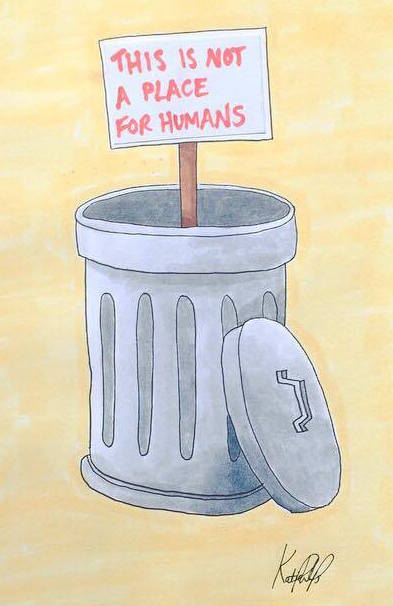
I realise calling a psychiatric unit a “nut house” isn’t accurate either, for example I have never encountered a “nut” when in hospital (other than the odd almond or macadamia in my fruit and fibre…I once heard someone claim they found a pecan in their bowl but I think that was just a myth so don’t take my word on it), but the “loony bin” slang term is particularly damaging as it conjures up ideas of a place into which the rubbish is tipped, a place that people don’t come back from and if anything is utter trash, it is that image.

I myself have had several admissions to various different “loony bins” and I can state with the utmost conviction that none of them bore any similarities to a bin, neither appearance wise or in terms of function. Firstly, on the whole they were all very clean (one had the bathrooms cleaned after practically every use so sometimes I was unable to shower BECAUSE they were being made extra clean), but more importantly none of the patients were anything like waste needing to be dumped.

The problem with the phrase isn’t even just damaging to the self worth of current or ex-patients. Potential inpatients may be scared of, and thus refuse admissions for treatment that they desperately need, because this whole “loony bin” perception has made people fear they will go in and never come out, that they are a lost cause who needs to be locked away from society for good. Admissions to a psychiatric hospital however, are not final destination. Instead they are more of a holiday. Ok, I will admit they are not exactly like a holiday, I know I would prefer a beach in the Caribbean over a stark white bathroom with a staff member watching me pee, but what I mean by this comparison is that they are a place that people come back from (albeit without the much revered tan or photo album). Going into hospital doesn’t have to be a terrifying endgame, define people or morph them into the branded mental patient to be impersonated at Halloween parties.

There is of course also the issue of this “bin” (a name of a place usually reserved for objects not people), being used as a place for “loons”. “Loons” sound like magical creatures, inhuman half breeds who are fundamentally different to “normal people”. The whole idea just emphasises the false distinction between “mental people” and “sane” ones when really they are both exactly the same. People in mental hospitals are not a different species, they are human just like you (unless dear reader, you are in fact a penguin in which case may I congratulate you on finding my blog without opposable thumbs).
I think it is comforting to label people with mental health problems as loons to be kept in a separate lidded inhuman/object bin world of restraints and locked doors, because by separating the sane and the insane, making a “them” and “us” situation, it perpetuates the idea that those crazy people are different and therefore you are not at risk of being contaminated. To think that a person screaming and being held down to be injected with anti anxiety medication is just like you is frightening and prompts all kinds of questions like “what if that happens to me”? It is nicer to think of all of that stuff as things that happen to “other” people, that the person cradling a wooden spoon and singing nursery rhymes is different, no possible image of you in the future. It is nice to put the lid on the idea and leave it outside the house for the rubbish collectors to remove so you don’t have to deal with it in your home.

The derogatory slang of “loony bin” and resulting “loon/human”, “them/us” dumping ground view of psychiatric units really is a use of language that has the ability make patients feel hopeless and forgotten, doomed waste discarded for good, and it creates judgement in people without mental health issues that just continue the stigma and fear that surrounds it all. I urge people to know that none of this is true.

For patients who have been admitted I want to say that life is not over, and being in hospital doesn’t mean that you are rubbish or damaged beyond repair and the landfill is not your future and final destination.
If anything I would say the slang for a psychiatric hospital should be “the temporarily out of order and in need of repair tray”, just like “normal” hospitals that treat only physical illnesses. It is not a place to be thrown in when you don’t have a place in the real world anymore, it is just a place in which you remain as human and as worthy of life as anyone else on the planet, you just have a few cracks in your porcelain skin that needs a little glue to help them stick back together.
We need to stop seeing psychiatric hospitals as bins or end games for the weird wastes of failed humanity, but as places for ordinary people who are just struggling in life and need a little support to get back into full working order, simply time and space to patch things up and get them well enough to leave that repair tray so they can go back home.

1

“Crazy Is The New Black” – Why Mental Illnesses Are Not A Fashion Trend

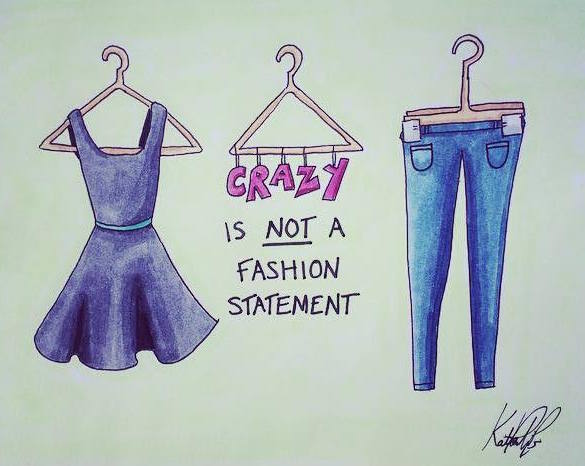
On Saturday night I went to a bar with two friends to watch the Eurovision Song Contest. I anticipated an evening of ridiculous dresses, flags being waved violently in my face, maybe even the odd dancer dressed as a potato. My hopes of such merriment were dashed when one of the presenters made a derogatory joke about mental health that did nothing but boost the stigma that my blog aims to destroy. AND there was no dancing potato. The joke? The “advertising” of a Eurovision Song Contest straitjacket to wear in celebration of the event because, as the presenter stated, “crazy is the new black”. Now I am not one to follow fashion trends so I don’t want to pass myself off as a fashion blogger, but in my opinion, that kind of statement and jokey interpretation of mental health problems went out of style around the 18th century and the fact that it was paraded on TV in 2016 is quite frankly something that has left my “flabber” well and truly “gasted”.

At first, after the comment had been made, I simply hated the presenter who had said it. I was ready to fly to Sweden to pull her off the air, but then I realised (around the time I was trying to hitch a ride to Sweden on the back of a pigeon who, alas, was no help in my mission whatsoever), that this joke was scripted and had therefore been approved by multiple people. Hell someone had even made a prop strait jacket, so this isn’t a little blip or misjudgement, this is a carefully considered statement that makes mental illness out to be a “cool trend”, that was viewed as acceptable for two hundred million viewers across the world.

I hate to whip out the “if this was a physical illness” card here, but seriously, think about it. Imagine if the woman had been advertising a Eurovision themed chemotherapy pump with feathers on it and claimed that “cancer is the new skinny jean”. People would have been up in arms, it would have been in newspapers, the demand for the removal of the presenter and script writer would have been widely documented, and Facebook would have been awash with furious people voicing their opinions. However, being mental health related, it was just swept under the carpet, nobody batted an eyelid other than a few distressed tweeters and bloggers online. Forgive me, but I have to ask what on earth is the difference between stating mental illnesses are “the new black” and saying cancer is “the new skinny jean” or whatever fashion trend is “in” these days? Cancer kills thousands of people a year? So do mental illnesses.
Maybe I am deluded to think that crazy isn’t a fashion trend and maybe I should pick up a copy of vogue ASAP, but in my eyes that joke is nothing like what “crazy” is to me.

Crazy is spending an hour putting on make up to go out with a group of friends and then crying it all off because you were so scared of tying your shoelaces incase the germs on them were to cause the end of the world. Crazy is being watched 24/7 for months, in the shower, on the loo, all of it because you are not trusted to keep yourself safe without constant supervision. Crazy is yelling at your mother because she cut a bagel incorrectly. Crazy is having to sleep with your hands on the pillow so the nurse watching you sleep all night can be sure you aren’t clawing your skin off under the duvet. Crazy is having to ask your friend to come into the bathroom with you to turn a tap on because you are scared to touch it yourself. Crazy is failed relationships because your partner cannot handle your mental illnesses anymore. Crazy is initially refusing to take an aspirin from a paramedic in the back of an ambulance who thinks you have had a heart attack, because he mentioned it was “lemon flavoured” and you fear that that may mean the tablet has calories. Crazy is having a separate room for exams at university so that you can cry and have panic attacks without disturbing other people. Crazy is being locked inside for months on end because the last time you were allowed out you tried to climb over a fence to escape the hospital you were detained in and had to be rescued by the fire brigade. Crazy is having to shower until the top layer of skin comes off and you are bleeding all over because only then can you be sure that the dirt is gone. Crazy is being the only person in your friend group who doesn’t have a job because you are mentally too unwell to work. Crazy is waking your mother up at 4am for a hug because you are too anxious to go to sleep. Crazy is taking menopause oestrogen supplements at 23 because you can’t eat enough to produce the hormone yourself and as a result your spine is riddled with Osteoporosis. Crazy is not being able to go to the toilet because your OCD says that it isn’t time yet. Crazy is going back a year in school because you missed yet another chunk of education being stuck in a psychiatric unit. Crazy is having nothing to say when family members ask what you have been up to, because they don’t count “I haven’t killed myself and have got out of bed every morning”, as an achievement. Crazy is being unwell for so long that you honestly can’t remember what normal is. Crazy is all of these things plus a hundred others that nobody can ever put into words. “Crazy” is the hell experienced by the millions of people across the globe who are struggling right now, but are too embarrassed and scared to speak out incase their worries are belittled, brushed aside or used as fodder for the next stigma supporting “joke”.

You can describe crazy in an infinite number of ways, but as the “new black?”. That is not what the word means to me.
If anything, crazy is the new “crisis in humanity”, and it is killing more people every day than your average fashion trend.

Crazy is the new black