What are they doing about the fact that you are insane?

Every time my parents pick me up from a psychiatric appointment, they ask me the same questions:

  1. “So what did they do to you today?”
  2. “What are they doing about the anorexia/OCD/depression?”

They are only trying to be nice and just want to understand more about what is going on with the crazy person living in their house, but I often wonder what exactly my parents expect me to answer when they ask me these kind of questions.
What did they do to me? Well first I was strapped to a table and then they hit me on the head with a mallet to smash the crazy out. What are they doing about the anorexia/OCD/depression? They are cornering it with a sleuth of angry bears (that is actually what a group of bears is called, “a sleuth”, trust me I looked it up on google), so that it runs off of a cliff into a flange of angry baboons (I may or may not have just discovered a website that tells you what the collective names for various kinds of animals hence the uses of ‘sleuth’ and ‘flange” in this post).

The truth is, the psychologists and psychiatrists and support workers I see don’t “do” anything, but at the same time that does not mean they don’t do anything. Sometimes I may do pieces of “work” or try courses of various therapies, discuss changing my medication or upping the dose, but on the whole the majority of my appointments are taken up by simply talking about things. If I say that to my parents, they worry that because nothing is being “done”, I am not receiving any treatment, but what many people don’t realise is that simply talking as a treatment, is seriously underrated.

By telling someone how you feel, you can release some of the emotions you are bottling up; by explaining a problem you are having to someone who doesn’t understand, you may understand things that even you didn’t know you were feeling; and by sharing a secret or a burden/pain, you share the weight of it and are allowed a little brain space to breathe. Like they say, “a problem shared is a problem halved”, not that I know who they are but they seem pretty smart to me. I know it all sounds very wishy washy, which is probably why the idea of “just talking” is sometimes not viewed as “treatment”, but mental health issues are far more complex and confusing than people can really comprehend, and you only learn about them through exploring. I have been in treatment for over a decade yet still I often realise things about my illnesses and my relationship to them that I didn’t know before, just by talking things through.

I suppose the message I want to get across in this post is that when it comes to recovery from mental health problems, it isn’t straight forward, there isn’t a set thing to “do” or fixed course you follow. As cheesy as it sounds, recovery really is a journey of self exploration, and everyone/everyone’s journey is different. People are individual and unique, so their experiences of their illnesses are individual and unique, different and relative to them alone, so “just” talking about things is really important. Only when you really understand what is going on with you and how your life is affected personally, can you really tackle the problem. If you are just starting to receive therapy or are supporting a loved one in therapy and are worried that nothing is really “happening”, please do not feel despair. It may not feel like it, but things really are being “done” and you are working towards recovery even if you don’t realise it right now. Words are power. Use them.

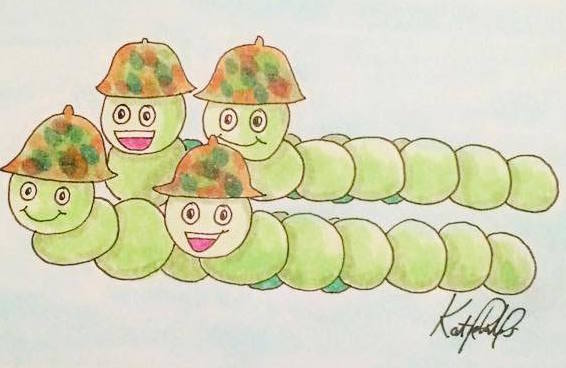
Just going to end this post here by letting you know that a group of is caterpillars is called an army. How hilarious is that? The answer is very. Caterpillars are literally the most non-threatening looking animals in the history of the world, yet still if a lot of them came into your house you would have to say that you had been invaded by an army. Now if you don’t mind, I am off to gather my own caterpillar army to help in my quest to destroy mental health stigma. Cheers.
12922297_10207348201637151_15230091_o

Why it is physically impossible to “look anorexic”.

A few weeks ago, the woman whose womb I once inhabited for 9 months (otherwise known as my mother), was chatting to a fellow human, and during the conversation my mother mentioned the fact that her offspring, aka me, has anorexia. The first response to be uttered (after the obligatory “Oh dear that is sad”), was the question “what size is she?”.

Has a more irrelevant question ever been asked? The answer is no. It is a question equivalent to asking someone with a broken leg “what colour is your cast?”, as if that will tell you about whatever funny business the bones are doing inside. Honestly I do not know what size I was before I heard of this incident, but right now I can assure you I am well and truly FURIOUS sized (like fun size chocolate bars only less fun, more rage.)
Unfortunately, this ridiculousness is a common response or question when someone hears that another person has an eating disorder, so I want to clarify one vital piece of information that everyone needs to know:

The weight or size of a person will never tell you how ill or how well someone is with an eating disorder.

Eating disorders (though obviously having implications in the “real world” in terms of behaviour around food/affect on physical composition of the body), are mental illnesses, the severity of which will never be judged by a number on the scales or a size on a pair of jeans. People with eating disorders can be underweight, a healthy weight or they can be overweight, but no matter what size, you will not be able to tell from their appearance what is going on inside their heads. Not only can you not tell the mental strain from appearance, you cannot tell the physical strain and the effect the illness is having on the body either. People with eating disorders die with bones popping out all over the place at a BMI of 2, but they also die whilst looking healthy or overweight because the physical complications caused by these illnesses are so much deeper and more complex than “weight loss”. Heart attacks caused by the body eating heart muscle for energy, electrolyte imbalances caused by purging and insufficient nutrition, and multiple organ failure caused by the general strain of eating disorders on the body are but three of the many ways people lose their lives in the fight and all of these things are invisible on surface level.

It isn’t even as if this misconception that eating disorders can be seen benefits anyone, as it is a dangerous belief for all involved. Sufferers may feel they aren’t really ill because they don’t look like the stereotypical skeletal pictures of people with eating disorders in the media, parents may not take their child’s issues to food seriously because they “look alright”, and medical professionals might deny input or treatment because the weight of the patient isn’t “too low” so they “can’t be that bad”. It is also an idea that even damages people who are trying to recover from an eating disorder, as sometimes help is withdrawn once weight is no longer “low” which is exactly the time that people need to be supported most.

Many people have even been refused treatment at all until the number on the scales is seen as corresponding to being “anorexic”, and until May 2013, there was actually a BMI criteria that had to be met in order to officially be diagnosed. Thankfully, the new DSM (basically a massive book that gives the lists of symptoms one needs to be diagnosed with any mental disorder) has revised this issue and anorexia can now be diagnosed in people of any weight, but despite this, the misconception still remains. It isn’t exactly unusual to hear the word “anorexic” used as an adjective to describe someone’s frail appearance, a casual turn of phase that further perpetuates the issue. Unless you have insanely magical x-ray vision and can see the thoughts and fears someone is harbouring about food (and if you do have such vision please go to a doctor as you are a medical marvel and could potentially help a lot of people with unseen medical conditions…or find buried treasure…but more importantly help people), you will never see a person “looking anorexic”.

The myth that eating disorders can be seen or measured is a dangerous, stigma inducing and potentially fatal story that needs to stop being told. If you really like myths, maybe give Theseus and the minotaur a go (it’s actually rather good, there is a maze with string, monsters and everything), but whatever you do please don’t believe the one I have attempted to debunk in this post.

12903879_10207275967351339_21790916_o

“Can’t you be normal? Just for today?”

17 days ago, my Grandma died. Today was her funeral.
I wasn’t going to write a post about it and thus about my mental health in the week that led up to my grandmother’s death because to be honest I think it makes me seem very selfish, self obsessed and ridiculous. However, having thought about it I have realised that the entire experience (I have lost all of my other grandparents before so I don’t mean the experience of a loved one dying, rather it was the events leading to it that I want to discuss), highlights something people often don’t realise about living with mental illnesses.
With mental health issues, as with physical illnesses, there are no days where you can simply “turn them off”. There is no break or holiday from the battle, even when interference from that voice in your brain comes at the most inconvenient and irrelevant time.

We were told my grandma was going to die on Monday the 29th of February. They didn’t say how long exactly, but she wasn’t going to live until the next Monday, so time was precious and naturally my family and I spent what was left of her life at her bedside, even if she was asleep for the last 72 hours or so. I love my grandma dearly and she has played a big part in my life, and a large portion of my childhood memories are constructed from the hours I spent being looked after by her in the house she shared with my grandad.

During the week starting the 29th February 2016 I should have been thinking of nothing but my grandma and my mum who was about to lose her mother, my irrelevant worries about germs, how many steps I had done or calories I had eaten should not have come into play, but no matter how hard I tried, they did. Even family members and friends thought I should give my personal neuroses a break for the week as they really weren’t important in a literal life or death situation, and were just making things more difficult than they were. In all honesty I agreed with them, and got frustrated at myself for not putting my irrational fears aside. I felt like a right idiot, like a person on the Titanic who, once alerted of the fact we had crashed into a massive iceberg, worried not about safety or lives being lost, but whether or not the iceberg issues would interfere with my dinner reservations that evening. I was the character in the disaster movie that you yell at the screen to shut up because they are worrying about such nonsense.

That said, a person with an eating disorder cant “just eat like a normal person” because it is Christmas and it is a nice occasion with nice food and nice people hiding behind every christmas tree, a person with OCD can’t “just stop” their rituals because the the house is on fire (or it has crashed into an iceberg…not sure how but lets just go with it) and they really need to focus on evacuating, and a person with depression cannot “just cheer up” because it is someones wedding and nobody wants to see a grumpy person throwing confetti with a face like a soggy potato. Being on your “best mental health act like a normal person behaviour” is no more possible than asking your liver to be on its “best physical health behaviour” despite having hepatitis. It is like asking someone with a broken leg “to just take the cast off and run” like nothing is wrong because it is the Olympics and therefore a special occasion that requires special effort. No matter what the occasion, the leg, the liver or indeed the brain, is still broken.

When it was the last time I would be able to hold my grandma’s hand I should have clung to it like she clung on to life, but in terms of OCD I was too afraid to touch her even though I have held her hands a million times before when I was a kid and survived to tell the tale. When it was the last time I could sit with my grandma I should have focused on being present with her, but my mind was buzzing with thoughts that I was lazy for sitting at all and needed to go outside to do some walking to burn calories. When my mum came home after a day of watching her dying mother she did not need me kicking up a fuss because I didn’t want to eat my dinner, yet still, every night I would cry over the same meal I have had every evening for who knows how long. It felt wrong, inconsiderate and selfish to be crying about a meal when my mum was about to lose her mother, but as much as I tried I honestly couldn’t help it and it is that message that I want to get across in this post. There were a lot of ways I should have behaved both in that week and on countless other occasions I could list from the past decade but with any illness, physical or mental, the should’s and oughts become difficult to obey.

Obviously I cannot blame everything on my mental health issues and some responsibility needs to be taken. I may not be able to help being ill but I should have dealt with my illnesses in a more constructive way that week. I should have called my psychiatrist or hospital to manage my worries rather than spilling them over onto my mum who was already full of her own fears and that is my fault. What I don’t want is it to make it sound like mental health issues are a get out of jail free card that allow you to do whatever you want with no consequences. After all the person who cannot run in the Olympics cannot spend the time of the race stealing penguins from the zoo instead and then blame it on the fact they had a broken leg that was preventing them from doing what they should have been.

If anyone reading this is a parent or carer of someone with a mental health condition I just want you to know that whoever your offspring or friend is, they do not mean to create any stress in your life with their problems, and when they do it is because they honestly cannot help it. They know there are times where it would help you if they could “just stop and be normal” and I can pretty much promise you that they will be trying, sometimes it just isn’t possible even when they can see the pain they are causing other people.

Good lord this post has got a bit heavy and depressing so I am sorry about that, but I feel it is an important topic that I need to touch on. Have a picture of a penguin in a sombrero to lighten the mood. Cheerio.


12674785_10207158070123982_2053468982_o


“I’m a little bit OCD” – Why OCD is not about liking things to be a certain way.

Standing on lego is annoying. Missing a bus by 30 seconds and seeing it drive around a corner without you on it is annoying. Oranges are annoying (don’t even get me started on oranges…little segmented bastards), but if there is one thing that annoys me more than any of those things, it is hearing the phrase “I’m a little bit OCD”. Seriously I would rather fight an army of oranges than hear that phrase in daily conversation and I REALLY hate oranges.

More times than I can count I have heard people use that immortal phrase that strikes rage into my very core to describe a quirk or preference someone has, from
“I like organising paper work, I am so OCD” to “The colour of my shirt always matches my socks, God I am so OCD!”. I realise that just because I am someone with OCD, I do not have the right to control and police the use of the word describing my condition, but still, hearing it used in such ways is not simply one of the many things that annoys me, but is actually a dangerous offhand turn of phrase that often contributes to the misinformed ideas and belief’s people have about OCD, a condition that is hard enough for people to understand in the first place.

Due to my OCD, a lot of things, if not everything in my life, is a certain way. The structure of every day is exactly the same and my routines and rituals could not be more rigid if they tried. Everything I do each day is exactly the same as I did it the day before but that is not in any sense because that is the way in which I like them. I do not wash for hours on end because I like to be clean, I do not take ages changing how I sit in a chair because I like to be comfy and I do not count things all day every day because I love numbers or have a passion for mathematics. The reason I do all of these things as well as the infinite other number of things I do in terms of OCD, is because I HAVE to do them in the way that I do. Ok I may be physically capable of being strapped to a chair away from soap or water so the feeling of “having to” do so many things is arguably “what my illness tells me” rather than fixed reality, but in terms of how I feel, everything I do is compulsory and I do not choose any of it or get any pleasure from the way things are whatsoever. THAT is the key difference between having OCD make you have things a certain way, or someone preferring to have things in a way that is most pleasing to them, despite the fact that to some it may seem odd or illogical. My Dad likes to fold towels over the bathroom rail in a way my mum and I think is ridiculous (seriously they don’t dry the way he hangs them, it is like he is on a mission to keep us in a prison of soggy towels. I guess in terms of what real prisons are like, soggy towel prison isn’t all that bad, still it isn’t ideal), but that isn’t because he has OCD and cannot handle the towels in any other way. It doesn’t bother him when my mum and I change the way the towels are folded back to the sensible way they dry more easily, he just sees that as our weird preference, just as weird as we see his.

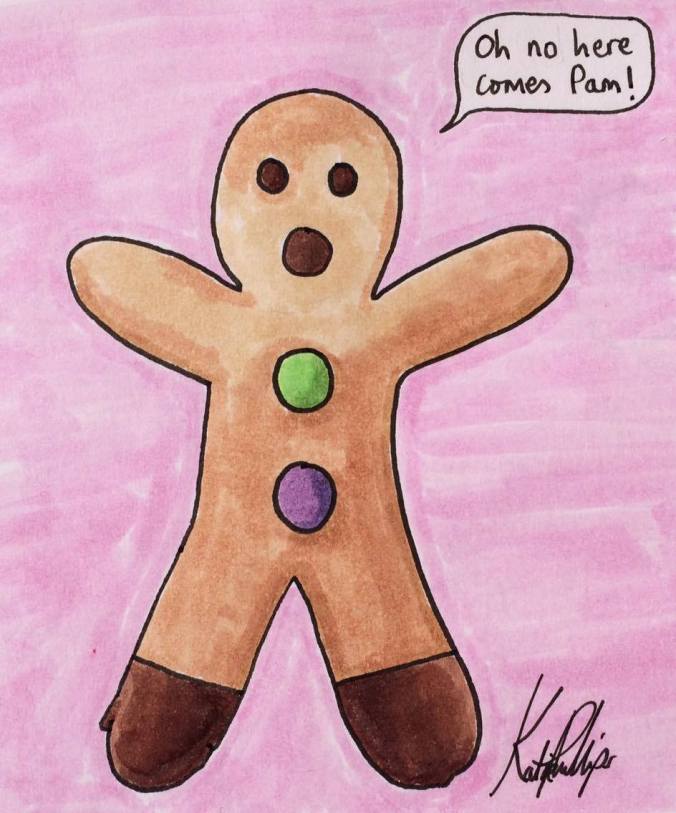
Allow me to give a better example using fictional characters Sam (who is allergic to peanuts) and Pam (who is not allergic to peanuts. Pam is however a passionate ice skater and she has a degree in marine biology, but these details are not relevant to this particular story.)

Imagine Sam and Pam go into a bakery to peruse the selection of cakes on offer that day. They then ask the baker (a jolly fellow with a moustache – again, irrelevant detail but it sets the scene quite nicely) for recommendations and both say “nothing with peanuts”. Both Sam and Pam are physically capable of eating peanuts but Sam chooses not to because his illness would cause him extreme distress to do so (his heart races all over the place and his head puffs up like a balloon), and Pam chooses not to because she prefers things without peanuts and has a particular fondness for gingerbread men. This example obviously isn’t fool proof as I realise I am not physically allergic to breaking the rules set by my OCD, but the distress it would cause because of anxiety and panic (like Sam with the puffy head because of his illness), is a similar comparison when then viewed alongside Pam who also avoids certain situations/has rigid/peculiar fixed ideas for different reasons (not that gingerbread men are peculiar. I am actually like Pam in that respect and have a fondness for those smiley spiced little chaps).

Maybe I have gone too off topic here as to be honest now all I can think about is gingerbread men and peanuts, but I guess the point I am trying to make is that saying you have OCD or “are so OCD” because you like things to be in particular quirky ways is not actually anything to do with OCD at all and it misrepresents/creates confusion around an already misunderstood condition. Having OCD force you to have things a certain way, is not about choice or preference or about liking things to be “just so”, OCD is being compelled to live a certain way and perform tasks whether you like them or not, and often they create a lot more distress than they alleviate.

That said I am off to chat to Pam about Marine biology. And maybe get a gingerbread man.
PAM

Read this blog and win a free pet penguin…

I’m going to be honest with you. I may have lied in the title of this post…BUT WAIT! Before you explode in rage and click the little red cross on this window, overwhelmed by the fury that someone on the internet has had the nerve to lie to you and use the promise of your very own waddling flightless bird to catch your attention, please hear me out. If you do I will give you a cookie (this may or may not be another lie.)
The most difficult thing about starting a blog is the uncertainty as to whether or not anyone is actually going to read it and this concern has held me back for a long time. However, this year I have made a resolution to go for it anyway as I think I have a lot to say on certain issues and the sure fire way to make sure nobody reads my words is to not write them down at all.
For the past few years mental health issues have been on the rise and with 1 in 4 of the UK population suffering with a mental health problem each year, it is now a big issue in our society. True, there are a lot of voices discussing the issue, from health care professionals and charities to newspapers raising awareness and generating scare stories of the much feared “mentally ill” (deranged humans so frightening that it is now common place to see at least one person dressed as a “mental patient” at Halloween or to watch a horror film where the villain is clinically insane). However, I personally don’t think that there aren’t enough voices from the mentally ill people that the horror films, headlines and statistics are about. It is to these voices that I would like to add, and, rest assured, I’m really not that scary.
With three mental illness diagnoses under my belt, the survival rate of some of which is lower than your chances with certain types of cancer, (hence the importance of speaking about mental health), I have been in treatment for well over a decade having first got ill around age 11. People often refer to the process of “going mad” as “losing one’s marbles”, but to be honest I don’t feel I have lost any marbles, rather I was born without them, as I showed signs of various mental health conditions shortly after my exit from the womb. Maybe my connection to “sanity” was cut at the same time as my umbilical cord, but, rather than mourn my lack of balls (unfortunate phrasing but I can assure you that we are still talking about the metaphorical glass balls of the marble variety), I’ve decided to use my marbleless brain to try and help people who are also struggling in their search for mental stability amongst the giant haystack that is everyday life.
A very wise and wonderful nurse once told me that “there is nothing wrong with you that what’s right with you can’t fix”, so, as an aspiring writer, I am therefore going to use my love of writing to find my way in this “crazy” world and hopefully help my fellow mental health warriors along the way. I know that by writing a blog I am not going to “fix” or “cure” anybody, but still I am going to do my best to do what I can. Picture this blog as a hug to a broken leg if you will, it won’t heal the bone inside but it might provide a bit of comfort, even if just for a little bit.
This whole grand plan may very well go down in flames and have no readers other than my mother (hi mum), but this year I am going to get off my ass give it a go anyway rather than continuing to put my hopes of helping people “someday” off even longer and finding myself still sitting at this computer screen in fifty years’ time, crying into a tin of baked beans and asking where all the time went and what happened to my dreams. Don’t get me wrong, I love baked beans, but that image of the future just isn’t part of my plan.
So yes, I will admit that I may have lied to you in the title of this post in the hopes of piquing your interest, but I hope you will forgive me and continue listening to my voice in this crazy life of a mentally ill person trying to find their way whilst attempting to support, educate and maybe even help someone else struggling out there. As for the promised pet penguin and proposed cookie for all readers, I promise I will be working on it.