41 Ways To Celebrate Easter When You Have An Eating Disorder

If I were to tell you that within the next seven days, a giant mole would appear in your garden and would hide chocolate potatoes amongst your shrubbery, you would probably look at me as if I were mentally ill (and you would have a point). If however we were to change that giant mole to a rabbit and the chocolate potatoes to chocolate eggs, I am sure your reaction would be a little different and more akin to “hooray, I love Easter!”.
Indeed, I would share in that hooray, as I have also always loved Easter and the whole  celebration of days that go alongside it. When I was younger, Shrove Tuesday or “pancake day” was the highlight of my year and I vividly remember having competitions with my grandparents as to who would be able to eat the most pancakes (spoiler alert, I won every year). I also loved making hot cross buns with my mother, mixing melted chocolate with shredded wheat to make “birds nest cakes”, and the annual tradition of putting Cadbury mini eggs into my plastic purple duck who would “lay” one of these eggs every time you pressed his head (please note this does NOT work with normal ducks no matter how hard you press them on the head. All you get in that situation is no chocolate egg and a very very angry duck).

Whenever I received an Easter egg as a child I remember being so excited that I couldn’t choose which one to eat first and from the age of five years old I would line them all up in order of expiration date just to make the decision for me. Even with this excitement I would make my eggs last for months and months, only having a little bit a day as a treat because I didn’t want them to disappear, so that it wasn’t unusual for me to still have an egg on the go at Christmas. In senior school they were so invested in festivities that there was even a giant egg hunt around the school grounds on the last day of term before we broke up for Easter and this was taken VERY seriously. People got into teams to compete, eggs were hidden with the utmost secrecy, and four or so teachers would even dress up as rabbits and hide in especially difficult to find spots, with bonus points going to any team who managed to find a bunny and drag them to the finish line. If you found a bunny, you were guaranteed a place in the top five teams and one of my fondest memories of my school days was watching as a hoard of screaming teenagers ran across a field in pursuit of the deputy head, who, after being found hiding in a tree, was sprinting for his life complete with bunny ears and a fluffy tail. It was truly a remarkable sight and Sir, if you are reading this, may I say you suited that fluffy tail perfectly and should seriously consider adding it to your daily wardrobe rather than saving it for special spring time occasions.

As I am sure you can see from all of those memories however, food is a key part of the Easter celebrations, so joining in with the festivities when you have an eating disorder can be quite difficult and lead to the Easter weekend being a stressful, as opposed to enjoyable time. Obviously, as I said when faced with this similar situation at Christmas, it would be great and ideal that for Easter we would all be able to set our eating disorders aside and join in. Eating disorders are horrible, potentially fatal illnesses that should not be allowed to dictate or ruin your Easter, and as my dad quite rightly says “eating a few chocolate eggs once a year isn’t going to do anything to you”. Alas eating disorders are not so easily persuaded by such demonstrations of logic and even with the best intentions and determination, they often interfere with one’s ability to join in with a lot of the “normal” Easter activities. Of course, if you are able to challenge yourself and join in with the more anxiety provoking aspects of Easter this year, then I would encourage you to go ahead and have a cracking time, but nevertheless, today as I did for Christmas, I thought I would offer you a blog post containing a few suggestions as to how to get involved and celebrate a holiday with your family in alternative ways that are not so focused on the food components of pancakes, buns and eggs…

41 Ways to celebrate Easter when you have an eating disorder

  1. Buy some of those little yellow chicks you can get to stick on cakes and instead of an Easter egg hunt, distribute the chicks around the house or garden and use them for your Easter themed hunt instead.
  2. Make an Easter decoration by doing some Papier-mâché on a balloon. Then when it is dry decorate it with as much paint and glitter as you can find to create the most fabulous egg you have ever seen.
  3. Email me a picture of your creation.
  4. Make an Easter wreath.
  5. Plant and decorate an Easter tree.
  6. Sit behind a bush with a leaf on your head and make noises like a lettuce in order to try and attract the Easter bunny.
  7. If the Easter bunny doesn’t show up, change tactics and try making noises like a cabbage instead (as we all know cabbages speak with a far lower pitch so maybe take someone with a deep voice for this one).
  8. If the Easter bunny still doesn’t show up, set off on an expedition around the world in search of your little rabbit friend.
  9. If yet again efforts fail, give up in your attempts to find the Easter bunny and simply become the Easter bunny yourself.
  10. Congratulate yourself on having become the Easter bunny and throw a party to celebrate your new job.
  11. Travel around the world as fast as possible and leave chocolate eggs for everyone who celebrates Easter (I know it is a big job but I think you will find you took it upon yourself).
  12. Rest after exhausting yourself doing number 11.
  13. Weave an Easter basket.
  14. Have an egg and spoon race (I know this technically involves an egg which can be considered as a food BUT the activity of an egg and spoon race doesn’t actually rely on consumption aka eating of the egg and is far more centred on putting the egg on a spoon and running as fast as humanly possible).
  15. Go to a pottery class and make an egg cup.
  16. Paint your egg cup.
  17. Play pin the beak on the chick (A PAPER CHICK).
  18. Buy a female chicken.
  19. Buy a male chicken.
  20. Leave both of your chickens in a barn.
  21. Add mood lighting to create a romantic atmosphere.
  22. Quietly play romantic songs into the barn (I recommend Dolly Parton. I am not sure why but I feel like chickens would like Dolly Parton.)
  23. Give your chickens some privacy.
  24. Wait until an egg has been laid.
  25. When an egg has been laid, ensure it is kept warm and is well cared for until it is ready to hatch.
  26. Watch as the egg hatches and congratulate yourself for creating a romantic partnership that has led to a new life in the form of a real life Easter chick.
  27. Realise that there is no way for you to achieve all of this in the next few days as Easter is only a week away and it takes considerably longer than that to progress from step 18-26
  28. Research how long steps 18-26 will take realistically.
  29. Check what date Easter is next year and put a date in your diary as many days/weeks before Easter Sunday needed to realistically carry out steps 18-26 in order to actually have an Easter chick born on Easter Sunday.
  30. Make pop up Easter cards to give to friends and family.
  31. Learn to knit and make some cuddly Easter bunnies.
  32. Turn those few bunnies into several hundred bunnies because as we all know, in nature these creatures tend to multiply rather rapidly.
  33. If you are religious, go to church.
  34. If you are not religious, maybe give someone without a car who is religious a lift to church.
  35. If you are not religious and don’t know anyone who is, simply kidnap a passer by and take them to church in the interests of traditionally celebrating Easter Sunday. I am sure the Pope would approve.
  36. Lie completely flat on the floor and impersonate a pancake.
  37. Plant daffodils.
  38. Water your daffodils with a watering can shaped like a bunny.
  39. Become a daffodil (please note you can only do this one if you didn’t do suggestion number 9 for as we all know it is far too much responsibility for one to be both the Easter bunny AND a daffodil.)
  40. Wear all of your winter clothes at once, get very angry and then play crazy golf. If anyone asks what you are doing answer that you are celebrating Easter by having some “hot cross fun”
  41. Roll your eyes at number 40 and wonder why on earth you are still reading the blog of someone who is clearly an idiot

So there you have it! 41 Non food related ways to celebrate Easter when you are suffering from an eating disorder! If you are a friend or family member of someone with an eating disorder, maybe suggest one of these activities to them in order to make them feel included in the festivities, or maybe ignore all of my suggestions and come up with a more sensible non food related way to celebrate to make sure that your friend/family member feels included with the holiday. Hopefully if you yourself reading this are a person with an eating disorder, one day you will feel able to participate in the more “traditional” chocolate egg/hot cross bun parts of Easter and maybe one day you will be fully recovered and able to enjoy Easter as much as you did before your eating disorder rudely entered your life. Either way, whatever stage you are at, I hope you all manage to have some fun this Easter weekend and that things aren’t too stressful. Stay calm, stay strong, and if in doubt, just become the Easter bunny.

Take care everyone x

EasterED

Why We Need To Keep Talking About Mental Health

Tomorrow is a very special day for this blog that you are oh so kindly reading in this moment (cheers for that), for tomorrow will mark the one year anniversary of Born Without Marbles being “a thing” on the internet as opposed to an idea in my head that I was too scared to carry out.
That means that I have been harping on about mental health, whether you have liked it or not, for an entire year, and I wouldn’t be surprised if there were people out there wondering why on earth I am still waffling on about illnesses that the majority of the population are well aware of by now.
Ok the general public may have misconceived ideas and perceptions as to what an illness may really be like, but everyone has a rough idea these days as to what things like OCD and Anorexia actually are, so why am I still talking about these things and why do I plan on continuing to talk about these things for the foreseeable future? Newton isn’t still harping on about the time that apple fell on his head (partly because Gravity is old news that doesn’t own the headlines these days and partly because he died in 1726 which somewhat limits his abilities to “harp on”), so why do I keep talking about what it is like to be mentally ill when the existence of mental illnesses is no longer breaking news. Well friends, whether you have been here from the beginning or whether this is your first experience of Born Without Marbles (Welcome. Please excuse the penguins I have left lying around in each post. They are kind of important), today I am going to answer that question and tell you why, even after a year of weekly waffling, I still feel that we all need to keep talking about mental health.

Of course there are all the obvious things like the fact that the more we talk about mental illness, the more research there will be and in turn the more likely we are to find a cure. To explain why I personally have such a passion for the subject however, I need to take you back to 2003, and, more specifically, eleven year old Katie (to set the scene I looked exactly the same as I do now only shorter).
As the name of this blog suggests, I can see that I have shown signs of mental illness from the moment I was born, but it was in 2003 that things really began to become a problem, that I became afraid and ashamed for the first time of the thoughts going on in my head. It was the first time that I didn’t feel normal, and feared that I was different from everyone else.

Every day at school I would watch other pupils in awe. I would see them eating school dinners, opening doors and shaking hands with each other as if it was the easiest thing in the world, and I would wonder how on earth they did it all. For some reason when I tried to open a door, I would find myself frozen in fear, unable to touch the handle as if someone was holding my arms behind my back. When I was in the queue for school dinners, my head was screaming at me to run away because I wasn’t allowed to eat, and no matter how hard I tried to concentrate in lessons about ox bow lakes, all I could see in my mind were images of terrible things happening to all the people I loved, and hear threats that the only way to stop those things happening was to repeat some kind of ritual. This would have been rubbish enough, but the worst bit was that I had no idea what this meant or why this was happening. I thought long and hard, trying to come up with an explanation but the whole thing made very little sense to me. What was so scary about the germs on a door handle when I had evidence all around me showing that nothing bad was happening to people “contaminated” with them? Why couldn’t I go to lunch, even on pasta days? Logically I knew that I loved pasta (pasta is flipping awesome), so why did the idea of eating a steaming bowlful topped with as much cheese as I could get away with before a disapproving dinner lady grasped my cheddar filled palm, scare me so much?
These things went on for months, and I said nothing to anyone because I was too afraid. Maybe mental health wasn’t as widely discussed in 2003 or maybe I was just unaware of what mental illnesses were, but I had never heard of anyone experiencing these things so I kept silent and hoped they would go away. Spoiler alert: they didn’t. Of all the awkward situations I found myself in however, there is one in particular that sticks in my mind and one that continues to motivate me and my dedication to this blog today.

“It” happened at the end of a music lesson. Now, in my school, music was taught in a separate building to all others, ditto art, drama, and DT who all had their own individual buildings (something tells me the staff members of the more creative subjects did not get on well…this explanation of the separate buildings certainly correlates with the time I saw the head of drama pelting the art teacher’s studio with water balloons anyway…)

On the day in which our story occurred, our class had been taken to a room on the top floor of the music building where there were a lot of computers and keyboards set up for us to spend a few hours learning how to play the theme tune from Titanic (a vital part to any eleven year old’s education). Then, the lesson ended and we were dismissed, a fact that meant we were going to have to leave the room and therefore, someone was going to have to open the door. Usually I was very good at avoiding such a responsibility, and at the end of every lesson I would fumble around with my bag until someone else had done the job so that I could scoot on after them without touching anything. This technique worked perfectly for every lesson, but today, for some reason, the teacher wanted us to lead out in single file from the nearest computer to the door. I think maybe someone had been messing about with a keyboard, playing Celine Dion’s soundtrack with a little too much gusto, so in the exit of the classroom, the teacher wanted to establish some serious authority. I felt sick. I was at the computer nearest the door. I was to be the first to leave, I was to lead my fellow students to freedom. I was to open the door. When I saw that it was a push door then, I was thrilled. Happily I nudged the door with my foot and led my classmates out, but the relief was short lived as I realised we were headed for another door, a pull one with a handle…AND AN EXIT CODE KEYPAD.
I thought about pausing in the corridor to let someone overtake but the corridor was too narrow, it was single file, there was no escape, and as I walked down the stair case to the door I genuinely felt like I was walking to the gallows. This was it. I was going to have to touch a door handle, and it was going to be the end of the world. When I reached the door I stopped. The time had come to raise my hand, but I couldn’t move. Instead, I just found myself stuck, panic building as the queue of students eager to go home started forming behind me. Luckily everyone was talking about the day too much to notice my embarrassing situation at first, but after a few minutes of standing in a line waiting, understandably, people started wondering what the hell was going on, and from the back of the line I heard a voice ask perfectly reasonably “is there something wrong with the door?” From then it went silent and all I could hear was the response in my head of “no actually, there is nothing wrong with the door, there is something wrong with me and I have no idea what it is”.

Eventually, after what felt like 34 years, the person behind me became impatient, reached around and opened the door, and from there I ran sobbing to the medical centre with shame, fear and embarrassment. I didn’t want to see anyone ever again, I had to hide, so I decided to take refuge in the sanitarium. When the nurse asked me what was wrong, I lied and told her that I had a tummy ache. I spent the rest of the day curled up on the sofa with a hot wheat bag watching episodes of the Simpsons, feeling more alone than I knew it was possible to feel. There were hundreds of other pupils in the school, but for some reason I was different, I couldn’t open doors or eat meals like they appeared to, and there was nobody, least of all me, who understood why.

It is for that Katie sitting on that sofa with that smelly hot wheat bag that I started this blog, and it is for all the smelly hot wheat bag holding people out there pretending to be fine, pretending to have tummy aches to cover up the fact they are terrified of their own minds and too scared to speak out for fear that other people won’t believe them, that I write this blog. Had I heard about mental health problems sooner, maybe I would have asked for support sooner, but what I would have found more helpful than any of the symptoms listed in the millions of health care packs, would have been the knowledge that there was at least someone out there who struggled with the same things, who let me know I wasn’t crazy, that I wasn’t alone. It is for that reason that, no matter how much awareness there is about the existence of mental illnesses, I will keep talking about my experiences with mental health problems in public spaces. This isn’t a blog to just give information, in my eyes, this blog is a friend, both to me, to the readers and to anyone out there who comments to say that they can relate to my problems and thus remind me once again that none of us are alone.

So happy birthday Born Without Marbles, and thank you from the bottom of my heart for all the support anyone reading this has ever provided. Here’s to another year, another 52 weeks of my ramblings, another 365 days of friendship.

Take care everyone x

MarblesBirthday

The Difficulty Of Losing A Therapist

Over the past few weeks, I feel that I have been going through what is commonly referred to as “a break up”, one of those horrible experiences that, in popular culture, is often portrayed as a situation that can only be remedied by much crying into tissues and several tubs of ice cream. Now I know what you are thinking, “but Katie, how can you be going through a break up when you yourself admitted the day before Valentine’s Day that you haven’t been in any kind of romantic relationship for over two years” (alright don’t rub it in guys…Jeez).
Well if you thought that, you would be right, no, I haven’t been in a romantic relationship for a very long time (aside from the one I am in wth Helena Bonham Carter that she isn’t aware of…yet), but in the world of mental health there is a common experience that is very like a break up, that being the loss of a therapist.

Now, before I go on I would like to preface this by saying that I do not mean for this to imply that I am caught up in any romantic entanglements with the therapist I am referring to and who is currently in the process of “leaving me” for a new job.
Indeed our relationship is very much the standard “patient/psychologist” affair (perhaps affair wasn’t the best choice of word there…). However, what I don’t think a lot of people understand is just how attached one can get to a person who only hangs out with you every week because they are paid to do so.
It a very odd situation, and whenever a therapist leaves I feel I should deal with it easily, without being particularly bothered. This is after all not a new experience for me, as I have literally lost count of the number of therapists that have left me over the years, (seriously if you rounded them all up you would have more than enough of a cast to put on a performance of Les Miserables and trust me, from someone with a theatre background, you need a lot of people to perform that show). That said I know a lot of people find this a very difficult thing to go through, and rather than it mean we are clingy or weird, I think it makes a lot of sense.

Yes, a relationship with a therapist is strictly professional and should, on paper, be the equivalent relationship to someone you have hired to be your private chef (who is paid for by the NHS because you are mentally unable to sustain yourself alone….I need to work on my analogies…)
The chef turns up at your house because it is their job just like my therapist turns up for our appointments, but when you are talking about your deepest darkest secrets and fears rather than how you like your eggs cooked, it can’t help but become more personal whether you intend it to or not.
In every other professional relationship you have with someone who is being paid to spend time with you, like a chef or a plasterer in your house, the reason for their being there is in reference to something separate, aka food or dodgy walls. With a therapist though, unsurprisingly, a lot of it is about talking about your life. How can that not be personal?
Ok other professional relationships have personal aspects to them as well, a private chef for example may eventually grow to know how much milk you like in your cup of tea without asking every time, yet with a therapist there grows a level of intuition that is less about knowing how you like your tea and more about being able to simply look at your face and know automatically that it is time to put the kettle on (although I would like to clarify that my therapist has never actually made me a cup of tea at all…if you are reading this dear therapist, maybe work on that in your new job). It is that deep connection of being understood as a person, and for that reason of course it can be like a relationship break up when a therapist retires or leaves to get a new job.

Again, of course I am not saying that it is in any way romantic and unlike romantic relationship endings we are not going to be left wondering who gets custody of the kids (we already decided in our first session that I get them Monday to Friday and then she has them over the weekend). Nevertheless I am left wondering what I will do without this person who is currently a big part of my life.
When you see a therapist for a long period of time, discussing your mental health problems/building a therapeutic relationship is sort of like building a house. In the beginning you have an empty plot of land and the patient has a hell of a lot of bricks (bricks that in terms of this analogy represent secrets/thoughts/things that make you as a person). The patient is standing in the middle of this messy pile of bricks without any idea of how to deal with it, so the therapist is there as a sort of builder/tidier to help sort it all out. Every week you both turn up at this plot of land and gradually, the patient hands the bricks individually to the builder. Together you try to construct something that is a little less of a mess, and a little more something you can work in. The more you talk, the more bricks that come out, and eventually the house is finished at which point you can go inside and start trying to make the place liveable. You try things out, experiment with fuchsia walls, checkered wall paper or new therapies and you see what works for you.
Then finally you get to the point where you can both walk into the house (aka brain), and know the insides and outs of it so well that one of you can reference something within the house and the other will know exactly what they are talking about. Refer to the “plant thing in the bathroom” and they know what that plant thing is as well as when in your life you bought it and why it is in the house, just as a therapist will eventually grow to know all about the way your mind works as well as any life events you simply reference to as “that time with the giant squid”. If anyone else comes in the house and you reference the plant thing, they don’t understand exactly what you are talking about. Even if you take them to the room to point it out they cannot have the same level of understanding as the person who helped you build the bathroom in that particular way and find that particular plant at the gardening centre. You can tell a new therapist about what happened during “that time with the giant squid”, but to them it will just be a story rather than an experience you have lived through together.
Getting a new therapist then is not as simple as the professional transition involved when you get a new plasterer for example (I have just realised there are a hell of a lot of interior design analogies in here which I think is in reference to my love of 90’s TV show Changing Rooms. I miss Carol Smiley. Where did she go. She was so Smiley). No, instead of a new therapist coming in to help you in the house you had made earlier, it is like having to smash all of that “brain internal understanding relationship” stuff to the ground and having to start again. Once again you need to start passing them all the individual bricks they have never seen before, so you actually have a long time of simply building up enough of a rapport/understanding before you can get on with any of the serious stuff.

Like the end of any romantic relationship you find yourself wondering if you will ever find someone you will get on as well with or who will understand the way you work in the same way, and the first sessions with a new therapist are very much like all the first dates you have to go on to try and find a new partner. Conversations go from deep personal investigations into the meaning of life to the cookie cutter “so what is your job”, “where do you live” standard statements that you have to go through before you can get to anything of real interest or value.
Unlike a first date of course, a new therapist will probably have all of your notes from the previous one and thus a rough knowledge of your history, but nevertheless, with or without these notes they will always say that they want to hear about your history “from you”. Admittedly this is a good idea. Obviously I can explain something that happened to me when I was eleven better than a therapist was able to jot down in a word document, but having to go through all that stuff is exhausting. Maybe if you don’t have a huge mental health history this “tell me about you” question can be answered relatively quickly, yet for me it is a question that is incredibly daunting. Tell me about your experiences with mental health services?! How can I do that? We have nearly 14 years of appointments to catch up on! I can’t get through all that in one hour!? DO YOU HAVE ANY IDEA HOW EXPENSIVE HOSPITAL PARKING IS?

This entire blog is probably just one long incoherent ramble so half of you reading will be probably wondering what the hell I am talking about and who the hell Carol Smiley is. I guess I just wanted to raise some awareness of how difficult it is when a member of your therapy team has to change and why it feels so much more impactful than a change in any other strictly professional relationship. If I was ruler of the world I think I would probably make it law that therapists are unable to ever get new jobs, retire, change jobs or go on maternity leave (sounds ridiculous I know but in terms of fair/rational leadership I would still be doing a better job than Donald Trump.)
Luckily as you will know if you have been around my blog for a while, I do have a whole team of therapists so it isn’t a total break down of my psychological support and only one person is changing. I also know and like the replacement very much so it is as “good” and manageable a “break up” as it can be. Nevertheless I can’t help but feel as though in a few weeks when it is time for our last session (on the 21st of March, put that in your diary folks), I will be losing someone very important, someone who I can trust and rely on, so naturally, this isn’t going to be easy.

Take care everyone x

therapistchange

Why I Like Being Diagnosed With Mental Health Problems

Before I get into this post, due to the potentially controversial/misleading title if people simply read that and not the rest of the blog, I really want to emphasise the fact that I am not saying in any way that I like having mental illnesses. As you all know, I hate having mental illnesses, and if I could find a magic wand to make them all go away for everyone on the planet then I would do so faster than the flap of a hummingbird’s wing (they do 50 flaps a second just incase you were wondering). That said, I have to admit that recently, at a time in which I am struggling a lot with my various disorders, the fact that I am diagnosed with such disorders, is the one positive thing I am holding onto. Confused? Allow me to explain…

Every morning I wake up exhausted from the previous day yet knowing that I have to basically relive that 24 hours again and fight the same daily incessant battles once more. Everything I do, from showering, making a cup of tea and putting on my slippers to eating a bowl of tomato soup (if Covent Garden are reading this then please be aware that I eat your fresh plum tomato soup everyday and am practically keeping you in business so please send me all the free soup available), is a challenge.
Now if I was to be told that the way I live my life is normal, then to be honest I wouldn’t want to take part in it anymore. If life is about constant fear, dread, terror and anxiety, and if it is normal to worry that your mum will die because you touched a towel wrongly, then quite frankly I would give up right now. I don’t enjoy my life as it is at the moment, I simply endure it, and the one thing that gets me through is knowing that none of what I do is normal and that none of this is how life has to be.

Of course I understand that everyone in life has a hard time. Just because you don’t have mental health problems doesn’t mean everything is sunshine and rainbows, so I am well aware that if I ever get better from any of this, life is not going to be easy or enjoyable all of the time. I do however like to think that general day to day life would be a bit less of a struggle.
It comforts me to see other people out there living their lives differently to how I do, touching doorhandles and eating food without crying, because it shows me a world that one day I might be able to be a part of. It gives me hope and something to aim for.
I like that my being told that the reason I struggle to eat is because I have an illness called anorexia, that the reason I cannot enjoy anything is because I have an illness called depression and that the reason I am compelled to perform futile routines for hours on end is because I have an illness called OCD. By identifying and diagnosing these things as illnesses, it suggests that they are things that one can get better from, just like with any purely physical illness.

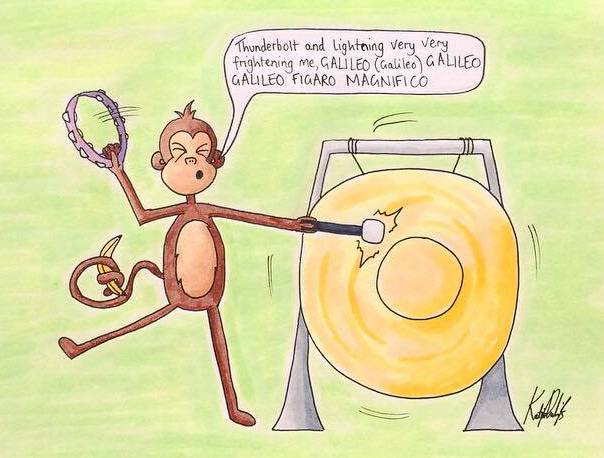
Imagine you have the flu. You cannot sit up because your whole body aches in places you never knew existed, you have a headache that feels like there is a monkey in your brain banging a giant gong and waving a tambourine (to be more specific he is trying to play Bohemian Rhapsody but it isn’t going at all well). You go from hot to cold so quickly that half the time you aren’t sure whether you want to be wrapped in a blanket or to sit in the freezer, and your nose and throat are so clogged with flu rubbish (medical term), that it is physically hard to breathe.
Imagine lying there groaning about how horrendous you are feeling, and then someone comes into the room telling you to keep it down because there is nothing wrong with you, that this is what life is like, that this is how you will spend your entire human existence, that the pain you are feeling is “normal”.
I don’t know about you, but whenever I have the flu or any other unpleasant physical illness, the comforting thing is the thought that it will go away, there is some evil germ doing something horrible in my body but one day it will be gone. It may be frustrating that I can’t get out of bed and have to cancel plans to meet a friend, but in a week or so I will feel more up to it and we can rearrange. Yes, it sucks that I cannot breathe through my nose and that I am drowning in tissues soaked in my own mucus (no need to thank me for that glorious image), but soon all the mucus will be gone and air will start flying up and down my nostrils with refreshing ease again.
When something is diagnosed as an illness, you can look it up, find cures, relate to symptoms that you thought only you felt and find inspiration and hope in people who have recovered from the troubles you are facing. Have a headache that feels like there is a monkey in your head banging a gong and waving a tambourine? Does it kind of sound like he is trying to play Bohemian Rhapsody but is failing miserably and should probably try learning to play the piano instead? Awesome, that is a symptom of an illness you have and should clear up in a few days. You don’t like having the flu, but you like knowing that there is a name for what you are experiencing and you like being able to learn that it will not last forever. It would be a hell of a lot harder for Harry Potter to destroy Voldemort had he not known who or what was the villain he was fighting, but in identifying him, he knew who the enemy was and therefore knew his target/who he should be attacking. By being diagnosed with mental health problems and by giving them names, I can therefore learn about them and work on a strategy to defeat the evil little bastards.

So as I said in the beginning, do I like having mental health problems? No,I hate their existence and whatever devilish lair they sprang from, but I still love, and it is of great comfort to me, that I am diagnosed with them. I know that at the moment I am not “normal”, that I am unwell, so like the person with the flu, I am getting through each hour by hoping that one day when I wake up, I will finally be able to breathe again.

Take care everyone x

monkeygong