How Physical Health Problems Can Trigger Mental Health Problems

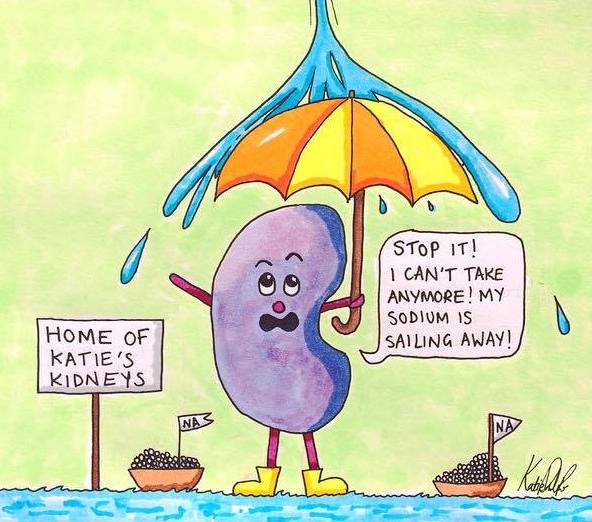
Last week I talked about a recent incident where my mental health, more specifically my eating disorder’s obsession with drinking a lot of water, had a detrimental affect on my physical health and in a hilarious twist of fate and example of bizarre symmetry (and by hilarious I mean literally the most unamusing thing to happen ever), this week I am talking about how the opposite can also be true, and how physical health conditions can end up triggering or making a pre existing mental health problem worse.

So when we last left off, I had explained how I had been admitted to hospital for water intoxication and was being treated for this problem via a strict fluid restriction plan to get all of my electrolytes back to acceptable levels (it is at times like this when I wish I had one of those “previously on” video clips that they show before episodes of various TV dramas…I should really look into that…ooh and a theme tune! I do love a good theme tune!)
Now, after a few days, the fluid restriction, whilst being incredibly annoying for me, seemed to be working, and my sodium levels kept improving until they were back to normal. Really, that should be the end of the story, the problem was solved so I should have been packing my bags and making my merry way home, but alas the story did not end there and developed into what I like to think of as an epic novel of utter ridiculousness.

You see whilst my sodium levels were improving, I wasn’t feeling any better which didn’t make much sense. I had been admitted for a problem that was being successfully treated yet bizarrely, as the days went on, I became more unwell with a pain in my stomach. The doctors couldn’t really make sense of this and before long I was in so much pain that I couldn’t stand or lift my head off the pillow and was in need of all the morphine I could get. A few tests were run but no answers were revealed so a surgeon was sent to have a look at me.

After thumping me in the abdomen with an iron mallet a few times (she said she was only going to “press gently” but trust me from the pain I am pretty sure that woman had a mallet and a vendetta against my stomach region), it was concluded that I might have a swollen appendix. I was told that normally the surgeons would book me in for an operation to whip it out just incase, however due to my already poor physical health from my eating disorder, they wanted to avoid taking me to theatre (alas the operating one and not the version where you get to watch The Sound of Music on stage whilst eating a little pot of ice cream with a spoon that is basically just a mini plank of wood with no resemblance to a spoon whatsoever), because they weren’t sure I would survive an anaesthetic.

Thus it was decided that they would only operate if they were absolutely certain that such a thing was necessary and therefore some more tests were scheduled to try and clear up what was going on. The problem with this was that by leaving time for tests, we were also leaving time for things to go downhill which they did fairly rapidly. Again the surgeon visited and again an operation was suggested but also feared so I was sent to yet another test in the form of a CT scan where I was basically shoved in and out of a tube a few times whilst doctors took photos of my insides (I really hope that my organs put on their best clothes and posed nicely for the occasion…it isn’t every day someone wants to photograph your intestines).

After the CT scan was complete it was around 1am and I was finally allowed to have some more morphine and attempt a snooze, whilst my sister, who had been sitting beside my bed for the past few days, went home. That was until 4am when another surgeon woke me up, to tell me that the scan had shown that things were rather serious and I was scheduled for emergency surgery immediately, my sister being called back in by the nurses having only just left. The next little bit of time is somewhat of a blur but from what I remember I was pumped with anaesthetic and taken to theatre (again, the operating one. I didn’t get so much as a lick of ice cream and I saw no children dancing in curtains. Livid.)
I was so knocked out that it was about 24 hours before I woke up from the procedure, dazed and confused with a tube coming out of my stomach and leading to a bag of some unidentified liquid.

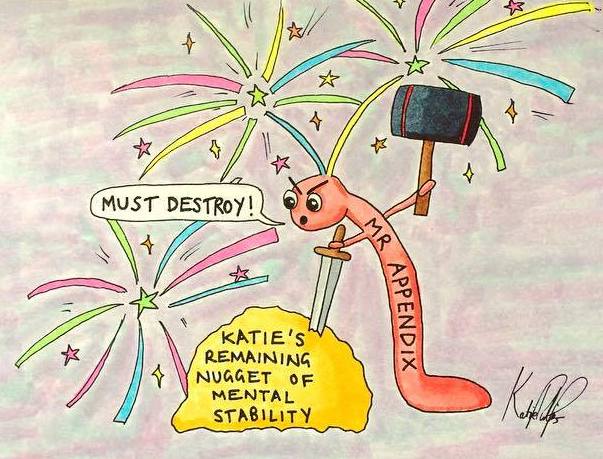
It was then that I was informed that my appendix, in being left for so long, had ended up exploding. (The surgeon told me that I shouldn’t say that it “exploded” because in technical terms you should say that it “ruptured” but damn it I went through a hell of a lot of pain and nonsense because of what happened so if I want to say that my appendix literally exploded like a firework on the 5th of November then I will jolly well do so!)
Consequently my body had been filled with poison, hence the tube and bag scenario coming out of my stomach after the appendix had been removed, to drain the poison out (the poison being the funny liquid in that bag.)

Since then the job has basically been to free my body of poison, recover from the surgery and try to build my body back up after its internal beating, a job that isn’t going too well at the moment because this whole physical health problem extravaganza has triggered the life out of my mental health problems, more specifically my eating disorder.

Admittedly I haven’t been doing particularly well for a while now, but I have been clinging on to some sense of stability by rigidly carrying out the same routine meal plan via some form of repetitive autopilot action. Unfortunately, this event has utterly destroyed my autopilot “just do what you did yesterday” routine.

I think when you have an eating disorder, eating your meals is kind of like a recovering alcoholic avoiding the pub.
If you force yourself to eat the same meal plan every day, you get into a sort of rhythm, a rather bumpy and unpleasant rhythm that you can’t lead a good conga to, but a rhythm all the same. Missing one meal however is like an alcoholic downing one mouthful of vodka after a few months sober and then suddenly finding it impossible to stop.

Knowing that missing one meal will always make the next one harder is the reason that I fight so hard to complete my meal plan even on the bad days because I know that not doing so will make it harder for me in the long run, but in this whole “my organs are exploding” situation, missing a meal wasn’t something I had any control over.
For the first day of the hospital admission, eating was mentally impossible because I was in a different place with different foods. This problem was somewhat solved when family and friends hauled bags upon bags of my safe foods to my bedside, but by that point I was physically in too much pain to lift my head let alone grab a spoon to chomp down on some cornflakes. During all of these pain days I was also constantly being wheeled in and out of various tests that doctors were telling me I wasn’t allowed to eat before, and incase I was going to need emergency surgery after some of these tests, my stomach also had to be kept empty on the off chance that people would be whipping the scalpels out (apparently it is significantly harder to operate when one has just demolished a peanut butter sandwich…or any kind of sandwich…not that there is any other sandwich worth mentioning).

Post surgery I was finally allowed and encouraged to eat to regain my strength and I genuinely tried, but again there were hurdles. Firstly the combination of anaesthetic/poison/million medications made me extremely nauseas, and I was being sick multiple times a day. My taste buds had also suddenly gone haywire and for some reason I could not tolerate sweet foods which for someone who always picks sweet over savoury and who lives off sweet things like porridge and cereal, this was somewhat of a problem. Even the flavour in toothpaste made me throw up (all over my toothbrush I might add…suffice it to say my breath was not minty fresh), and shock of all shocks, I started to be repulsed by peanut butter. Me. Repulsed by peanut butter aka the food that was previously the holiest substance on earth? Who am I? I think I am going through some kind of identity crisis. You might as well start calling me Malcolm.

Therefore I was trying to find new foods that I could both mentally and physically tolerate, family and friends bringing in new groceries every day (including my parents who had had to cut their holiday short and catch an emergency flight back to the UK with fears that they might not get “back in time”…safe to say their relaxing trip to Malaysia was somewhat of a disaster this year..).

Excitingly, a new safe food that I could physically and mentally tolerate was discovered in the form of mashed potato, but by this point it had been so long since I had eaten properly even that was a struggle. I felt sick at every meal time and I could never be sure why. On one hand it could have been the “genuinely physically ill with poison and anaesthetic” sick that I shouldn’t have forced myself to fight as nothing I ate would be kept down anyway, or it could have been the simply sick with anxiety and fear of food sick that I really should have been challenging to prevent it getting any worse. Sometimes food would arrive and I would feel so ill that I wouldn’t risk a mouthful only for the food to be taken away, the sickness to go and me to realise that all that nausea had been anxiety as apposed to anything related to physical complications.

After multiple meetings with my eating disorder services who visited me a lot on the medical ward, it was decided that I would be discharged home incase eating became easier there due to familiar surroundings. Armed with a ridiculous amount of mashed potato, I really tried but a few days in found that I was struggling to swallow. Again I assumed this must be that whole “throat closing up with anxiety” thing, so I persevered, but then after finding some weird white nonsense all over my tongue and throat and a trip to the doctor, it was discovered that life had thrown yet another curve ball and in my weakened post surgery state, had given me tonsillitis and oral thrush, conditions that make swallowing rather difficult and would therefore interfere with anyone’s ability to eat…Oral thrush? I didn’t even know that was a thing? WHAT THE HELL IS GOING ON WITH MY BODY.

Now I am three weeks post surgery (happy no appendix anniversary to me!) and in positive news, the nausea from anaesthetic and poison is practically gone. Having started another lot of antibiotics and some weird throat drops I have also regained the ability to swallow but after so many physical preventions to eating, I am now mentally more terrified than ever at the prospect. I have been to my eating disorder unit and the scales say that I have lost weight yet somehow I feel bigger.
Doctors are telling me that I have to get back to my old meal plan immediately so that we can add new things in to regain all that I have lost but it feels impossible. I cannot comprehend how the hell I was managing to eat before, despite the fact I was doing it only a few weeks ago, because now such an ability has become alien and frightening. I am tied up in a bundle of fear over food, throwing up, weight gain, trying to eat whilst being laid up in bed unable to carry out my usual exercise routines and consequently recovery from surgery isn’t going very well because I don’t have the energy to recover. Both the physical affects and mental health problems are feeding off each other like my body is an all you can eat buffet, and ironically the one person not getting fed in this situation is me. I have been on the edge of collapse for months now, clinging to the edge of stability with all the strength I can muster, but this has thrown me. I have fallen off the cliff. I am spiralling.

…And on that jolly note, that is pretty much my explanation of how a physical illness can go on to affect/cause/trigger a relapse in a pre existing mental illness. As with a lot of my blog posts, it hasn’t been a particular barrel of laughs as far as topics go, but it is the honest truth, and as always, that is what I am determined to put out there in terms of raising awareness of mental health problems.
Now after all this typing, I think I am very much in need of a nap and then maybe I will give some more mashed potato another go. Eating food is the last thing I want to do right now and my stomach is already full from terror, but I promise, I really am trying.

Take care everyone x
AppendixExplode

The Dangers Of Drinking Too Much Water When You Have An Eating Disorder

So in last week’s blog, I talked about a recent lesson I had learnt about the importance of familiar surroundings when you struggle with OCD, and funnily enough I have learnt something else in the past week too.
I am learning a lot of things lately. It is like being back in pre-school only Daniel Jones hasn’t stolen my green crayon (if you are reading this Daniel then yes I know it was you and I still want it back), and the topics of these recent lessons have been far more focused on mental health and less on how messy one can get whilst finger painting/what noise a cow makes (hint: it is moo).

In life, we are constantly being told to drink more water. If you have ever sat in a doctors’ waiting room you will have no doubt seen several posters about how drinking a lot of water is very important, how kidneys love the stuff, how dangerous it is to get dehydrated, and from all of these posters and health warnings you may assume that the more water you drink the healthier you are, which…well… isn’t exactly true, especially if you are someone who is struggling with an eating disorder.

Drinking too much fluid is by no means something common to all people with eating disorders however, and in my years of experience getting to know fellow sufferers, there seem to be three camps of people and how their disorders manage fluids.
In one camp we have the people with eating disorders who struggle to drink enough water and end up extremely dehydrated, then there is a second camp of people who could drink a whole swimming pool if they had a big enough straw, and then finally in the third camp there are the people with eating disorders who do not have a problem with maintaining safe fluid levels and would therefore like to leave the camp I have just put them in and go back home to a habitat that is slightly less tent like.

As it happens, I am in the second aforementioned camp (ours has a lovely log fire and on Saturdays we roast marshmallows), and I struggle with drinking too much water even if I am not at all thirsty.
It is odd because I have always known that drinking too much liquid isn’t good for you, but when it comes down to it, me gulping down glass after glass of water is like some uncontrollable compulsion, a kind of outer body experience.
Many a time I have been pouring myself another litre and in my head have been thinking “NO. STOP! THIS IS DANGEROUS NOW” but my body won’t listen and carries on filling up my glass anyway. It doesn’t matter how ill I feel, drinking the water feels like an urgent and necessary task as if I need to dowse a fireball that is burning somewhere in my stomach, no matter how much water it takes.

Even in the camp of people with eating disorders who struggle with drinking too much water, it is likely that everyone will do so for a variety of reasons and it is rare for two sufferers with the same disordered behaviours to have the same reasons for carrying them out.
When it comes to me though, my compulsion to drink a lot of fluid is partly because of posters I used to see at my local gym telling me that if I didn’t drink enough my body would hold onto water (leading me to fear that the number on the scales would go higher), but mainly it is because no matter how many doctors or dieticians talk to me about the science of the intestine, I am convinced that if I do not drink ridiculous amounts, any food I eat will get stuck in me forever.

Technically I know all about stomach acids and the body’s ability to break down solid foods via various muscle contractions and other clever things that go on behind one’s belly button, but in my head, eating anything solid conjures up an image of that solid thing getting stuck in a tube. Say for example I eat an apple, it doesn’t matter how much I chew it, when it is in my stomach I still picture it as a big red cartoon like shiny apple with the stalk attached, a lump that will stay there unless I am able to create enough waves to erode and wash it away.

For this reason, to try and keep my drinking under some form of control, I have been on a fluid chart for years where I write down everything I drink to try and keep an eye on things so that it doesn’t get out of hand. If I don’t write my fluids down my brain tends to trick me and convince me that I haven’t had a mouthful of water in days (even if I am surrounded by empty bottles of Evian and have been peeing every five seconds), so it is safer for me to keep a record of it so that when the compulsion to drink a lot comes, I can remind myself that I have already drunk more than enough and need to distract myself elsewhere. Last week however, this fluid chart thing went a little bit off plan with the disappearance of my parents on holiday.

I have had several people message me asking what on earth happened after the mass break down described last week, whether my parents ended up cancelling the holiday or whether we gave it a go despite plan A being a rather sizeable fail.

Well, after people had realised that I couldn’t stay at my parents’ friends’ house for the duration of the holiday, the immediate conclusion was that the holiday would be cancelled, but eventually we managed to come up with an alternative plan wherein mum and dad would go off to Malaysia as planned and I would stay at home with my sister and my most legendary friend of all time alternating sleeping over to try and help me stay safe.

It was going rather well for the first few days (or at least better than the disaster that had been plan A), but as time went on I started to get more and more anxious about my parents being away and consequently the urge to drink increased in order to wash all of that anxiety and stress away. I know it sounds pathetic but without my mum there to verify how much I was drinking and suddenly in total control of my fluid intake myself, things started to get out of hand. People who stayed over would be able to support me in the day time but when up late at night I couldn’t help but manically gulp glass after glass of water over the sink. All the people who write those “yay kidneys like water, stay hydrated” posters would probably be thinking that is great but as with most things in life, moderation is key and you can have too much of a “good thing”.
Drinking too much water can cause problems for anyone who has been hitting it hard on the old H20 because your kidneys cannot process it and consequently the water stays in you where it can dilute the salt/sodium level in your blood and cause a condition called hyponatremia, which doesn’t sound particularly exciting but in general language this is known as water intoxication, and I am pretty sure that phrases containing the word “toxic” are never good phrases to hear describe someones physical health.

In healthy adults eating and maintaining a healthy diet, a few extra glasses of water will not cause this kind of thing, but the risks when it comes to people with eating disorders is often greater purely because they may not have been consuming enough salt/sodium in the first place, and essentially there is a risk of drowning your cells on the inside. This then leads to things like heart problems, fainting, water on the brain, seizures, psychotic episodes, death, and basically a lot of things that mean you “aren’t very well” which is exactly what happened to me a few days after my parents flew off to Malaysia and is exactly why my poor sleepy friend had to call an ambulance at 2am on a Saturday morning having been woken by me banging around, generally delirious and spouting nonsense (and a little bit of water. I was like a living water feature. Delightful).

The reason I stayed in hospital for so long however is a slightly more complicated story which I will have to get around to next week, just so that we are all up to date and clear as to why I was so rude as miss a blog post two Mondays ago (Oh the shame. And I was raised in a house with such good manners!), but as an initial explanation, the problem was that I was hospitalised for drinking too much water, and it is now after some severe tellings off from several health professionals that I feel the need to write this post about it so that people realise just how dangerous drinking too much water can be when you have an eating disorder, in case it is something other people struggle with themselves and seriously need to seek support for. If you are one of those people who struggles with drinking too much water I know you are probably doing what I used to do upon hearing these kind of things, the whole “surely it can’t be that bad” and “it would never happen to me” but trust me when I say that water intoxication is extremely dangerous and potentially fatal so if you struggle with it, even if your head tells you “you will be fine”, it is vital you get regular blood tests to check your sodium balance.

Luckily after a few days of being on a water restriction in hospital (good lord was I thirsty), my sodium levels returned to a more acceptable level…it is just that other things started to go wrong after that but again, patience dear friends! All in good time!

Now what I don’t want is for someone who already struggles with drinking enough to read this blog and suddenly panic and start restricting their fluids more than they already were because that is NOT what I am saying you should do and that is dangerous for a different bunch of reasons all on their own. I am just saying it is dangerous to go ridiculously overboard when it comes to fluid consumption even if your eating disorder tries to force you in that direction, and that instead of not drinking anything, just do it all in moderation. Water isn’t dangerous, everyone loves a good paddle or dip in the swimming pool, you just have to keep it at a safe level and be careful not to drown.

Take care everyone x

Kidney

P.s I am sorry if this blog is a little bit all over the place. Physically I am still not in the best place right now and my ability to write is somewhat affected but please bear with me! I am sure recovery will hurry up soon!

Six Tips For Going Home After A Hospital Admission For Mental Health Problems

You know that feeling when you go to the cinema, watch a film, then leave the pitch black room of the movie theatre and step out into the light? Usually, if you have been seeing a film in the day time, the sunlight outside will be such a contrast to the dimmer environment you inhabited previously, that you end up blindly staggering around in a daze wondering where you are, how to deal with the situation, and why on earth that small bucket of popcorn you purchased cost £50.
That overwhelming sudden change in environment and resulting confusion is pretty much what it is like when you leave inpatient treatment in a mental health hospital for the real world after several months (though I admit, in that situation, you are a little less concerned about the price of popcorn in cinemas than the analogical version suggests), and this is one of the reasons so many people relapse the moment they leave 24 hour care.
In hospital, you are helped to manage your mental health problem in a very specific environment which, once changed, can make someone feel like they are mentally back at square one, home in the house with the same ghosts that haunted them prior to admission. Everyone knows that going into hospital is hard, but at the same time, there are moments when leaving and going back home doesn’t feel any easier. There is a lot of support out there for people who are due to be admitted, but not a lot of help for those on the brink of freedom, and when on the brink of anything (e.g a cliff or freedom), it is vital to have a parachute, a safety net, a plan, and that is what I hope to help you lovely people with in this post. So as someone who left hospital a mere six days ago themselves (it is a very long story that I won’t bore you with here, but in summary I kicked up a right fuss about being in hospital and have been allowed home on a Community Treatment Order, a full explanation of which can be found via this link to my post about the Mental Health Act…https://bornwithoutmarbles.com/2016/07/11/demystifying-the-mental-health-act-with-penguins/) here are a few nuggets of advice for how to deal with leaving inpatient treatment after a lengthly admission:

1. Make a plan and stick to it: When you are in hospital, there are usually a lot of rules and staff who enforce them. Your days are structured, and going from this very regulated, controlled environment to total freedom where you can do as you please, can be a frightening shift in responsibility. Therefore it is vital to make a plan and rules to stick to at home so that the change is less dramatic and you still have boundaries, rather than the secure bars of safety falling down around you and allowing your mental illness to run wild. Create a basic timetable to follow (not religiously, just to give you a sense of how to structure the days you are suddenly free to spend as you choose), and implement any non-negotiable rules from the ward at home. Follow the plan of recovery that you have been working on in hospital and don’t let your days be filled up by the to-do lists scribbled on the walls of your mind by your anxieties.

2. Take it one day at a time: Before going home it is important to acknowledge that making the transition is never going to be perfect. There are new challenges to face, and with that it is likely there will be little slip ups along the way (If you watched hurdles at the Olympics this year you will know exactly what I mean. Seriously those people were professional hurdlers and they still kept falling over and sending hurdles flying all over the place). The key however is to not see every set back as permission to revert to relapse or give up the race. If you mess up one day, start afresh the next morning and don’t let a bad hour spiral into another bad year. Treat mistakes like sand castles, make them, acknowledge them, whack a shell on top, and then watch the tides of time wash them away.

3. Keep Moving forward: Whenever I leave hospital I often find myself feeling that the geographical move signals a mental move in terms of recovery. When inpatient you are constantly being pushed to move forward, but when you go home it is easy to halt all progress and remain static because your head tells you that you are “not in treatment anymore”. The truth is, wherever you are, you are in treatment and progress in recovery is possible, so to avoid getting stuck, make a list of goals or challenges for each month to keep progress going.

4. Ask for help: Bottling up thoughts and keeping how you feel a secret is a lot harder in hospital than at home because in hospital there are people constantly following you around and shining a torch in your face at night to check if you are sleeping, which, funnily enough you were until someone rudely shone a torch in your face (if you have someone doing that at home then you should probably bring it up with your landlord). Asking for help when inpatient then is not really necessary, because help is often following you around even when you don’t want it. At home however, it is easy to isolate yourself, pretend you are ok to please others, and fall down a slippery slope greased with eels and vaseline because you fear letting others know that you need a little assistance in scrambling back up aforementioned eel ridden slope. Admitting you are struggling is tough, but it is tougher to fight your battles alone. If you can call the hospital to speak to staff from the unit you were in, do that. If not, call a friend. Either way, reach out, be honest and don’t be ashamed of needing people to hold onto.

5. Use your imagination: Whenever I have been in hospital, then go home and struggle, I often find it helpful to imagine I am back in hospital. It doesn’t sound like particularly great advice to help someone in their journey to mental stability by telling them to imagine they are in a psychiatric unit (in terms of signs of insanity that one sounds pretty high up the list), but I like to remind myself of the fact that though things feel so different and so much harder at home, really the only difference is location. If you have managed to eat your meal plan/not self harm/resist compulsive behaviours within hospital walls then going home and doing the same is, in practical terms, no different. The hurdles as it were have not got higher, they are on a different track, so if you can leap them in one place you can leap them in another. Don’t let your head spiral out of control and make you believe that doing what you have been doing for months is as drastic as it feels.

6. Acknowledge that you are still unwell: One of the biggest mistakes when leaving inpatient treatment is to see yourself as “better” and able to thrust yourself back into hard core “normal life”. Just being at home will take a lot of energy and mental effort, so don’t force or pressure yourself to going straight back to a stressful job full time when you have been out of action for a while. Allow yourself to still see the journey to recovery as your full time occupation and ease yourself back into things gradually. If you have a job, maybe go back part time at first so that you still have time to look after yourself, and find your feet back home. Then when you have found your feet (and we all know how much easier life is when one is aware as to the location of all body parts), you can try full time again, but take it steady and prioritise mental health.

So there you have it! Six delightful tips to help keep you on track when making the difficult transition from hospital to home. Maybe calling them delightful is a bit of a stretch, but they are at least what I am trying to use to help me as I find myself suddenly back in reality after several months of being locked away behind a very high and unscalable green fence.
On a more personal and honest note, I know that discharging myself from inpatient treatment six days ago was probably not the best idea, and I know I did it for the wrong reasons, but hopefully it will work out OK in the end. Whether or not these tips are any good of course will be determined by how things go over the next few months of me carrying them out myself back at home.

I guess that is something we will find out together…

Leaving inpatient tips

Unveiling The Secrets Of Life As A Mental Health Nurse

As you are probably all aware, this blog is a blog about mental health.
If you weren’t aware and thought this was actually a blog offering gardening tips, then I am sorry to disappoint you, but I really have no advice to offer in that department so you may want to look elsewhere for tips. All I know is that you should water your plants…but not too much…and plants need sunlight…but then some like to be in cool dark cupboards…yeah like I said I really am not qualified or experienced as a gardener…ANYWAY, browsing the titles of my current collection of posts I have noticed that most of them are aimed at people with mental health problems, but what about a post centred around the people who spend their lives trying to treat those without marbles? How do they feel about working with the mentally ill? What do they like about the job and which parts make them wish they had steered clear of the anxious and the depressed inhabitants of this godforsaken planet, to pursue a career in fish mongering instead? What makes them dream of swapping therapy for cod and medication side effects for a nice piece of haddock? What advice do they have for people thinking about becoming a mental health professional and how does one go about following that dream? If the mentally ill are plants, who are the gardeners providing enough warmth for seed germination and growth? (Please note I just used the word germination…that is a gardening term…maybe I am more qualified in that department than I realised). Well, if you have wanted to know the answers to any of these questions and even if you haven’t, I am here today to give them to you anyway in a hard hitting interview with a real, qualified mental health nurse working on the ward in which I currently reside. Prepare yourself for the secrets of the mental health professionals, the story behind the shift work and a very confused nurse wondering what on earth I am talking about…

LIGHTS GO UP.

[The nurse and I are seated in blue chairs in a place known as “the quiet room”. The conversation begins whilst the sound of the cleaner mopping slops rhythmically in the background]

Me: Hello Nurse Gertrude Potatobucket, thank you so much for joining me today for this interview.

Gertrude Potatobucket: What interview? Who is Gertrude Potatobucket?

Me: This interview. I want to know about the life of a mental health nurse for an article on my blog. Also you are Gertrude Potatobucket for the duration of this interaction because I am hiding your real name in the interest of confidentiality, so you can be brutally honest as nobody will know your true identity.

GP: I will agree to the interview but can’t I pick another name? Why does it have to be Gertrude Potatobucket? That sounds ridiculous.

Me: I will have you know it is not at all ridiculous but is an underused name that deserves more recognition, so no, you cannot pick an alternative. Anyway, I’m supposed to be the one asking questions here so please just accept your new identity and lets get to the good stuff.

GP: Katie I really think…

Me: [In a loud and interrupting manner] QUESTION ONE. WHAT DOES BEING A MENTAL HEALTH NURSE ENTAIL?

GP: [Sighs…there is a long pause during which the sound of mopping appears to increase in volume until Nurse Potatobucket realises that she is going to take part in an interview whether she likes it or not and gets on with answering the question at hand]. The role of a mental health nurse is different depending on what kind of service you are working for but in terms of my responsibilities on this Eating Disorder Unit, I am in charge of co-ordinating health care assistants on shift, running support groups, working with patients in 1:1 sessions, supporting them at meal times and I am in charge of handing out any medication prescribed by Doctors or psychiatrists.

Me: What a busy bee you are! I can almost hear you buzzing, your face is practically aglow with black and yellow stripes. So tell me Gertrude, how did you earn such responsibility? How does one go about becoming a mental health nurse? What training is required?

GP: To be a mental health nurse you need to have at least 5 GCSE’s including maths, English and Science and then go to university for three years to study mental health nursing. You don’t have to go to university to work in mental health though. If someone wanted to be a Health Care Assistant they would need to have something called a care certificate, but it is possible to get a job as an HCA without any official training. If someone has experience in mental health and does a good interview for a job, they may be offered a position and then have the opportunity to do the care certificate whilst working.

Me: Well to qualify alone sounds like a lot of fun but how about the job itself? What would you say is the best thing about being a mental health nurse?

GP: Supporting people and helping them to make positive changes in their lives.

Me: How nice. I don’t want to paint a misleadingly fluffy picture about the job though so tell me, what is the worst thing about being a mental health nurse?

GP: You see some really sad and upsetting stuff. Also shift work can be difficult as you never have a fixed schedule or routine and can be working at day or night depending on your rota. That said I know that “Bertha Potatonose” likes shift work as it enables her to be flexible when looking after her children, so it is different for everyone. Oh God I have just used her real name, can you cut that bit out?

Me: No need, I will simply hide her identity by replacing her real name with Bertha Potatonose.

GP: What is it with you using the word potato in fake surnames?…

Me: [Even louder and more interrupting than the first time the interviewee started to question the interviewer] QUESTION FIVE: HOW DOES BEING A MENTAL HEALTH NURSE AFFECT YOUR DAILY LIFE AND WHAT ADVICE WOULD YOU GIVE TO SOMEONE WHO WANTED TO BE A MENTAL HEALTH NURSE?

GP: [Sighs. Despair at the situation is visible. The cleaner is still mopping in background]. First off I would advise someone to get some life experience or experience as an HCA. Secondly I would say that in terms of daily life you really need to learn to leave work at work and look out for your own wellbeing at home. You can’t look after someone else unless you have first looked after yourself.

Me: Does this mean there any people then that you would advise to avoid looking into being a mental health nurse? Are there any people you feel would be particularly unsuited to the role?

GP: No. It can be a difficult job but anyone can be a mental health nurse. Different people bring different life experiences, skills and character to the job and I think that is important. Mental illnesses don’t all fit into a neat box and neither do the people who are able to be great Mental Health Nurses.

Me: Inspiring. Truly inspiring.
Now Ms Potatobucket, I know that the people at home often worry when speaking to a mental health professional in candid honesty about their condition that they will be thought of as “crazy” or “weird”. Answer me honestly, do mental health nurses ever judge patients regarding what they say in a session?

GP: No, there is never any judgement. All I feel towards people talking about their difficulties is empathy and I want to show compassion towards the difficult time they are having in life.

Me: Well that is a relief. I am sure we will all rest easier in our beds tonight knowing that we can spill our inner most thoughts without fear of being thought to be “weird”. In addition to worries like that, a lot of people in treatment out there may also be struggling at the moment and feeling like things will never get better. Do you think recovery from a mental illness is ever really possible?

GP: Definitely. All mental health nurses hold the hope and belief that the people they are treating can get to a better place. I think everyone is capable of building the strength and determination not to let their mental health problem rule them forever, and in learning skills they can gain confidence they may not have had initially in fighting their issues.

Me: Fascinating stuff Gertrude. Truly fascinating. Now finally. The question everyone at home has been waiting for and the most important piece of information in all of this. Tell me, has being a mental health nurse in any way altered the opinion you hold with regard to penguins?

GP: What does that have to do with working in mental health?

Me: [Incandescent with rage at being asked a third question during the interview] MS POTATOBUCKET

GP: Oh for goodness sake ok, yes, being a mental health nurse has given me a new found appreciation for penguins.

Me: Aha! Just as I expected! Gosh! Looking at my watch it appears we are all out of time! Thank you so much for answering these questions Nurse Potatobucket. Your honesty and words will touch millions. On behalf of all my readers please know that we are eternally grateful.

GP: Can I go now?

Me: Absolutely

[Interview ends. The sound of mopping in the background has stopped. Upon leaving the room the cleaner is nowhere to be found and only a mop lies in the corridor. The cleaner has not been seen since…]

FADE TO BLACK

Well there you have it! The hard nitty gritty truth about what it is like to work as a Mental Health nurse, how to become one, and how such a career can affect one’s opinion on monochrome birds who refuse to comply with society’s expectations and use their wings to fly. I really hope that this helped people out there either if they are thinking about becoming a Mental Health Professional or those in treatment worrying about what carers in an inpatient setting may be thinking. It appears there is no judgement when it comes to working with the marble-less hoards and no matter how it feels at the time, it seems there is always hope and the potential to recover.
Now if you don’t mind me I am going to abandon my job as journalist for the day and turn to a little detective work. I really am getting worried about the case of the mysteriously disappearing cleaner that took place during this interview…any witness statements would be appreciated in the comments.

I will speak to you all next Monday, take care x


Gertrude Edited

Demystifying The Mental Health Act…With Penguins

If there is ever a widely reported act of violence on the news orchestrated by a single individual, the majority of the time it will be equally widely reported that said person was mentally ill and most likely “detained under the Mental Health Act”. Understandably then, when people hear of people being detained under the Mental Health Act, they associate the Act with danger. To be fair I can understand why people may jump to this conclusion.
If every time I heard about some violent crime I simultaneously heard that the perpetrator was addicted to coco pops, I may naturally make a connection between violent knife attacks in the street and coco pops. When the coco pops are simply mentioned as a “thing” and there is no explanation to tell me that coco pops are actually little puffs of cocoa sugar covered wheat based cereal with the key ability to turn the milk chocolatey, how am I to know any different?
Therefore, seeing as I am currently “detained” and have recently been given a load of forms explaining the official legal terms of it all, I thought I would do a post to clear up any confusion and to give a purely factual explanation of what the Mental Health Act is, what it does and what it means.
I don’t however want this to turn into some boring school lesson, so to liven it up I am going to provide my explanation via little examples involving “Patricia the penguin”. You know what they say: “When life gives you lemons you make lemonade”, so when life sections you under the Mental Health Act, you use the lump of paperwork dumped on you to make a post explaining what it means, with pictures of penguins to help clear up confusion and reduce mental health stigma. I think that’s the saying anyway…so here goes…

What is the Mental Health Act?: It is a law that enables professionals to admit and detain patients for a compulsory admission to hospital. It doesn’t have to have involved any incidents of violence, much like the consumption of coco pops does not have to be involved with criminal activity. Alas, unlike coco pops, the Mental Health Act does not turn the milk chocolatey, for there is rarely any milk involved.

How does one come to be sectioned under the Mental Health Act?: This is a question that will vary between the sections of the Act and individual circumstances, but as a basic principle a Mental Health Act Assessment will be called by professional people (I am not sure what they are professionally qualified in exactly, but they are usually people holding clipboards, stroking their chins, squinting/looking thoughtful), and they will interview you and ask questions in order to assess your health.

Are there different sections of the Mental Health Act?: What a marvellous question dear reader and one I can respond to with the knowledge that indeed there are several, the differences between which I will explain below with the help of Patricia…

Section Two: Recently, Patricia the penguin has been acting unsafely (skating on thin ice as it were), and is suspected to have a mental illness without the capacity to see that she is putting herself in danger. She is not however diagnosed with one, nor has she been in hospital before, so a group of professional penguin Doctors with specific training may place her under a section two, aka a legal detention to hospital for an assessment of her mental health, in order to establish whether or not she needs treatment. It can last up to 28 days and in that time they aim to discover if she has a mental disorder. Under this law she can be treated against her will if it is deemed in her best interests, and discharge or transfer to another section can happen during, or at the end of the 28 days.

Section Three: A section three is a detention in hospital for treatment, so if Patricia were to be put under this section it would mean that she were well known to hospital services, would have a diagnosis and not require assessment. In the section two admission, the focus would have been more about finding out why Patricia was found skating on thin ice in the middle of nowhere and deciding whether or not her reasons were rational, but for the section three they already know why she was skating in such a reckless way, for she has a diagnosis of “Skating on thin ice syndrome”, a common mental health problem in penguins that requires treatment when severe. On this section Patricia can be held for up to 6 months, but may be discharged sooner, or later if the section is renewed for further treatment. Again under this section it is possible for Patricia to be treated against her will (e.g. in her case, forced to skate on thicker blocks of ice even if she doesn’t want to).

Section Four: Section four is pretty much like a section two in that again it is a detention for a short period of time (72 hours) for an assessment of one’s mental health. This is more commonly used in emergency situations as you only need one special doctor to enact it, unlike a section two which requires two. For example, if Patricia is skating on thin ice at 5am in the middle of the arctic and two doctors with the ability to enact the Mental Health Act have been sent for, but one got lost by turning left at the second igloo (use your imagination kids), the doctor with superior navigation skills could potentially hold Patricia under a section four for 72 hours until the other Doctor hurries up to give his second opinion, which then may result in her being placed on a section two.

Section Five: In this circumstance Patricia has realised she may have skating on thin ice syndrome and has voluntarily admitted herself to hospital. However, twenty minutes into her admission she is overwhelmed with the desire to skate on thin ice and asks to discharge herself. The Doctor does not think this would be a good idea in terms of Patricia’s safety though, so he can put her on a Section 5(2), aka use his “Doctor’s holding power” for up to 72 hours. If there are no doctors available at the time Patricia is asking to leave however, a nurse can enact a section 5(4) which lasts for 6 hours or until a doctor arrives. This section will be used if there aren’t specially qualified doctor/doctors around to enact a section two/four available and can take place in general as well as mental hospitals.

CTO: This isn’t technically another section it is tied up in it all, as a CTO is a community treatment order that it’s possible for someone who has been detained under a section 3 to be discharged on to. Basically, it’s a legally binding order of conditions someone has to meet in order to be allowed to remain in the community (e.g. Patricia must attend weekly appointments/hand in her ice skates, cancel her membership to the local ice rink and take her antifreeze medication.)

And there we have it! Now of course this is a very brief explanation as to what the Mental Health Act is and there are far more details and legal jargon/complexities that go into each section, but hopefully I have demystified The Mental Health Act somewhat, albeit with a very basic, penguin centred outline. Hopefully if you are reading this you will never have to have anything to do with the Mental Health Act personally, but at least you will know what it actually is that is being referred to when an article brings it up in relation to something unpleasant that doesn’t put any effort into explaining the Act itself.

Finally, I just want to let everyone know that if anyone is concerned, I can confirm that Patricia the penguin is merely a fictional character created for the purpose of educating and reducing stigma, so please do not go away and worry about how she is doing after having been through all these sections. As a product of my imagination, I can assure you that Patricia is just fine, and I hope you all are too. Cheerio.

Patricia
(I hope the above picture serves as enough evidence that Patricia is safe and sound/not in any danger. As you can see she is merely enjoying a bowl of coco pops in her safe ice igloo and has not been ice skating, nor will she be doing so in the near future.)

Life Lesson: Running Away From Your Problems Is Not A Good Idea

Last Wednesday (the 22nd of June if you want to put it in your diaries for next year), was my 24th birthday. I anticipated a day of being at home with my family and playing on my new games console, but things did not go exactly to plan, much like the rest of this week. So, for today I wanted to use this post to provide a brief personal update on my current situation, as I feel it will be necessary for you all to know for the next few weeks of blogging delights, and the whole thing has taught me a little lesson I wish to share with you, the lesson being that you cannot run away from your problems. Actually that is a lie, you can run away from your problems very easily, but they will chase after you, and those little buggers can run fairly fast (so fast that I am convinced that they are on steroids and am hereby requesting that “Problems” are not allowed to race at this years olympics).

But I am getting ahead of myself, spouting lessons before I have explained how I learnt them, so let us go back to the beginning, by which I mean my 24th birthday rather than the dawn of time and the dinosaurs.

So, on the 24th of June at 10:30am my dad picked me up from my house to attend my appointment at the hospital and there I sat in the waiting room until my Psychologist arrived. I was taken to be weighed as per usual (a fairly disappointing experience, as the scales were just as they always were, no balloons/ribbons on the scales to celebrate my birthday or anything), and then we went through to talk. Had barely been chatting for five minutes however, before my psychologist presented me with an unexpected birthday present, this year, the very unwelcome surprise of an inpatient bed in hospital due to recent deterioration in my mental health, the bed being for Friday, less than 48 hours away. Now I know that people say that it is the thought that counts, and if anyone offers you a gift for your birthday you should be grateful and say thank you, but suffice it to say that I was not at all impressed with this suggestion, and couldn’t help thinking that my therapist should do any future present shopping for friends and family on amazon. I would rather she had given me a moustache maintenance kit for a gift, and I don’t even have a moustache…yet.

It was all pretty unwanted and sudden in my eyes, not the birthday party I wanted at all, so I left feeling rather deflated, much like the non existent balloon my therapist had failed to put on the scales to add a bit of merriment to weigh day proceedings. Luckily my mum later cheered me up by taking me to the park I used to frequent as a child to play on the swings, a far jollier birthday activity. I then played my new games console all evening, so I managed to have a nice birthday in the end by generally ignoring all worries about hospitals and anything other than which character I wanted to be in Mario Kart. (Incase you are interested I picked Toad because he looks like a mushroom and if you don’t find pleasure in watching a man who looks like a piece of spotted fungi zoom around a racing track throwing bananas, then quite frankly there is no hope for you). Basically, I ran away from my problems and pursued my dreams of winning the grand prix instead.

The next day however I was rudely awaken by my problems (quite literally, my therapist phoned me whilst I was still in bed dreaming of penguins), and she told me once again that I should go into hospital the next day. Again, I refused and got on with my day, but a little later I got another phone call that suggested the problems I was avoiding were rapidly gaining on me, this time the notification of a Mental Health Act assessment later that afternoon. My parents have since told me many a time, that it would have been the best idea to just remain calm and attend, but as a natural born problem avoider without marbles, I decided to do the next best thing, aka run away on bus and then a train to Exeter. Do I have family or friends in Exeter you ask? No. Did I have a place to stay or plan in Exeter at all you cry? No. I quite simply had no idea what I was doing other than getting away from the situation and possible hospitalisation to be re-fed back in Bristol. Unfortunately things got a little messy around this point, and though I caught the train and found myself hurtling across the English countryside at 65mph, the mess I had got myself in was hurtling right alongside (not even on a train, the mess was literally running alongside the track that fast. Steroids I tell you. STEROIDS). I won’t bore you all with the details, but in summary, my problems burst on the train to seize me no matter how hard I tried to deny any of it was happening, and a few hours later they had rudely dragged me back to Bristol where I was sectioned under section three of the Mental Health Act and admitted to an eating disorders hospital right away with none of the things I would have needed to pack. All I had in my bag was my wallet and my train tickets to Exeter, which I had well and truly learnt were of no use in my current predicament.

So, that pretty much brings me to my present situation, legally detained in hospital, unsure of how long I will be here and frightened in relation to every aspect of my life. Worst of all, the hospital in which I am detained doesn’t even have wifi (I am officially back in the stone age), and I will admit that one of my worries when I woke up the next day was you, my dear little internet blog readers. Though a small crowd I admit, you are in all honesty a key motivation for me to keep kicking ass as much as I can. I have no control of my personal life at the moment, but I still have my blog and writing to escape to so that is what I am focusing on for now to get me through. That said, without wifi posting this is going to be an almighty challenge, so if it is Monday and you are reading this then another lesson we will have learnt from this week is that I am a technological genius who is more educated in the ways of computer than Bill Gates.
Thankfully, as one positive to brighten up this rather bleak post, I do at least have some of my things in my hospital room now, as my mother was kind enough to bring the basics in, and it is always nice to have your own toothbrush and teddies when trapped under stressful circumstances. I guess that is yet another lesson right there: never underestimate the power and importance of clean teeth and something to cuddle.

I really hope you can all forgive me for this slightly indulgent post that is all about my personal mental health and situation, rather than stigma reducing information or any advice I can offer, but to be fair this is my birthday week, and if you can’t be a bit indulgent and have a ramble about yourself on your birthday then when can you? I promise normal/more interesting blogging will resume next week when I have settled in and know what is going on in my life, but for now I hope you can all at least take away the main lesson I have learnt and point of this post that in some ways we can all benefit from it, that being that when it comes to mental health issues and things generally in life, you cannot run away from your problems as they will always catch up with you eventually, (even if you are on a train to Exeter).

Orange.jpg

(For the purpose of this picture I have envisaged my problems as a giant orange with a satsuma for a nose. This is not because of any symbolic significance related to oranges or their complex segmented form, it is simply because I really do not like oranges and never miss an opportunity to draw them in a bad light).